TOPICS
Results for Topics : "Population"
|
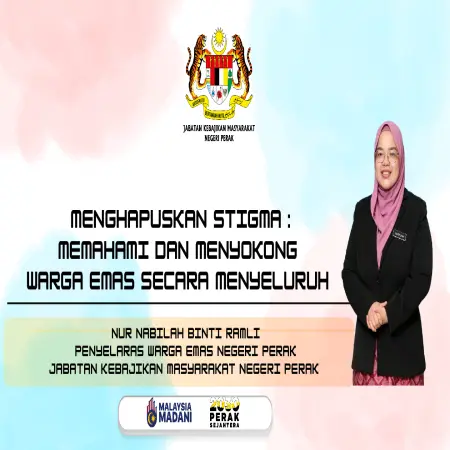
Menghapuskan Stigma: Memahami dan Menyokong Warga Emas Secara Menyeluruh
Item Type: Conference or Workshop Item
Editor:
Year: 00/08/2026
Abstract: Malaysia needs to have a structured policy in terms of social support and elderly welfare, as well as plan a sustainable financial support system before becoming an aging nation. This planning aims to ensure that everyone can have a healthy and prosperous life in their later years. The National Elderly Policy (DWEN) and the National Elderly Action Plan (PTWEN) 2026-2030 are Malaysia's official commitment to creating independent, dignified, and well-being elderly citizens.
|
|
|
|
|
|
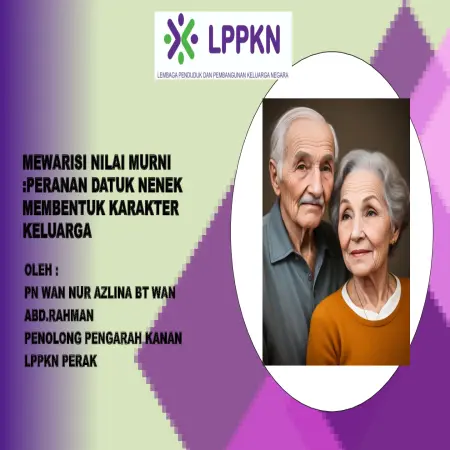
Mewarisi Nilai Murni: Peranan Datuk Nenek Membentuk Karakter Keluarga
Item Type: Conference or Workshop Item
Editor:
Year: 00/08/2026
Abstract: The definition of successful ageing is an individual who has a high level of social support, no cognitive limitations, no depression (mental issues), is able to be independent in daily activities, and has no chronic or controlled illnesses. The role of grandparents in building family character includes being a source of advice and guidance; emotional support (for children, in-laws, grandchildren); introducing traditions and culture; sharing ideas and experiences; taking care of grandchildren; and instilling good values and discipline.
|
|
|
|
|
|
Malaysia makin menua dan masa depan sumber manusia
Item Type: Conference or Workshop Item
Editor:
Year: 00/08/2025
Abstract: Malaysia is heading towards an aging country where by 2030, 5.8 million of Malaysia's total population will be aged 60 and above. The total fertility rate is also decreasing. Various initiatives from the government need to be planned and implemented to face the aging era.
|
|
|
|
|

|
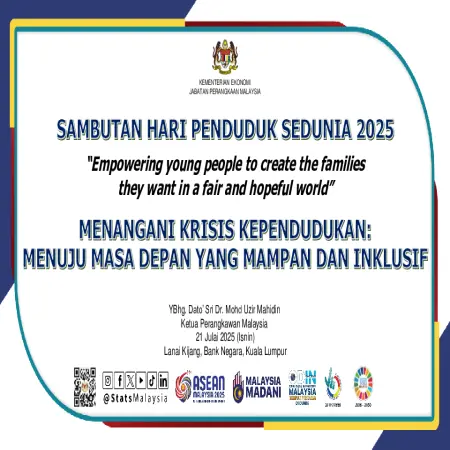
Menangani krisis kependudukan: menuju masa depan yang mampan dan inklusif
Item Type: Conference or Workshop Item
Editor:
Year: 00/07/2025
Abstract: The phenomenon of depopulation will become a new challenge for Malaysia in 2060. The population is projected to peak in 2059 at an estimated 42.38 million people. The total fertility rate (TFR) will decline to 1.4 by 2060. The average age of mothers at first live birth will increase (2023: 28 years). Median age at marriage: men: 28.0 years, women: 27.0 years in 2023. Household size is decreasing to 3.7 (2024), 5.2 (1980). Life expectancy is increasing, men: 77.2, women: 81.5. The evolution of national socio-economic strengthening focuses on restructuring the economy for a quality life for the people. As the leader in official statistics, Department of Statistics Malaysia (DOSM) will begin to release aggregate/statistical data at granular levels regularly. Trusted figures and data are the lifeblood of growth and fairer distribution.
|
|
|
|
|
|
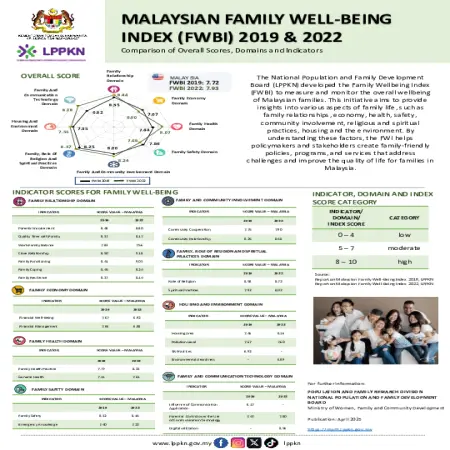
Malaysian Family Well-Being Index (FWBI) 2019 & 2022: Comparison of Overall Scores, Domains and Indicators
Item Type: Infographic
Editor:
Year: 00/12/2024
Abstract: The National Population and Family Development Board (LPPKN) developed the Family Wellbeing Index (FWBI) to measure and monitor the overall wellbeing of Malaysian families. This initiative aims to provide insights into various aspects of family life, such as family relationships, economy, health, safety, community involvement, religious and spiritual practices, housing and the environment. By understanding these factors, the FWI helps policymakers and stakeholders create family-friendly policies, programs, and services that address challenges and improve the quality of life for families in Malaysia. Overall scores Malaysia FWBI is 7.72 (2019) while Malaysia FWBI is 7.93 (2022)
|
|
|
|
|
|
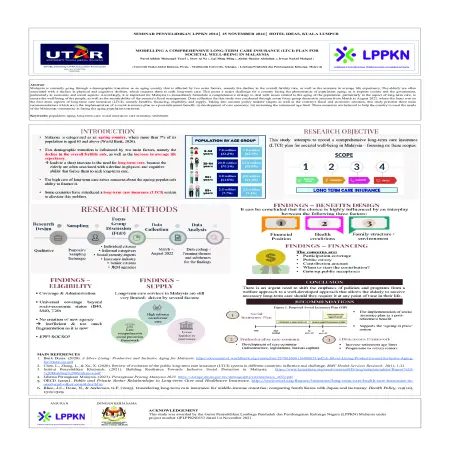
Modelling a comprehensive Long-Term Care Insurance (LTCI) plan for societal well-being in Malaysia
Item Type: Scientific Poster
Editor:
Year: 00/11/2024
Abstract: Malaysia is currently going through a demographic transition as an aging country that is affected by two main factors, namely the decline in the overall fertility rate, as well as the increase in average life expectancy. The elderly are often associated with a decline in physical and cognitive abilities, which requires them to seek long-term care. This poses a major challenge for a country facing the phenomenon of population aging, as it impacts society and the government, particularly in economic and social aspects. Accordingly, it is important for Malaysia to immediately formulate a comprehensive strategy to deal with issues related to the aging of the population, particularly in the aspect of long-term care, to ensure the well-being of the people, as well as the sustainability of the country's fiscal management. Data collection for this study was conducted through seven focus group discussion sessions from March to August 2022, where the focus was on the four main aspects of long-term care insurance (LTCI), namely benefits, financing, eligibility, and supply. Taking into account policy makers' targets as well as the country's fiscal and economic situation, this study presents three main recommendations which are i) the implementation of a social insurance plan as a post-retirement benefit; ii) development of care economy; iii) increasing the retirement age limit. These measures are believed to help the country to meet the needs of the Malaysian community in facing the aging population transition.
|
|
|
|
|
|
Malaysia SDG roadmap and the road towards 2030
Item Type: Conference or Workshop Item
Editor:
Year: 00/05/2024
Abstract: Malaysia has undertaken periodic reviews to assess the achievement of ICPD goals and objectives. Malaysia has continuously embraced sustainable development in the national agenda. In this regard, the commitment to the 2030 Agenda for Sustainable Development (2030 Agenda) has been mapped with the Mid-Term Review of the 11th Malaysia Plan to support the Sustainable Development Goals (SDGs). The national development priorities of the Twelfth Plan continue to be aligned to the Sustainable Development Goals (SDGs) of the 2030 Agenda.
|
|
|
|
|
|
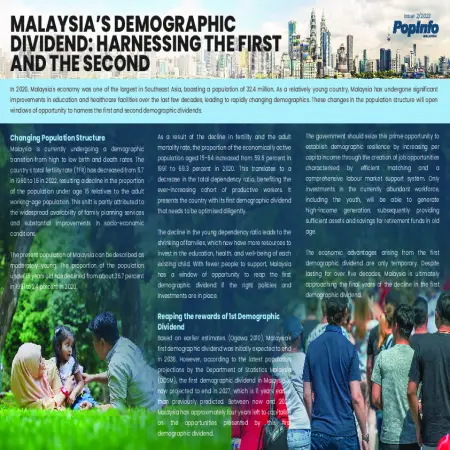
Malaysia's demographic dividend: harnessing the first and the second
Item Type: Newsletter
Editor:
Year: 00/12/2023
Abstract: In 2020, Malaysia's economy was one of the largest in Southeast Asia, boasting a population of 32.4 million. As a relatively young country, Malaysia has undergone significant improvements in education and healthcare facilities over the last few decades, leading to rapidly changing demographics. These changes in the population structure will open windows of opportunity to harness the first and second demographic dividends.
|
|
|
|
|
|
Memperkasakan keusahawan sosial produk menstruasi bagi membasmi kemiskinan haid
Item Type: Article
Editor:
Year: 00/12/2021
Abstract: The Sustainable Development Goals (SDGs) set Goal-1 to end poverty in all its forms everywhere. However, menstrual poverty still happens to teenage girls and women from the past until now. It is not easy for them to get or buy menstrual products due to financial constraints. Based on a focus group discussion research session, the main objective of the study is to review the social entrepreneurship strategies carried out by three social entrepreneurship organizations – BunPad, KotMe and AntPower (pseudonym of the study) in dealing with the issue of menstrual poverty among underprivileged women.
|
|
|
|
|
|
Malaysia negara tua 2030
Item Type: Infographic
Editor:
Year: 00/12/2018
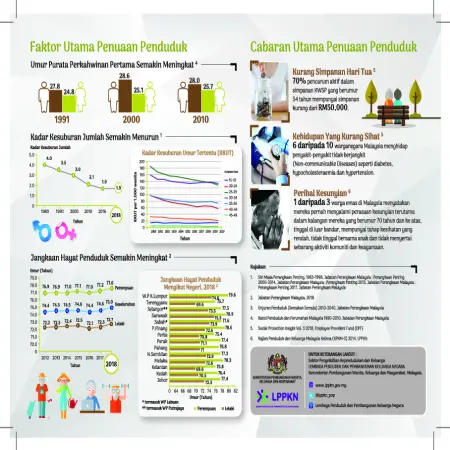
Abstract: This infographic shows about the main factors and challenges of aging in Malaysia. According to the United Nations (UN) definition, senior citizens are among those aged 60 and above. This definition was introduced during the “World Assembly on Aging” held in Vienna in 1982. In recognition of the elderly, the UN through Resolution No. 45/106 has also declared October 1 as International Senior Citizens Day. In Malaysia, the National Senior Citizens Day celebration has been celebrated on October 1 every year since 1992.
|
|
|
|
|