| Abstract |
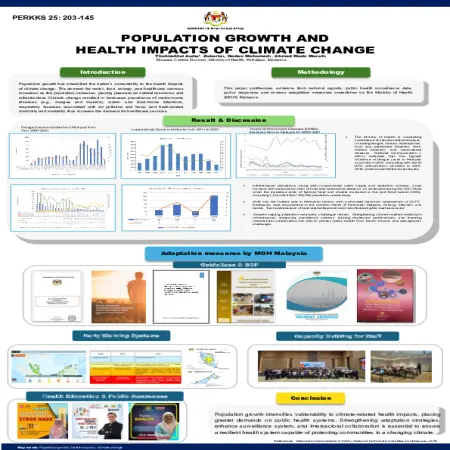
Population growth has intensified the nation’s vulnerability to the health impacts of climate change. The demand for water, food, energy, and healthcare services increases as the population increases, placing pressure on natural resources and infrastructure. Climate change resulted in increased prevalence of vector-borne diseases (e.g., dengue and malaria), water- and food-borne infections, respiratory diseases associated with air pollution and haze, and heat-related morbidity and mortality, thus increase the demand for healthcare services. Conclusion, population growth intensifies vulnerability to climate-related health impacts, placing greater demands on public health systems. Strengthening adaption strategies, enhance surveillance system, and intersectoral collaboration is essential to ensure a resilient health system capable of protecting communities in a changing climate. |