| Abstract |
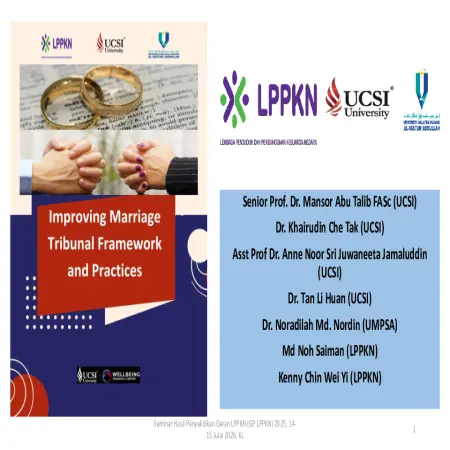
This study looks at the effectiveness of the Marriage Tribunal system for non-Muslim couples in Malaysia and suggests an evidence-based framework to improve its mediation practices. Although the tribunal operates as a mandatory pre-divorce reconciliation mechanism, concerns have been raised about procedural efficiency, professional capacity, and overall effectiveness in the reconciliation process. The study proposes a four-pillar framework consisting of structure, process, practitioners, and performance, along with an Integrated Tribunal Model that introduces a structured, triage-based approach to mediation. This model combines systematic assessment, tailored intervention pathways, and output-based evaluations. Overall, the findings show that while the Marriage Tribunal system has a strong institutional foundation, targeted reforms are needed to enhance its effectiveness, consistency, and responsiveness to the complex psychosocial dynamics of marital conflict. |