| Abstract |
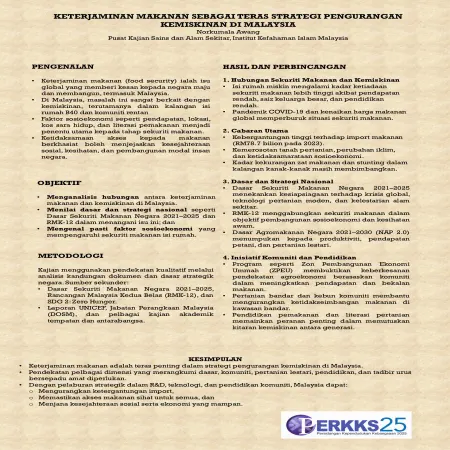
Food security is a global issue that affects both developed and developing countries, including Malaysia. In Malaysia, this problem is closely linked to poverty, especially among B40 households and vulnerable communities. Socioeconomic factors such as income, location, cost of living, and nutritional literacy are key determinants of food security. Inequality in access to nutritious food can affect a country's social well-being, health, and human capital development. In conclusion, a multi-dimensional approach that encompasses policy, community, sustainable agriculture, education, and integrated governance is urgently needed. With strategic investments in R&D, technology, and community education, Malaysia can reduce import dependence; ensure access to healthy food for all; and generate sustainable social and economic well-being. |