Browse by Subject
|
Stress dan tahap kesejahteraan sosial pasca pandemik covid19: Satu tinjauan
Item Type: Book Section
Editor:
Year: 01/12/2022
Abstract: Since the start of the Coronavirus Disease 19 (COVID-19) pandemic in late 2019, the highest daily deaths recorded in Malaysia were 408 and until the end of the pandemic period, on 30 March 2022, the cumulative death toll was over 35,800 deaths. Throughout the pandemic phase, every Malaysian individual of all ages, races and economic social backgrounds received the impact of the phased implementation of the Phased Movement Control Order policy implemented by the government. This paper aims to identify the factors that influence the level of stress of parents during the post COVID-19 pandemic in Malaysia.
|
|
|
|
|
|
Intergenerational support and labour participation among older people in Malaysia
Item Type: Book Section
Editor:
Year: 00/12/2022
Abstract: Most older people receive significant assistance from their adult children. Some rely solely on their retirement savings, while others continue to work to support themselves in old age. This study examines the role that adult children play in shaping their parents’ decisions to participate in the labour market. When compared to older people who never received any help from their adult children, the results showed that older people who received assistance more often were less likely to work. This suggests that older individuals’ reduced incentive to work in the labour market is a result of their greater reliance on family support.
|
|
|
|
|

|
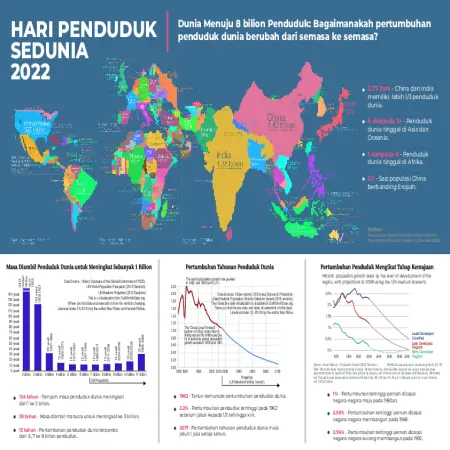
A world of 8 billion: Towards a resilient future, harnessing opportunities and ensuring rights and choices for all
Item Type: Newsletter
Editor:
Year: 00/11/2022
Abstract: The world's population is projected to reach 8 billion on 15 November 2022. The best way to ensure demographic resilience is to support human rights, including individuals' reproductive rights and choices.
|
|
|
|
|
|
Reka bentuk aplikasi saringan mental sihat remaja
Item Type: Book Section
Editor:
Year: 10/11/2022
Abstract: Mental health is one of the most important aspects that must be met by every individual to achieve optimal health in addition to physical and social well-being. An increase in mental health-related problems can be seen every year and puts pressure on the daily life of patients among teenagers who are more susceptible to mental disorder factors due to the influence of the environment and current lifestyle, coupled with the situation of movement control orders (MCO) throughout Malaysia. However, many individuals do not undergo screening due to feeling of shame and are unware of their problems.
|
|
|
|
|
|
Prediction of Malaysian women divorce using machine learning techniques
Item Type: Article
Editor:
Year: 01/10/2022
Abstract: This paper discusses the performance of three machine learning techniques namely Decision Tree, Logistic Regression and Artificial Neural Network for predicting divorce among Malaysian women. Secondary data were obtained from the Fifth Malaysia Population and Family Survey (MPFS-5) conducted by the National Population and Family Development Board (LPPKN). The total number of instances in the dataset was 7,644 ever married Malaysian women aged 15 to 59 years old. Divorce is currently a serious problem among the Malaysian community due to various reasons. In 2019, the divorce rate in Malaysia rose by 12% from the previous year. During the first three months of the movement Control Order (MCO), i.e. from March 18 to June 18, 2020, the Syariah Court of Malaysia recorded 6,569 divorce cases. Worse, a total of 90,766 divorce cases were recorded from January to October 2020. Among the six predictive methods, The Decision Tree Model (C5.0) was found to be the best model in classifying divorce among Malaysian women. The accuracy of the C5.0 model was 77.96% followed by the Artificial Neural Network (Multi-Layer Perceptron) and Logistic Regression (Forward Stepwise) model (74.68% and 67.89%, respectively). The order of important predictors in predicting divorce among Malaysian women is the wives’ employment status (0.1531) followed by the husbands’ employment status (0.1396), type of marriage (0.1327), race/ethnicity (0.1327), distant relationship (0.1212). the wives’ qualification level (0.1115), age group (0.1053) and religion (0.0998)
|
|
|
|
|

|
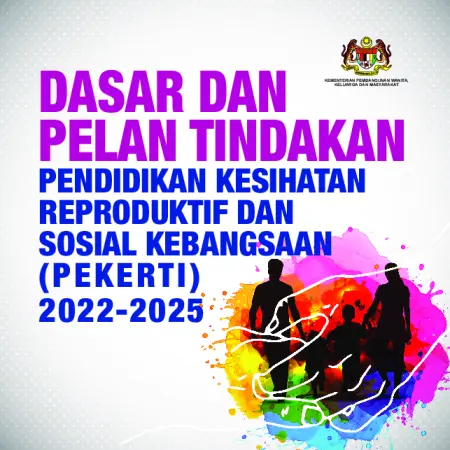
Dasar dan Pelan Tindakan Pendidikan Kesihatan Reproduktif dan Sosial Kebangsaan (PEKERTI) 2022-2025
Item Type: Act & Policy
Editor:
Year: 08/09/2022
Abstract: This new PEKERTI policy is applicable to every individual regardless of age and gender and takes into account ethnic, religious and cultural diversity. Focus will be given to producing a healthy population in terms of reproductive and sexual health based on high moral values and practicing responsible behavior and mutual respect for each other.
This PEKERTI policy has been streamlined to achieve 5 objectives which are to (i) increase the awareness of Malaysians regarding the importance of reproductive and social health education, (ii) develop evidence-based reproductive and social health education programs, (iii) develop human expertise and modernity in aspects reproductive and social health education, (iv) carry out research in aspects of reproductive and social health education and (v) ensure programs and services under this policy are continuously monitored and evaluated.
In order to achieve these 5 objectives that have been set, 5 Cores have been identified as policy implementation machinery namely (i) Advocacy, Promotion and Prevention, (ii) Comprehensive Reproductive and Social Health Education Covering All Age Levels, (iii) Human Capital and other Resources for Reproductive and Social Health education, (iv) Research and Development and (v) Monitoring and Evaluation.
|
|
|
|
|
|
Bandar pintar inklusif warga emas: Bagaimana ketersediaan kita?
Item Type: Book Section
Editor:
Year: 01/07/2022
Abstract: The Third National Physical Plan projects that about 77% of Malaysia’s population will live in cities in 2020 and is expected to increase to 82% by 2030 and 87% by 2050. The elderly in Malaysia (those aged 60 and above) will increase from a total of 2,875 in 2015, to 5,196 million in 2030 and 9,593 in 2050. Malaysia as a developing country will experience an ageing population in the near future.
|
|
|
|
|