Browse by Subject
|
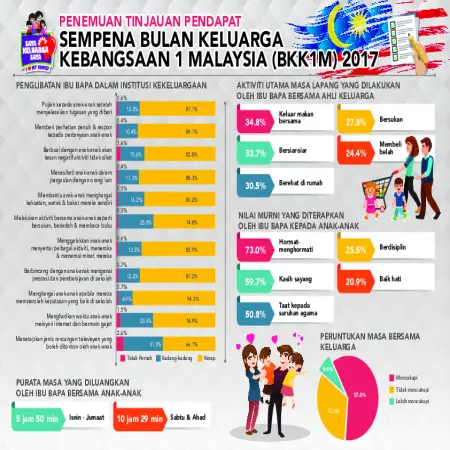
Penemuan tinjauan pendapat sempena Bulan Keluarga Kebangsaan 1 Malaysia (BKK1M) 2017
Item Type: Infographic
Editor:
Year: 01/06/2018
Abstract: This survey was conducted in conjunction with the National Family Month 1 Malaysia. The survey involved 1165 parents ( Malaysian citizens with children aged 5 to 17 year).
|
|
|
|
|
|
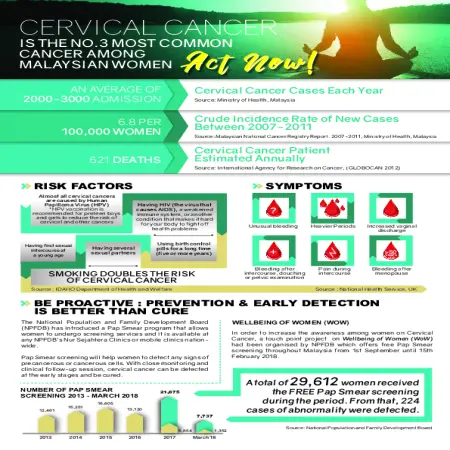
Cervical cancer
Item Type: Infographic
Editor:
Year: 00/05/2018
Abstract: This infographic describes information about cervical cancer. Cervical cancer is the no.3 most common cancer among Malaysian women. Almost all cervical cancers are caused by Human Papilloma Virus (HPV). The symptoms such as unusual bleeding, heavier periods and bleeding after menopause.
|
|
|
|
|
|
Fathers' bonding and self-esteem among trainees in the drugs treatment and rehabilitation center in Melaka
Item Type: Thesis
Editor:
Year: 00/05/2018
Abstract: The paper discusses a survey study that examined the father’s bonding and its relationship with self-esteem. A total of 97 trainees in Cure and Care Rehabilitation Centre (CCRC), Tiang Dua, Melaka who participated in the study had responded to questionnaires on aspects of fathers’ bonding and their self-esteem. Analysis of correlation between fathers’ bonding and self-esteem were performed. Frequency count, percentage and mean were also calculated to examine the parenting involvement among fathers. The Pearson r Value, the significant and t-Test were used to the objectives of the study. Results indicated that 65% have lower bonding with their father’s whereas only 35% have had a high father’s bonding. The t-test also showed there is non significant correlation in the index of father’s bonding with self-esteem (Sig=.402 and r value= -0.086). However, the respondents felt that their fathers were unfriendly and had little communication with them. The correlation between fathers’ bonding and their self-esteem was rather low. This implies that the roles of father in parenting need to be examined further.
|
|
|
|
|

|
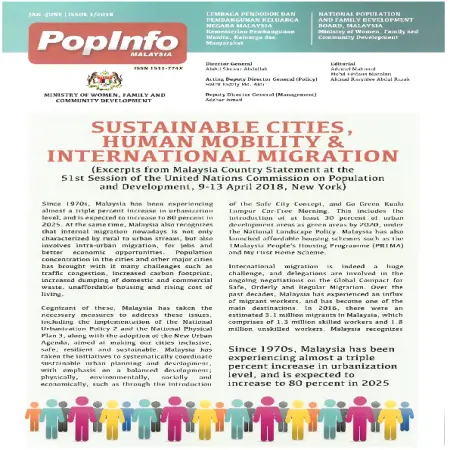
The 51st session of the commission on population and development :general debate on sustainable cities, human mobility and international migration, New York
Item Type: Country Statement
Editor:
Year: 09/04/2018
Abstract: Malaysia has taken the initiatives to systematically coordinate sustainable urban planning and development, with emphasis on a balanced development; physically, environmentally, socially and economically, such as through the introduction of the Safe City Concept, and Go Green Kuala Lumpur Car-Free Morning.
|
|
|
|
|

|
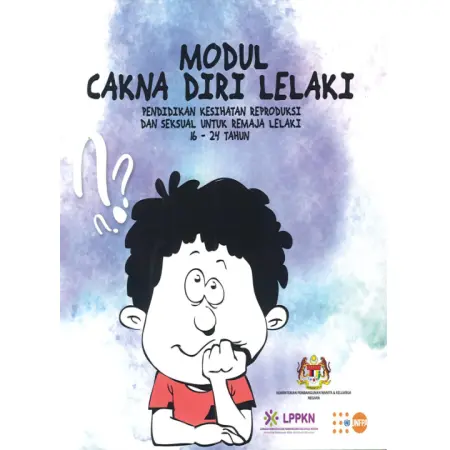
Modul Cakna Diri Lelaki Pendidikan Kesihatan Reproduksi dan Seksual Untuk Remaja Lelaki Berumur 16-24 Tahun
Item Type: Module
Editor:
Year: 00/01/2018
Abstract: The Sexual and Reproductive Health Module for boys and young men age 16 to 24 years was developed to address sexual and reproductive health as well as social issues for boys and young men. It is also aim to create awareness on the importance of reproductive health and social education as well as gender equality for future well-being. This module is divided into two (2) main target groups i.e. general adolescents (Module A) and most-at-risk adolescents (Module B). The main components of Module A includes topics on adolescent growth, developmental, health, psychosocial - 3R (Respect, Relationship and Responsibility), laws and regulations, drugs and substance abuse. Module B covers topics on risky social behaviors, risky sexual behaviors and teen pregnancy. This module is developed as an interactive form using various learning methods such as role play, sketches, group work and discussions to attract participation of boys and young men.
|
|
|
|
|
|
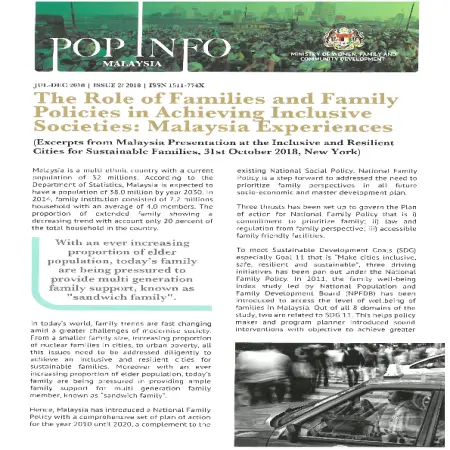
The role of families and family policies in achieving inclusive societies: Malaysia experiences
Item Type: Newsletter
Editor:
Year: 00/00/2018
Abstract: With an ever increasing proportion of elder population, today’s family are being pressured to provide multi generation family support, known as “sandwich family”. Hence, Malaysia has introduced a National Family Policy with a comprehensive set of plan of action for the year 2010 until 2020, a complement to the family well-being index. Next, community based intervention program called Family and Community Empowerment Program (FACE) and Family Impact Assessment (FIA) where an evaluation on the impact of family-related policies and program will be accessed.
|
|
|
|
|
|
Sustainable cities, human mobility & international migration
Item Type: Newsletter
Editor:
Year: 00/00/2018
Abstract: Over the past decades, Malaysia has experienced and influx of migrant workers, and has become one of the main destinations. In 2016, there were an estimated 3.1 million migrants in Malaysia, which comprises of 1.3 million skilled workers and 1.8 million unskilled workers.
|
|
|
|
|
|
Pengukuran tahap kesejahteraan subjektif golongan remaja di Malaysia
Item Type: Conference or Workshop Item
Editor:
Year: 00/00/2018
Abstract: This presentation aims to measure the level of subjective well-being of adolescents in the country aged between 18 and 24 years old. A total of 2,597 respondents were analyzed using data from the Fifth Malaysian Population and Family Survey (MPFS-5). The article found that the level of subjective well-being is higher in female adolescents as compared to male adolescents, the level of well-being especially their standard of living, health and safety will be reduced in tandem with an increase in age.
|
|
|
|
|