Browse by Division/Agency
|
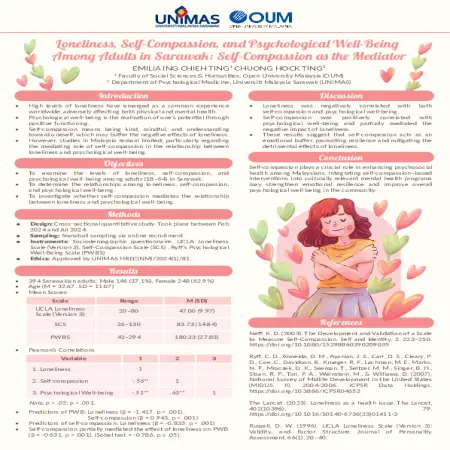
Loneliness, self-compassion, and psychological well-being among adults in Sarawak: self-compassion as the mediator
Item Type: Scientific Poster
Editor:
Year: 00/11/2025
Abstract: High levels of loneliness have emerged as a common experience worldwide, adversely affecting both physical and mental health. Psychological well-being is the realization of one’s potential through positive functioning. Self-compassion means being kind, mindful, and understanding toward oneself, which may buffer the negative effects of loneliness. However, studies in Malaysia remain limited, particularly regarding the mediating role of self-compassion in the relationship between loneliness and psychological well-being. Self- compassion plays a crucial role in enhancing psychosocial health among Malaysians. Integrating self-compassion-based interventions into culturally relevant mental health programs may strengthen emotional resilience and improve overall psychological well-being in the community.
|
|
|
|
|
|
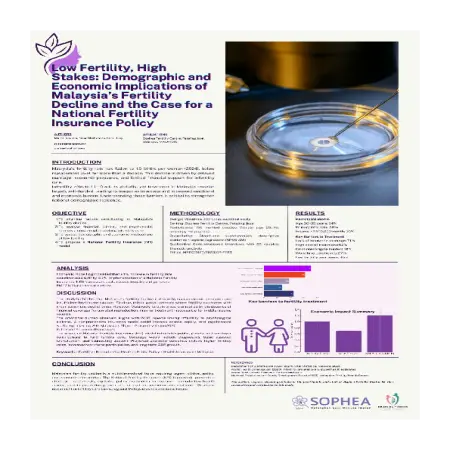
Low fertility, high stakes: demographic and economic implications of Malaysia’s fertility decline and the case for a National Fertility Insurance Policy
Item Type: Scientific Poster
Editor:
Year: 00/11/2025
Abstract: Malaysia’s fertility rate has fallen to 1.6 births per woman (2024), below replacement level for more than a decade. This decline is driven by delayed marriage, economic pressures, and limited financial support for infertility care. Infertility affects 1 in 6 adults globally, yet treatment in Malaysia remains largely self-funded, leading to inequalities in access and increased emotional and economic burden. Understanding these barriers is critical to strengthen national demographic resilience. Conclusion, Malaysia’s fertility decline is a multidimensional issue requiring urgent clinical, policy, and economic intervention. The National Fertility Insurance (NFI) framework presents a strategic, sustainable, equitable policy mechanism to improve reproductive health access, sustain population growth, and strengthen socioeconomic resilience. Strategic investment in fertility care can safeguard Malaysia’s socioeconomic future.
|
|
|
|
|
|
Lelaki itu sebenarnya…?
Item Type: Conference or Workshop Item
Editor:
Year: 00/08/2025
Abstract: Unraveling the myths, realities, and science of men's health and fertility in Malaysia. Malaysia's fertility rate has dropped far below the replacement level (2.1) since 2013. In Malaysia, 1 in 10 men show poor-quality sperm. The causes of male fertility problems are obesity; lifestyle (smoking/alcohol/drugs); health and medical issues; age factors.
|
|
|
|
|

|
Laporan Seminar Kependudukan Negeri Kelantan Sempena Hari Penduduk Sedunia 2025
Item Type: Report
Editor:
Year: 00/08/2025
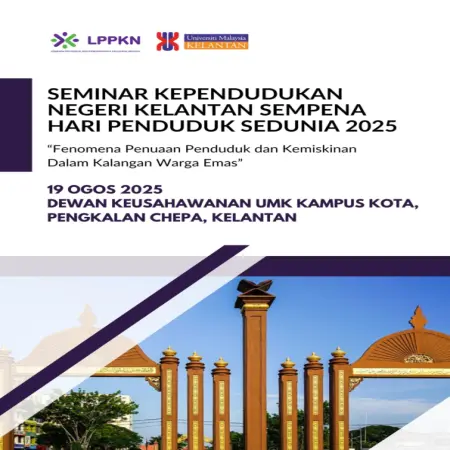
Abstract: In conjunction with the celebration of World Population Day 2025 at the Kelantan state level, the Kelantan State of National Population and Family Development Board (LPPKN) in collaboration with Universiti Malaysia Kelantan has organized the Kelantan State Population Seminar at Universiti Malaysia Kelantan, Pengkalan Chepa, Kelantan on 19 August 2025. The theme of the Kelantan State World Population Day celebration this time is "The Phenomenon of Population Aging and Poverty Among the Elderly". Also held at this celebration is the Population Forum entitled "The Phenomenon of Population Aging and Poverty Among the Elderly". Three (3) working paper presentations were also presented, namely the issue of population aging, elderly people and poverty.
|
|
|
|
|
|
Laporan Seminar Kependudukan Negeri Perlis Sempena Hari Penduduk Sedunia 2025
Item Type: Report
Editor:
Year: 00/08/2025
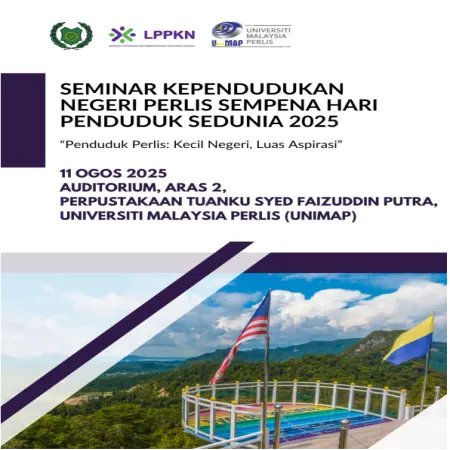
Abstract: In conjunction with the celebration of World Population Day 2025 at the Perlis state level, the Perlis State of National Population and Family Development Board (LPPKN) in collaboration with the Perlis State Government, the Perlis State Women's Development and Social Welfare, Unity and Environment EXCO Office and Universiti Malaysia Perlis organized the Perlis State Population Seminar at Universiti Malaysia Perlis, Perlis on 11 August 2025. The theme of the Perlis state level World Population Day celebration this time is "Perlis Population: Small State, Big Aspirations". Also held at this celebration was the Population Forum titled "Empowering Young People to Form the Families They Want in a Fair and Hopeful World". Four (4) working paper presentations were also presented, namely socio-economic, health and family issues.
|
|
|
|
|
|
Laporan Seminar Kependudukan Negeri Pulau Pinang Sempena Hari Penduduk Sedunia 2025
Item Type: Report
Editor:
Year: 00/08/2025
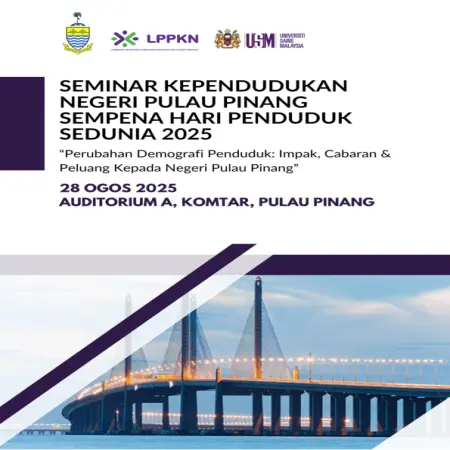
Abstract: In conjunction with the celebration of World Population Day 2025 at the Penang state level, the Penang State of National Population and Family Development Board (LPPKN) in collaboration with the Penang State Government and Universiti Sains Malaysia organised the Penang State Population Seminar at Komtar, Penang on 28 August 2025. The theme of the Penang State World Population Day celebration this time is “Population Demographic Changes: Impact, Challenges and Opportunities for the State of Penang”. Also held at this celebration was the Population Forum entitled “Elderly Friendly Community: Empowering the State of Penang to Face an Aging Population”. Three (3) working paper presentations were also presented, namely demographic issues, reproductive health and fertility.
|
|
|
|
|
|
Laporan Seminar Kependudukan Negeri Terengganu Sempena Hari Penduduk Sedunia 2025
Item Type: Report
Editor:
Year: 00/08/2025
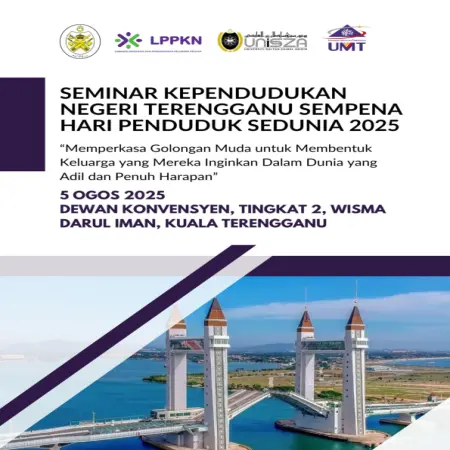
Abstract: In conjunction with the celebration of World Population Day 2025 at the Terengganu state level, the Terengganu state of National Population and Family Development Board (NPFDB) in collaboration with the Terengganu State Government, Universiti Sultan Zainal Abidin and Universiti Malaysia Terengganu organized the Terengganu State Population Seminar at Wisma Darul Iman, Kuala Terengganu, Terengganu on 5 August 2025. The theme of the Terengganu State World Population Day celebration this time is "Empowering Young People to Form the Families They Want in a Fair and Hopeful World". Also held at this celebration was the Population Forum entitled "Building a Harmonious Family in Terengganu". Two (2) working paper presentations were also presented, namely the issue of marriage and divorce.
|
|
|
|
|
|
Laporan Seminar Kependudukan Negeri Selangor Sempena Hari Penduduk Sedunia 2025
Item Type: Report
Editor:
Year: 00/08/2025
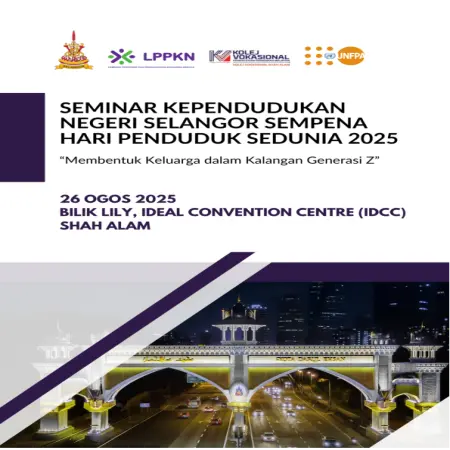
Abstract: In conjunction with the 2025 World Population Day celebration at the Selangor state level, the Selangor state of National Population and Family Development Board (LPPKN) in collaboration with the Selangor State Government and Shah Alam Vocational College organized the Selangor State Population Seminar at the Ideal Convention Centre, Shah Alam, Selangor on 26 August 2025. The theme of the Selangor state level World Population Day celebration this time is “Forming Families Among Generation Z”. Also held at this celebration was the Population Forum titled “Having a Family: Gen Z Ready or Not?”. Three (3) working paper presentations were also presented, namely male reproductive health, family well-being and early marriage.
|
|
|
|
|
|
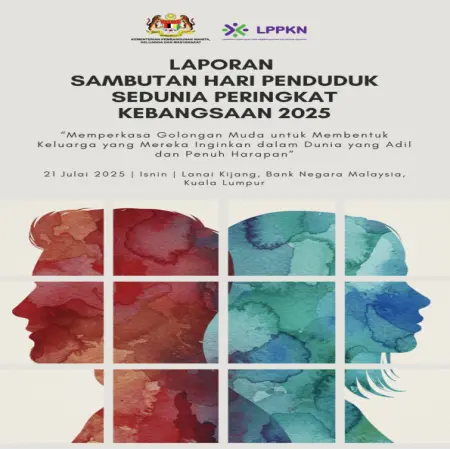
Laporan sambutan Hari Penduduk Sedunia Peringkat Kebangsaan 2025
Item Type: Report
Editor:
Year: 00/07/2025
Abstract: In conjunction with the celebration of World Population Day 2025, the Ministry of Women, Family and Community Development through the National Population and Family Development Board (LPPKN) in collaboration with the Department of Statistics Malaysia (DOSM), University of Malaya (UM) and the United Nations Population Fund (UNFPA) has organised the national level World Population Day Celebration 2025 at Lanai Kijang, Bank Negara Malaysia, Kuala Lumpur on 21 July 2025. The theme of this World Population Day celebration is “Empowering Young People to Form the Families They Want in a Just and Hopeful World”. Also held at this celebration is the Population Forum entitled “Addressing the Population Crisis: Towards a Sustainable and Inclusive Future.
|
|
|
|
|
|
Laporan Seminar Kependudukan Negeri Johor Sempena Hari Penduduk Sedunia 2025
Item Type: Report
Editor:
Year: 00/07/2025
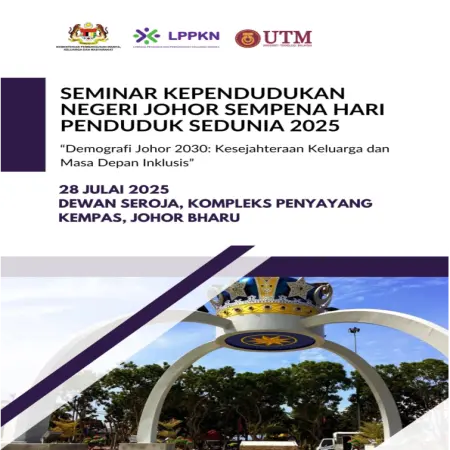
Abstract: In conjunction with the celebration of World Population Day 2025 at the Johor state level, the Johor State of National Population and Family Development Board (LPPKN) in collaboration with Universiti Teknologi Malaysia organized the Johor State Population Seminar at the Penyayang Complex, Johor Bharu, Johor on 28 July 2025. The theme of the World Population Day celebration at the Johor state level this time is “Johor Demography 2030: Family Wellbeing and an Inclusive Future”. Also held at this celebration was the Population Forum titled “Johor Family Aspirations”. A plenary session was also held with the presentation of working papers on three main issues, namely late marriage; fertility and women's well-being. Seventeen (17) working papers were also presented by academics covering issues of religion, marriage, economics and family health.
|
|
|
|
|