Browse by Type
Results for Item type : "Book Section"
2023 (24)
|
Faktor kritikal mendepani isu dan cabaran tenaga kerja menua
Item Type: Book Section
Editor:
Year: 00/12/2023
Abstract: An aging workforce is one of the few phenomena faced by countries experiencing an aging population. This is also the case in Malaysia which has been categorized as an aging country by the World Bank since 2020. The aging workforce poses a number of issues and challenges to policy makers, employers and employees, especially those who are going through the aging process themselves.
|
|
|
|
|
|
Perceived social support, mental health and quality of life among recipients of old age financial assistence
Item Type: Book Section
Editor:
Year: 00/12/2023
Abstract: The present study examines multidimensional perceived social support, mental health and quality of life (QOL) in older adults aged 60 years and older who receive the financial assistance provided by the Department of Social Welfare. A cross-sectional study approach was conducted among 487 older adults living in Selangor, Malaysia, who are the recipients of old age financial assistance known as Bantuan Warga Emas (BWE).
|
|
|
|
|
|
Kesan peralihan demografi terhadap kebajikan sosial dan pasaran buruh: perbincangan kumpulan fokus
Item Type: Book Section
Editor:
Year: 00/12/2023
Abstract: Demographic transition refers to changes in the population structure of a country, mainly related to factors such as birth rate, mortality rate and life expectancy of the population. This study aims to identify the effects of demographic transition on social welfare and labour market conducted in Shah Alam, Selangor among heads of household.
|
|
|
|
|
|
The Evolution of a Progressively Graying Staff: A Bibliometric Analysis
Item Type: Book Section
Editor:
Year: 00/12/2023
Abstract: The development of research on demographic and related aspects of the ageing workforce is crucial to resolve the labour shortage issue and the increase in retirement age.
|
|
|
|
|
|
The linkage of government assistance programs towards digital and financial well-being of small household income families in urban area during covid-19 pandemic
Item Type: Book Section
Editor:
Year: 00/12/2023
Abstract: The Covid-19 pandemic and the Movement Control Order (MCO) have had a negative impact on the financial well-being and digital well-being of B40 or small household income families in urban areas. In responding to the crisis, the government had launched multiple assistance programs to assist the group. Hence, the study intends to examine the relationship of government assistance towards digital and financial well-being of the group.
|
|
|
|
|
|
Emosi dan kesihatan mental ibu bapa di fasa endemik covid-19: hasil penemuan kajian tinjauan pendapat umum LPPKN di Negeri Terengganu
Item Type: Book Section
Editor:
Year: 00/12/2023
Abstract: Post Covid-19 had an impact on family institutions mainly in terms of preparation of family members especially parents in facing life post-pandemic Covid-19. This study aimed to identify the emotional and mental health levels of parents in the endemic phase of Covid-19 in Terengganu.
|
|
|
|
|
|
Women in Malaysian Animation Films: Characters and Roles
Item Type: Book Section
Editor:
Year: 00/12/2023
Abstract: The area of animation is currently seeing significant growth and development in Southeast Asia, with particular emphasis on the nation of Malaysia. At this point, Malaysia has demonstrated a notable proficiency in the creation of animated films of superior quality and substantial scope. Animations have emerged as a significant component in the advancement of display media during the Fourth Industrial Revolution (IR 4.0). These animations serve as a medium that indirectly facilitates the process of teaching and learning.
|
|
|
|
|
|
Understanding the relationship between digital parenting styles and children’s digital resilience in Malaysia
Item Type: Book Section
Editor:
Year: 00/12/2023
Abstract: The significant increase in online and screen time adds to the issues of children's online safety which has always posed a significant risk to parents, even before the pandemic. The opportunity given by parents to access digital gadgets has transformed how children perceive, react, and adapt to world change, especially in the era of IR4.0. Despite a huge number of studies conducted on digital media among young generations, only a few focused on digital parenting and digital resilience topics, especially in the aftermath of the COVID-19 pandemic.
|
|
|
|
|

|
Analisis literatur menangani isu keganasan rumah tangga demi membangun Malaysia Madani
Item Type: Book Section
Editor:
Year: 00/12/2023
Abstract: Domestic violence is one of the branches of the discussion of family counseling issues among counselors in Malaysia. Domestic violence is a social problem that has adverse effects on women and children from physical, psychological and social aspects. This study was conducted to detail the findings of a semi-structured interview with an Information Officer of the Nur Sejahtera Clinic of the National Population and Family Development Board (NPFDB) and an Assistant Officer of the Jabatan Kebajikan Masyarakat Malaysia (JKMM) as well as a literature review related to definitions, propositions / Nas Al-Quran, factors , elements of legislation, intervention, Islamic approach, and measures to overcome the issue of domestic violence.
|
|
|
|
|
|
Kemiskinan haid: analisis pengetahuan, sikap dan amalan pengurusan menstruasi di Malaysia
Item Type: Book Section
Editor:
Year: 00/12/2023
Abstract: Sexual and reproductive health (SRH) is very important in the social and economic development of a country, especially Malaysia. It refers to physical and emotional well-being, also including the ability to be free from unplanned pregnancy, unsafe abortion, domestic violence, sexually transmitted diseases, AIDS/HIV and good and perfect menstrual management. The issues of period poverty has gained attention in Malaysia although it is not a new social phenomenon. The issue of poverty exacerbated by the Covid-19 pandemic has become a cancer in the discussion of period poverty.
|
|
|
|
|
|
Hubungkait antara cara gaya keibubapaan dan jenis trauma kanak-kanak dalam kalangan pelajar universiti di Malaysia
Item Type: Book Section
Editor:
Year: 00/12/2023
Abstract: According to the Social Welfare Department, children in need of care and protection according to Section 17[1][a] were injured and there were found a total of 2,074 cases recorded in 2020 and increased to 2,239 cases in 2021. Most cases occur in family institutions where children are under the care of a parent or guardian. Through this study, in addition to identifying the pattern of parenting styles in Malaysia and the status of childhood trauma level from the perspective of adolescent perception, the correlation between the two aspects was also studied.
|
|
|
|
|
|
Faktor yang mempengaruhi amalan selamat pengurusan kebersihan haid dalam kalangan pelajar perempuan di Malaysia
Item Type: Book Section
Editor:
Year: 00/12/2023
Abstract: Menstruation is a normal physiological process of females at their reproductive age and it requires the best regular hygiene management. However, unsafe menstrual hygienic practice can lead to problems related to reproductive health, poor educational performance and poor quality of life. This study aims to examine the level of safe practices and identify the factors that influence safe practices in the management of menstrual hygiene.
|
|
|
|
|
|
The relationships between personal values, travel motivation, and subjective well-being of Malaysian adults
Item Type: Book Section
Editor:
Year: 00/12/2023
Abstract: The outbreak of coronavirus at the end of 2019 had affected many aspects of life such as economy, education, tourism, health and others. The pandemic forces everyone to obey the self-quarantine and social-distancing orders which adversely affect their social well-being. Past
research have showed that limited physical movement during the ‘lock-down’ period has been reported to reduce individual’s well-being. Based on this scenario, a study had been conducted to identify the relationship between importance of personal values, travel motivation, personality, and subjective well-being among Malaysian adults.
|
|
|
|
|
|
Using games to stimulate and motivate Esl students in Malaysia
Item Type: Book Section
Editor:
Year: 00/12/2023
Abstract: Vocabulary is a vital part of English second language education. Unfortunately, the teaching and learning process is challenging for students as regular classroom activities have become tedious and boring, which does not motivate them to learn. Not only that, but this also discourages them from practising outside of the classroom. To help encourage students to become more motivated in learning and improving their English vocabulary, teachers need to consider more creative activities to be used in the classroom.
|
|
|
|
|
|
Unleashing teen pregnancy in Malaysia and the revolving health care issues
Item Type: Book Section
Editor:
Year: 00/12/2023
Abstract: Increasing teen pregnancy cases are becoming a serious public health concern in both developing and developed nations for past decades. Teenage pregnancy occurs among adolescent girls between 10 and 19 years old. A recent study reveals that 14 out of every 1,000 female teenagers in Malaysia become pregnant every year. Such prevalence suggests there is still a lack of general understanding of reproductive health matters among the teenagers. The issue of teen pregnancy requires considerable attention to prevent more social and health problems such as more unintended pregnancies, baby dumping and extensive spread of sexually transmitted diseases within society.
|
|
|
|
|
|
Usability of ‘Rancanglah’ for health education in family planning: the perspective from healthcare personnel
Item Type: Book Section
Editor:
Year: 00/12/2023
Abstract: Advancement of digital technology brings great potential to complement current method in promoting family planning. Traditionally, health education on family planning is routinely delivered through face-to-face counseling during postnatal follow up at 6 weeks post-delivery. The innovation of RancangLah, a mobile-based application aims to educate women to choose the best family planning method for them apart from having awareness on their pregnancy risk.
|
|
|
|
|
|
Melaporkan kualiti tinjauan sistematik amalan bersesuaian pendidikan untuk kanak-kanak bawah dua tahun: Pematuhan mengikut garis panduan Prisma
Item Type: Book Section
Editor:
Year: 00/12/2023
Abstract: The aim of this study was to assess the quality of the reporting of the systematic review of educationally appropriate practices for children under two years of age using the guidelines of the Item Pelaporan Pilihan for Systematic Review and Meta-analysis (PRISMA). Results of searches from Scopus, Web of Science (WoS), and Taylor & Francis online have obtained 42 journal articles of empirical report data that describe the education of children under two tears of age starting in 2019-2023
|
|
|
|
|
|
Employability skill model development for people with disability (PWD): A Mixed-Methods Approach
Item Type: Book Section
Editor:
Year: 00/12/2023
Abstract: A disability of a human being does not define their identity and capabilities, the skillset does. Employability skills are one of the skills which are highly valued by employers and essential for effective workforce performance. The National Health and Morbidity Survey (NHMS) 2019 report stated that 11.1% of Malaysians above 18 years old who have disabilities in Malaysia are ready for working in industry. However, employers frequently disregard PWD chances due to 'red tape' and challenges in hiring PWDs to work in their company.
|
|
|
|
|
|
Factors affecting financial wellbeing among informal sector workers in Malaysia
Item Type: Book Section
Editor:
Year: 00/12/2023
Abstract: Challenges in the employment sector have become a global concern since the country was hit by the COVID-19 epidemic which caused a financial crisis, threatened the survival and wellbeing of the people and resulted in many individuals moving from the formal employment sector to the informal employment sector. The large size of the informal sector can hinder national development due to lower overall productivity, less tax revenue to the government, and lack of access to social safety nets and can lead to poverty, income inequality, and economic vulnerability.
|
|
|
|
|
|
Kepentingan pendidikan keusahawanan bagi mengurangi jurang kemiskinan dalam mencapai matlamat pembangunan mampan negara: kerangka konseptual
Item Type: Book Section
Editor:
Year: 00/12/2023
Abstract: The study was conducted on the importance of entrepreneurship education in reducing the poverty gap between urban and rural population. This study aims to study the effectiveness of entrepreneurship education in changing the living standards of a family. Sustainable development requires an education that is effective in lifting students out of poverty. Poverty is a global problem not only faced by the country of Malaysia but the whole world is facing the same problem.
|
|
|
|
|
|
Descriptive analysis : family planning method in Klinik Nur Sejahtera (National Population and Family Development Board Malaysia) in the year 2018 – 2022
Item Type: Book Section
Editor:
Year: 00/12/2023
Abstract: Family planning (FP) is a component of sexual and reproductive health (SRH) and refers to the human right of individuals to regulate the number and spacing of birth. In Malaysia, contraceptive prevalence rate (CPR) during the past three decades has remained stagnant, with only 34-35% of women practicing modern contraception, this number relatively low compared to global rate and neighboring countries (Najimudeen, 2014).
|
|
|
|
|
|
Review on big data analytics in population research: methods and application
Item Type: Book Section
Editor:
Year: 00/12/2023
Abstract: This exploration delves into the transformative influence of big data analytics on population research, encompassing methodologies, tools, applications, challenges, and their chronological distribution. It scrutinizes the digital era's impact on the field and the emergence of novel data sources and techniques. Key research papers contributing to this discourse are also highlighted.
|
|
|
|
|
|
What adolescents have to say about mental health? Recognizing their views on the impact of home-based learning and teaching (PDPR) and technology usage during the covid-19 pandemic
Item Type: Book Section
Editor:
Year: 00/12/2023
Abstract: The aim of the study is to explore adolescents/students mental health during pandemic COVID-19. Qualitative approach was used to obtain data from respondents. Specifically, semi-structured interviews were conducted among adolescents/students who aged between 13 – 19 years old. A total of 47 students were selected from secondary schools in Kedah, Malaysia to participate in the study. The results showed that educational and technology were among the factors revealed by students as to influence their mental health during pandemic.
|
|
|
|
|
|
Peranan, tahap kesejahteraan, cabaran dan persediaan golongan wanita dalam menghadapi situasi pandemik covid-19 di Malaysia
Item Type: Book Section
Editor:
Year: 00/06/2023
Abstract: Towards post COVID-19, most of the daily routines of Malaysian women's life have changed. The change in routine includes the management of household affairs, work routine to work from home (work from home) and socializing routine. As a result, society, especially women, is seen as increasingly depressed due to the loss of sources of income, limited involvement in outdoor activities and problems in balancing work and family time. Aware of this situation, the National Population and Family Development Board Malaysia (NPFDB) has taken the initiative to conduct a series of public opinion surveys throughout 2020 and 2021. This study aims to explore the role, level of well-being, challenges and preparations of women in facing the pandemic situation COVID-19 in Malaysia. This study is an online survey study. The findings of this study are a reflection of the current situation of society and family institutions in Malaysia in facing several new waves during the COVID-19 pandemic. The findings of the survey show that women are more affected than men, but the level of well-being of women in Malaysia is seen to be still at a satisfactory level. In addition, the results of the study also found that women stated that they are faced with various issues and challenges especially for those who are married. Issues of family management, children's education at home and more flexible working hours should be highlighted for consideration by the Government. It is hoped that various initiatives and development plans related to women can be planned in addition to strengthening existing policies towards achieving the aspiration of "Building a CIVIL Malaysia". In general, the chapters in this book contribute to knowledge related to the current situation of women in facing the new normal life. While in particular, the chapters in this book contribute to knowledge related to the role, well-being, challenges and preparation of Malaysian women in facing the situation of the COVID-19 pandemic.
|
|
|
|
|
2022 (24)
|
Bandar pintar inklusif warga emas: Bagaimana ketersediaan kita?
Item Type: Book Section
Editor:
Year: 01/07/2022
Abstract: The Third National Physical Plan projects that about 77% of Malaysia’s population will live in cities in 2020 and is expected to increase to 82% by 2030 and 87% by 2050. The elderly in Malaysia (those aged 60 and above) will increase from a total of 2,875 in 2015, to 5,196 million in 2030 and 9,593 in 2050. Malaysia as a developing country will experience an ageing population in the near future.
|
|
|
|
|
|
The impact of ageing, population growth and fertility rate on economic growth: new evidence using dynamic heterogeneous panel
Item Type: Book Section
Editor:
Year: 00/00/2022
Abstract: Over the last century, a declining fertility and mortality rate have led to an ageing population. This trend was primarily found in Europe and North America prior to the past two decades, but it has since become widespread. Due to altered reproduction patterns and rising life expectancy, the ageing population will probably increase.
|
|
|
|
|
|
The socio-demographic factors affecting labour participation of older people in Malaysia: evidence from the fifth Malaysian population and family survey 2014 (MPFS-5)
Item Type: Book Section
Editor:
Year: 00/00/2022
Abstract: This study analyses the relationship between sociodemographic characteristics and labour participation among 4,059 older Malaysians (age 60+) using data from the Fifth Malaysian Population and Family Survey 2014 (MPFS-5). A binary logistic regression was used to identify the significant predictors of older Malaysians participating in the labour market after controlling for key demographic, health and socio-economic, geographical and intergenerational support variables.
|
|
|
|
|
|
Penurunan kadar kesuburan penduduk di Malaysia: Implikasi dan intervensi
Item Type: Book Section
Editor:
Year: 00/00/2022
Abstract: The fertility rate of the national population has decreased from 6.8 children in 1957 to 4.9 children in 1970. This rate continued to decline to 3.9 in 1980, 3.3 in 1990, 2.7 in 2000, 2.2 in 2010 and then 1.7 in 2020. The United Nations projects that the fertility rate of the country’s population will remain at a level between 1.7 and 1.8 until 2100.
|
|
|
|
|
|
Preliminary investigation of cognitive abilities among B40 single mothers
Item Type: Book Section
Editor:
Year: 00/00/2022
Abstract: There have been a lot of socioeconomic research regarding the B40 income group in Malaysia but hardly any conducted among single mothers within the B40 population. Research that emphasizes on B40 group whereby RM4,850.00 is the maximum household income which represents 40 percent of Malaysians is intensely required in order to acquire the most appropriate strategies and policies that can improve their socioeconomic conditions.
|
|
|
|
|
|
Long-term care insurance (LTCI) for the ageing society in Malaysia
Item Type: Book Section
Editor:
Year: 00/00/2022
Abstract: The increase in life expectancy and declining fertility rates have contributed to the rising tide of the ageing population in Malaysia. Undeniably, an ageing population poses the need for policy changes to address the economic and social risks caused. Against this backdrop, it is therefore crucial for Malaysia to give serious attention in developing a policy related to long-term care financing.
|
|
|
|
|
|
Stress dan tahap kesejahteraan sosial pasca pandemik covid19: Satu tinjauan
Item Type: Book Section
Editor:
Year: 00/00/2022
Abstract: Since the start of the Coronavirus Disease 19 (COVID-19) pandemic in late 2019, the highest daily deaths recorded in Malaysia were 408 and until the end of the pandemic period, on 30 March 2022, the cumulative death toll was over 35,800 deaths. Throughout the pandemic phase, every Malaysian individual of all ages, races and economic social backgrounds received the impact of the phased implementation of the Phased Movement Control Order policy implemented by the government. This paper aims to identify the factors that influence the level of stress of parents during the post COVID-19 pandemic in Malaysia.
|
|
|
|
|
|
A process model for stakeholder engagement and management for the Rebung cancer early cancer diagnosis pilot project for an underserved urban population in Selangor, Malaysia
Item Type: Book Section
Editor:
Year: 00/00/2022
Abstract: A cancer control plan in Malaysia has been published since 2008, however, the stage at diagnosis for most cancers in Malaysia remains advanced, despite multiple efforts from many sectors. Situational awareness is critical in implementing projects, especially in the B40 in the community; REBUNG (Reducing Barriers in Cancer Early Diagnosis in Urban B40 Group) is a multi-sectoral complex intervention that studies a community and the processes to access early cancer diagnosis. Thus, this study aims to map out the stakeholders in implementing a cancer control program in a single-site urban poor pilot community in Taman Medan, Petaling Jaya.
|
|
|
|
|
|
Mothers’ views and their expected roles on parent-adolescent communication on sexual and reproductive health
Item Type: Book Section
Editor:
Year: 00/00/2022
Abstract: As parents generally have more contact than other adults with their children, they are the most suitable people in imparting correct knowledge about sexual and reproductive health (SRH) to their adolescents. However, apart from getting information from parents, adolescents also learn from other parties such as the internet, teachers, or peers. Thus, this study aimed to explore mothers’ views on parent-adolescent communication on SRH and their expected roles in communicating about SRH.
|
|
|
|
|
|
Validation of “Rancanglah’: a mobile-based application that creates awareness towards better utilisation of family planning (FP)
Item Type: Book Section
Editor:
Year: 00/00/2022
Abstract: Sustainable Development Goal 3 (SDG 3) aims at ensuring healthy lives and promoting wellbeing for all ages. Focusing on target 3.7 with the goal towards granting universal access to sexual and reproductive care, family planning and education, it shows how important family planning is, towards improving population wellbeing. In Malaysia, health education on family planning is routinely delivered through face-to-face counseling at 6 weeks postpartum.
|
|
|
|
|
|
The association between knowledge on sexual and reproductive health and attitude towards pornography among youth in the technical and vocational training (TVET) centres in Malaysia
Item Type: Book Section
Editor:
Year: 00/00/2022
Abstract: With technology advancement and increase accessibilities to gadgets, pornography exposure has been seen rampant among youth. Multiple studies have proven the negative effects of pornography exposure especially pertaining to risky sexual behaviours. This study aims to determine differences of SRH knowledge and pornography attitudes among youth subsequently investigate association between level of SRH knowledge and pornography attitudes among youth in TVET Centres in Malaysia.
|
|
|
|
|
|
Keperluan kaunseling penduduk muda: kajian di Kuala Terengganu
Item Type: Book Section
Editor:
Year: 00/00/2022
Abstract: The counseling needs of the 21st century are more challenging. There are various issues among the young population that drive the need for new counseling that is very different from the previous era. This clearly shows that the need for counseling also moves along with the era of the modernization of society. As the need for youth counseling evolves, this article will discuss the counseling needs of the young population.
|
|
|
|
|
|
Daya tahan keluarga muda di Malaysia: penemuan kajian indeks kesejahteraan keluarga Malaysia 2019
Item Type: Book Section
Editor:
Year: 00/00/2022
Abstract: Every year, the number of divorce cases in the country is increasing, especially among young couples. Lack of understanding, narrowness of life and interference from outside parties are among the main factors in the occurance of household rifts at this time. In the face of challenges and crises related to family institutions, the element of family resilience needs to be strengthened.
|
|
|
|
|
|
Characteristics of digital resilience of children post covid-19 in the Malaysian context
Item Type: Book Section
Editor:
Year: 00/00/2022
Abstract: Over the past two decades, there has been a sharp increase in digital media usage among Malaysian children. The significant increase of online and screen time adds on to the issues of children online safety which has always posed a significant risk to parents, even before the pandemic. The opportunity given by parents to access gadgets and games has transformed the way children perceive, react, and adapt to the world change especially in the era of IR4.0. Thus, this study intends to examine the characteristics of digital resilience of children in the Malaysian context.
|
|
|
|
|
|
Reka bentuk aplikasi saringan mental sihat remaja
Item Type: Book Section
Editor:
Year: 00/00/2022
Abstract: Mental health is one of the most important aspects that must be met by every individual to achieve optimal health in addition to physical and social well-being. An increase in mental health-related problems can be seen every year and puts pressure on the daily life of patients among teenagers who are more susceptible to mental disorder factors due to the influence of the environment and current lifestyle, coupled with the situation of movement control orders (MCO) throughout Malaysia. However, many individuals do not undergo screening due to feeling of shame and are unware of their problems.
|
|
|
|
|
|
Grandparenting in Malaysia: evidence from household surveys
Item Type: Book Section
Editor:
Year: 00/00/2022
Abstract: The lack of childcare facility and support has resulted in fertility decline and low female labour force participation rate in Malaysia, as some women forgo childbearing to focus on career development, while others stop working to look after their children. Grandparents can play a crucial role in childcare, to allow women to combine their maternal role with work. This paper analyses grandparents’ roles in childcare by socio-demographic characteristics.
|
|
|
|
|
|
Policy response to the changing marriage institution in Malaysia
Item Type: Book Section
Editor:
Year: 00/00/2022
Abstract: In Malaysia, educational improvement, urbanization, modern sector employment, women empowerment, and migration have brought about dramatic changes in marriage institutions, with the surging of age at marriage, singlehood, and divorce. Between 1970 and 2010, the singulate mean age at marriage among men and women increased from 25.5 years and 22.0 years to 28.0 years and 25.7 years.
|
|
|
|
|
|
Kadar kesuburan mengikut umur: suatu perbandingan perbezaan ufuk ramalan
Item Type: Book Section
Editor:
Year: 00/00/2022
Abstract: Population ageing is facing by most countries today. This issues is influenced by factors such as increased life expectancy, migration and decreased fertility rates. The optimal fertility rate is 2.1 which means the average birth rate for a woman is able to replace herself and her partner. However, Malaysia has recorded a worrying situation since 2013 when the total fertility in the country was below 2.1, which is below the global fertility rate. A low fertility rate will increase the old-age dependency ratio and in turn affect the country’s economic growth. This study aims to analyze the pattern and forecast of fertility rates in Malaysia for the years 2001 to 2016 by using Lee-Carter model.
|
|
|
|
|
|
Examining the wellbeing of families during the acute phase of covid-19
Item Type: Book Section
Editor:
Year: 00/00/2022
Abstract: The COVID-19 pandemic and the subsequent movement restriction order (MCO) imposed an acute threat to the well-being of families caused by the threats linked to the social disruption including financial insecurity, caregiving burden, and confinement-related stress (e.g., crowding, changes to the arrangement, and routine). Also, many people have needed help even if they were not infected. This paper investigates the wellbeing of families in Malaysia during the pandemic.
|
|
|
|
|
|
Redefining quality interpersonal communication in marriage from divorcees’ perspectives
Item Type: Book Section
Editor:
Year: 00/00/2022
Abstract: Quality interpersonal communication is essential in the development and maintenance of any relationship, including marriage. As society adapts to new avenues of communication, married couples often underestimate the relevance of interpersonal communication in their relationship due to their lack of understanding of quality interpersonal communication. Therefore, this study investigated the conceptualisation of quality interpersonal communication through the lens of Relational Dialectic Theory in marriage from the perspectives of divorcees.
|
|
|
|
|
|
Relationship between family functioning, resilience and psychological well-being among B40 youths in the Klang Valley district
Item Type: Book Section
Editor:
Year: 00/00/2022
Abstract: Global economic uncertainties in the COVID-19 era have had an adverse impact on many households across nations, including Malaysian households. In particular, the B40 households have seen an upsurge in the cost of living, which puts a strain on their purchasing power. The Malaysian government has implemented various initiatives to alleviate the financial burdens of the B40 groups, such as Bantuan Prihatin Malaysia. Yet, the psychological wellbeing of the B40 group’s families are not under care.
|
|
|
|
|
|
Malaysian youths at risk: a review of mental health and maladaptive behaviors
Item Type: Book Section
Editor:
Year: 00/00/2022
Abstract: The contemporary world with its constant changes and challenges often poses great risks to the mental health of young people who are at the age of learning about themselves and the world they live in. Similarly, recent developments have indicated that Malaysian youths today are greatly affected by mental health issues and are easily driven by maladaptive behaviors.
|
|
|
|
|
|
Tahap kesejahteraan penduduk warga tua: kajian kes warga tua Bandar Baru Sungai Buloh
Item Type: Book Section
Editor:
Year: 00/00/2022
Abstract: By 2030, Malaysia is projected by the United Nations to reach the ageing country status with 15 percent of the country’s population aged 60 and above. This aging phenomenon is seen to cause a great impact and challenge to the development of the country. Approriate planning is needed to deal with this phenomenon and ensure the well-being of the elderly. This study was conducted to identify the elements of the well-being of the elderly and their level of well-being by making Bandar Baru Sungai Buloh as the study area.
|
|
|
|
|
|
Wanita dan menopos: satu kajian literatur
Item Type: Book Section
Editor:
Year: 00/00/2022
Abstract: The Malaysian Ministry of Health has defined menopause as a situation of menstrual loss that will occur among women aged 45 to 55 years. However, it is undeniable that menopause can also occur before a woman turns 40 due to health factors. Past studies on postmenopause have focused on physical health aspects such as effects on hormones, sleep and medical support given to postmenopausal women.
|
|
|
|
|
2021 (11)
|
Pengukuhan capaian vaksinasi HPV melalui perkhidmatan di Klinik Nur Sejahtera LPPKN: Suatu gambaran umum
Item Type: Book Section
Editor:
Year: 01/12/2021
Abstract: In Malaysia, Cervical Cancer remains among the top three most common cancers among women aged 15 to 44 years. Although the Malaysian Ministry of Health (MOH) has developed the Human Papillomavirus (HPV) Vaccination Program since 2007, the level of vaccination reach involving target groups in the country is still at a moderate level and not yet comprehensive. In support of efforts to ensure women’s reproductive health and well-being, the National Population and Family Development Board (NPFDB), an agency under the Ministry of Women, Family and Community Development has implemented an HPV vaccination program through Klinik Nur Sejahtera (KNS) nationwide.
|
|
|
|
|
|
Pencetus utama konflik perkahwinan sepanjang fasa pertama perkahwinan dalam kalangan pasangan muda: Kajian kes semasa Perintah Kawalan Pergerakan (PKP)
Item Type: Book Section
Editor:
Year: 01/12/2021
Abstract: The first phase of marriage is often associated with a crisis phase, an adjustment phase and a stress phase. The success of the young couple through this phase will ensure the stability of the marriage and the survival of the family institution. Divorce is a major threat to young couples in the first phase of marriage. This study aims to identify the triggers of marital conflict during the first phase of marriage (1-10 years) among young couples in the State of Selangor.
|
|
|
|
|
|
Determining important factors in Malaysian family well-being using tree-based classification techniques
Item Type: Book Section
Editor:
Year: 00/05/2021
Abstract: Tree-based classification techniques were used to identify the crucial factors influencing the Malaysian family well-being. Data from the nationwide survey, conducted by the National Population and Family Development Board (NPFDB) of Malaysia in 2011 were used for the analysis. Two types of tree-based classification techniques, which are the decision tree and bagging decision tree, were considered for this study.
|
|
|
|
|

|
Peranan, tahap kesejahteraan, cabaran dan persediaan ibu bapa dalam menghadapi situasi pandemik covid-19 di Malaysia
Item Type: Book Section
Editor:
Year: 00/00/2021
Abstract: This paper describes the current situation in family institutions in particular related to the role, level of well-being, challenges and preparation of mothers and fathers in facing the COVID-19 pandemic that has spread in the country since early 2020. The subtopics in this paper are based on 10 public opinion polls conducted by the National Population and Family Development Board (NPFDB) throughout 2020 and 2021. The survey, which involved nearly 13,000 respondents, focused on Malaysian mothers and fathers, who have children aged 3 to 24 years only. There are seven subtopics in this paper, namely (i) Introduction; (ii) Literature Review; (iii) New Norma Family; (iv) The Role of Parents in the Family; (v) Level of Parental Well -Being in Family Institutions; (vi) Challenges and Parental Preparation Related to the Use of Digital Technology; and (vii) Recommendations and Conclusions. The findings show that despite facing various issues and challenges such as health and safety of family members, education of children and family financial/economic management, majority of mothers and the father was found to still remain in a state of well -being good. Mothers and fathers as the main pillars of the family are seen continues to play an important role for adapting family members to a normative lifestyle new. However, some detailed assessments and assistance support needs to be reconsidered by the Government to help mothers and fathers especially in the home-based teaching and learning (PdPR), i.e. current methods and future learning for children. Based on the sharing of subtopics in this paper, it is hoped that various activities and programs can be planned as well as the formulation of new policies that are equally beneficial towards achieving the aspirations of the Malaysian Family. Generally, this paper contributes to the relevant knowledge about Malaysian Family well -being education in the face of new norm life. While in particular, this paper work contributes to role -related knowledge, well -being, challenges and preparation of parents in the situation of COVID-19.
|
|
|
|
|
|
Kajian masa depan mengenai matlamat kependudukan 70 juta dan hubungannya dengan pembangunan umat digital di Malaysia
Item Type: Book Section
Editor:
Year: 00/00/2021
Abstract: This paper highlights the discussion of future studies on the population goal of 70 million people and its relationship with the development of the digital community in Malaysia. The total population of Malaysia is still small which is 32.75 million in the first quarter of 2021 with an area of 334,000 square kilometers. The rationale for achieving the population goal of 70 million is to provide a base of demand and market for the products of local industries in addition to receiving many greater benefits and preparing Muslims towards mastering technology.
|
|
|
|
|
|
Keluarga dan cabaran norma baharu
Item Type: Book Section
Editor:
Year: 00/00/2021
Abstract: This paper describes the current situation in family institutions during the pre-pandemic period of Covid-19 by also showing the pattern of family well-being in the country through the Malaysian Family Well-being Index (FWI), a special measurement that has been introduced by the National Population and Family Development Board (NPFDB) since 2011. Although there was an increase in scores in the third series of FWI in 2019, the situation in family institutions seemed to change with the start of the outbreak of the Covid-19 in the country at the beginning of 2020.
|
|
|
|
|
|
The impact of aging and fertility rate on economic growth in Malaysia: new evidence using ARDL model
Item Type: Book Section
Editor:
Year: 00/00/2021
Abstract: Population aging and the health status of the community are the primary agenda in the achievement of the Sustainable Development Goals 2030 (SDG, 2030). However, current trends in the world have shown a rapid increase in the aging population rate, whereas the birth rate has shown a downward trend. Malaysia is no exception in this regard, which is expected to become an old country status by 2030 when the population aged 60 years and above reaches 15% of the total population.
|
|
|
|
|
|
A multimodal analysis of Malaysian contraceptive promotional materials
Item Type: Book Section
Editor:
Year: 00/00/2021
Abstract: Communicating about contraception is still a taboo subject for many Malaysians. This study focuses on the use of multimodal communication in providing information and promoting contraception to the Malaysian public. Employing Kress and Van Leeuwen’s visual grammar framework and linguistic genre analysis, the study unpacks the social-cultural practices represented in printed and digital promotional materials disseminated by Malaysia’s three main responsible agencies. These resources were published by the National Population and Family Development Board (NPFDB), the Ministry of Health (MOH) and the Federation of Reproductive Health Association of Malaysia (FRHAM).
|
|
|
|
|
|
Trends and variations in contraceptive use in Malaysia
Item Type: Book Section
Editor:
Year: 00/00/2021
Abstract: The contraceptive prevalence rate (CPR-the proportion of married women in the reproductive age group using any family planning method) in Malaysia CPR had stagnated since the mid-1980s when the government shifted its programme thrust from family planning to family development.
|
|
|
|
|
|
Fatherhood program and children’s development: Does it mature?
Item Type: Book Section
Editor:
Year: 00/00/2021
Abstract: The prevalence of social problems and criminal cases among teenagers in Malaysia is at an alarming level. Often, such problems are associated with the fragility of the family institution underpinned by the role of the father. In Malaysia, fatherhood-related programs are still limited and minimal compared to the United States where most initiatives to support fathers have been implemented through father-specific programs designed to improve fathers' economic self-sufficiency, parenting knowledge and skills.
|
|
|
|
|
|
Peraturan perkahwinan transnasional: Kajian kes dan penelitian semula berasaskan konvensyen penghapusan semua bentuk diskriminasi terhadap wanita (CEDAW)
Item Type: Book Section
Editor:
Year: 00/00/2021
Abstract: This paper discusses the issue of transnational marriage from the context of determining the nationality of a child resulting from the marriage of a Malaysian women to a foreign citizen’s spouse based on the Convention on the Elimination of Discrimination against Women (CEDAW).
|
|
|
|
|
2018 (1)
|
Fertility preferences in Malaysia
Item Type: Book Section
Editor:
Year: 30/11/2018
Abstract: Most countries have been experiencing changes in fertility pattern over the last few decades. Fertility transition from high to low is a relatively recent phenomenon in Malaysia. The total fertility rate (TFR) had declined from 4.9 children per woman in 1970 to 4.0 in 1980. It has continued to fall and has reached the replacement level of 2.1 in 2010. This chapter provides the trend analysis and a comparative analysis of fertility trends to explain the fertility transition of Malaysia’s population. Data used in this study were obtained from Department of Statistics, Malaysia and Fifth Malaysian Population and Family Survey, 2014. The result of this study showed that the fertility rate between age groups was higher among Malay than other ethnics since 1991–2010. Across all ages, the fertility rate has a negative correlation with the educational level where women with tertiary education tend to have fewer children compared to less educated women. This study also presents the fertility desire in Malaysia. There is a negative correlation between age group and fertility desire. In addition, the desire to stop childbearing is found to be stronger when women have had three living children. The findings of this study will help policy makers to plan programmes to improve the fertility rate in Malaysia.
|
|
|
|
|
2017 (3)
|
Reproductive and social health education
Item Type: Book Section
Editor:
Year: 01/01/2017
Abstract: On 6th December 2009, the Cabinet approved the PEKERTI Policy & Action Plan proposed by Ministry of Women, Family and Community Development (MWFCD), which aims to guide young people from getting involved in social problems.
|
|
|
|
|
|
Mama Care
Item Type: Book Section
Editor:
Year: 01/01/2017
Abstract: One aspect of women's reproductive health care which is increasingly in demand is postnatal care services. In order to improve the welfare of women in low-income households and to recognise the skills traditionally passed down from generation to generation, Mama Care Postnatal Care Programme was established in 2012 under the 7th National Blue Ocean Strategy (NBOS), 1Malaysia Women's Initiative and Self Empowerment (1MWISE). It is targeted single mothers, elderly and women from low-income household.
|
|
|
|
|
|
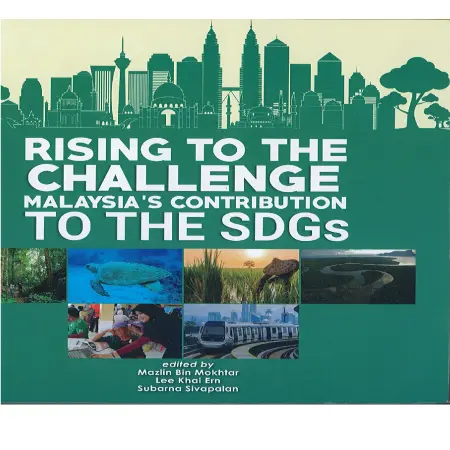
Malaysian Family Wellbeing Index
Item Type: Book Section
Editor:
Year: 00/00/2017
Abstract: Family institutions need to be strengthened to balance the rapid process of social and economic development of the country. This is important because the family is the basic social unit that prepares the supplies the human capital for the national development. Given the importance of family wellbeing for the future of the nation, scientific studies ought to be conducted to measure the wellbeing of families in this country.
|
|
|
|
|

2014 (1)
|
Malaysia's initiatives for sustainable family development
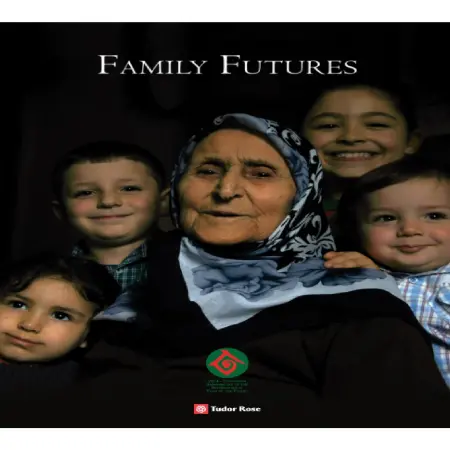
Item Type: Book Section
Editor:
Year: 01/01/2014
Abstract: Various initiatives to strengthen the family institution have been undertaken by the Government of Malaysia through the Ministry of Women, Family and Community
Development (MWFCD). Through its agency, the National Population and Family Development Board (NPFDB), the MWFCD has formulated, developed and implemented policies and programmes such as the National Family Policy,
1Malaysia Family First (1MF1st) and 1Malaysia Youth Empowerment and Support (1MYes) programmes, One-Stop Family Centres, and family education programmes such as the Strengthening of Marriage Institution (SmartStart remarriage programme), Parenting@Work, Smart Belanja@Lppkn (family financial management programme), KASIH Parenting Modules and counselling services.
To ensure sustainable family development, the National Family Policy (NFP) and its accompanying plan of action was launched in March 2011 and implemented by the NPFDB in partnership with other ministries, departments and related non-government organizations (NGOs). The aim of this explicit policy is to develop prosperous, healthy and resilient families to ensure social stability. The NFP is
a key policy that focuses on aspects of family well-being and development, providing direction for the development of family-friendly programmes and services for nurturing healthy and resilient families in line with the aspirations
of Vision 2020.
|
|
|
|
|
2011 (1)
|
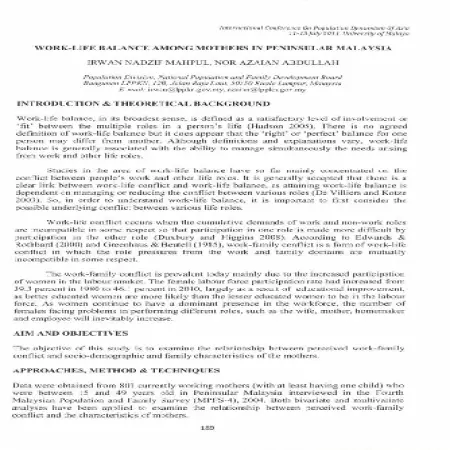
Work-life balance among mothers in Peninsular Malaysia
Item Type: Book Section
Editor:
Year: 01/01/2011
Abstract: Achieving work-family balance is dependent on managing the conflict between work and family roles. This study focuses on the prevalence of work-family conflict among mothers in Peninsular Malaysia. The objective of this study is to examine the relationship between perceived work-family conflict and socio-demographic and family characteristics of the mothers.
|
|
|
|
|