Advanced Search
|
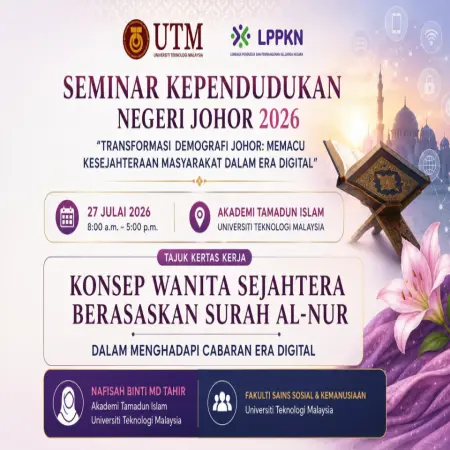
Konsep Wanita Sejahtera Berasaskan Surah Al-Nur Dalam Menghadapi Cabaran Era Digital.
Item Type: Conference or Workshop Item
Editor:
Year: 00/07/2026
Abstract: When women are well, the family institution becomes more harmonious and, in turn, contributes to the well-being of society and the nation. From an Islamic perspective, a woman's well-being is not only measured through physical, emotional, and social aspects but also includes spiritual, moral, intellectual development, as well as social responsibilities based on faith and adherence to Shariah. However, the rise of digital technology has changed the landscape of women's lives. Despite the various opportunities it offers, the digital era also brings new challenges that could affect the well-being of women, families, and society. The concept of women's well-being based on Surah Al-Nur should be translated into policies, educational modules, Islamic digital literacy, and women's empowerment programs by various stakeholders.
|
|
|
|
|
|
Navigating Johor’s Demographic Transformation: The Lived Exprerience of Nurse Turnover in Private Hospitals and its Implications for Community Wellbeing in the Digital Era
Item Type: Conference or Workshop Item
Editor:
Year: 00/07/2026
Abstract: Johor’s demographic transformation is not only about population growth; it is also unfolding inside the workforce that sustains the state’s health system. Nurse are leaving faster than they can be replaced. Each departing nurse is not merely an institutional vacancy. It is an erosion of Johor’s health-workforce capacity while facing an ageing, growing population needs it most. Retention as a strategic imperative. Sustaining Johor’s nursing workforce requires leadership excellence, cultural transformation, and investment in nurses’ professional and psychosocial needs supported, not replaced, by the tools of the digital era.
|
|
|
|
|
|
Keluarga Sebagai Mikrosistem Dalam Pembentukan Identiti Islam Remaja di Johor
Item Type: Conference or Workshop Item
Editor:
Year: 00/07/2026
Abstract: Changes in urban family lifestyles can reduce meaningful interactions between parents and teenagers. The use of devices and social media expands the sources of information and exposes teens to various values. Technology can make communication easier, but uncontrolled use can reduce face-to-face communication. Parents need to balance monitoring, trust, setting boundaries, and having dialogues with their teens. Empirical studies are needed to examine the relationship between family education and the Islamic identity of teenagers in Johor. Families need support from schools, communities, and relevant agencies to help shape teenagers who are principled, ethical, and capable of facing current challenges.
|
|
|
|
|
|
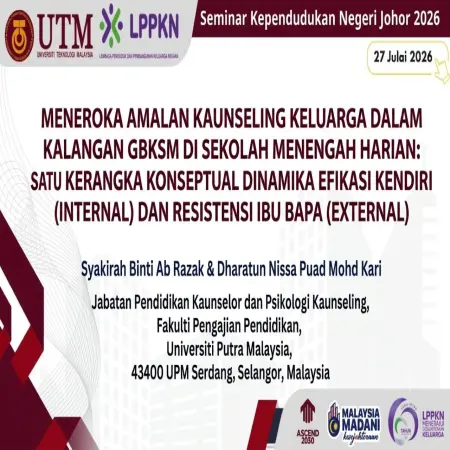
Meneroka Amalan Kaunseling Keluarga Dalam Kalangan GBKSM di Sekolah Menengah Harian: Satu Kerangka Konseptual Dinamika Efikasi Kendiri (Internal) dan Resistensi Ibu Bapa (External)
Item Type: Conference or Workshop Item
Editor:
Year: 00/07/2026
Abstract: The challenge of family counselling practice is not just a technical issue or scheduling problem. It is a profound psychological clash between GBKSM Self-Efficacy and the parent's defensive bulwark. Systemic implications of empowering GBKSM clinically alone will continue to fail if the dynamics of parental resistance and stigma are left unaddressed. Policy alignment, breaking down psychological walls is a prerequisite for achieving the goals of the Malaysia Education Plan (2026-2035) which demands full collaboration between schools, families and communities.
|
|
|
|
|
|
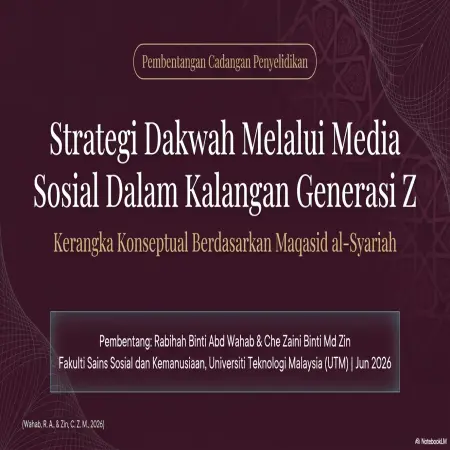
Strategi Dakwah Melalui Media Sosial Dalam Kalangan Generasi Z: Kerangka Konseptual Berdasarkan Maqasid Al-Syariah
Item Type: Conference or Workshop Item
Editor:
Year: 00/07/2026
Abstract: Conceptual and practical contribution: integrating the 3 main dimensions (Gen Z, Social Media, Maqasid) into a complete da'wah ecosystem and shifting from just popularity metrics (likes/views) to metrics of blessing and ethics. The suggestion for the next study is to test this conceptual framework empirically through field analysis (quantitative/qualitative) to measure actual changes in attitudes and religious behaviors of Generation Z.
|
|
|
|
|
|
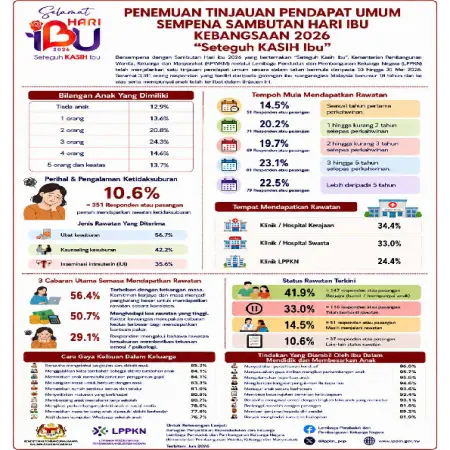
Penemuan Tinjauan Pendapat Umum Sempena Sambutan Hari Ibu Kebangsaan 2026 “Seteguh KASIH Ibu”
Item Type: Infographic
Editor:
Year: 00/06/2026
Abstract: In conjunction with the 2026 Mother's Day celebration themed “As Strong as a Mother's Love,” the Ministry of Women, Family and Community Development (MWFCD), through the National Population and Family Development Board (NPFDB), conducted an online public opinion survey from May 10 to 31, 2026. A total of 3,311 respondents, consisting of Malaysian mothers aged 18 and above who have children, participated in this survey.
|
|
|
|
|
|
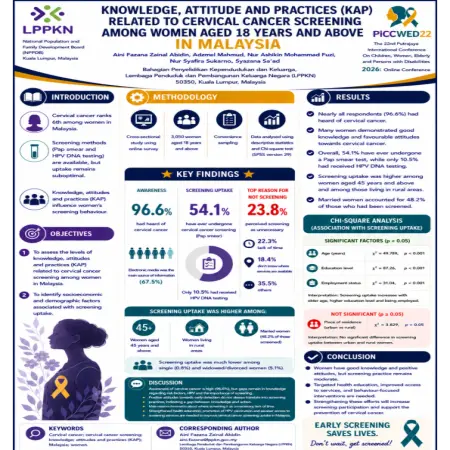
Knowledge, Attitude and Practices (KAP) related to cervical cancer screening among women Aged 18 years and above in Malaysia
Item Type: Scientific Poster
Editor:
Year: 16/05/2026
Abstract: Cervical cancer ranks 6th among women in Malaysia. Screening methods (Pap smear and HPV DNA testing) are available, but uptake remains suboptimal. Knowledge, attitudes and practices (KAP) influence women’s screening behaviour. Overall, 54.1% have ever undergone a pap smear test, while only 10.5% had received HPV DNA testing. Many women demonstrated good knowledge and favorable attitudes towards cervical cancer. Targeted health education, improved, access to services, and behaviour-focused interventions are needed.
|
|
|
|
|
|
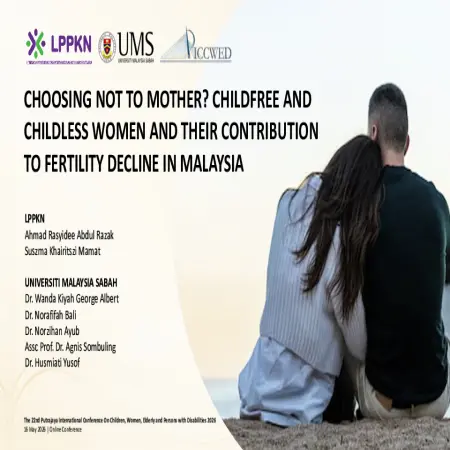
Choosing not to mother? childfree and childless women and their contribution to fertility decline in Malaysia
Item Type: Conference or Workshop Item
Editor:
Year: 16/05/2026
Abstract: In Malaysia, the Total Fertility Rate (TFR) has declined to 1.6 births per woman (2024), which is below the replacement level of 2.1. Over the past decade, the world has experienced significant demographic and cultural changes, particularly in family structures, including declining fertility rates and shifting norms around marriage. Globally, there is a growing trend of individuals choosing not to have children – not due to infertility or delayed marriage, but based on personal choice. This study aims to explore the contribution of childfree and childless women to fertility decline in Malaysia. The findings show that childfree and childless women experience non-motherhood differently, with childfree women often associating it with autonomy and emotional fulfilment, while childless women experience greater emotional vulnerability and social pressure.
|
|
|
|
|
|
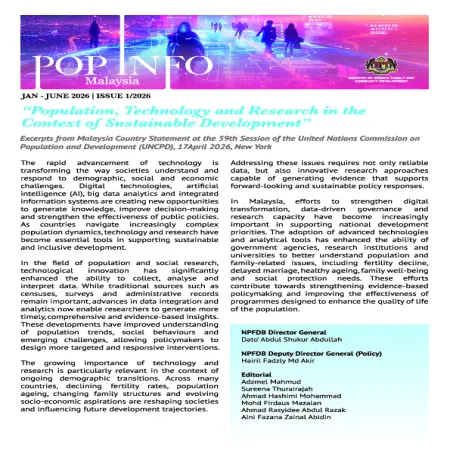
Population, Technology and Research in the Context of Sustainable Development
Item Type: Newsletter
Editor:
Year: 00/05/2026
Abstract: The rapid advancement of technology is transforming the way societies understand and respond to demographic, social and economic challenges. Digital technologies, artificial intelligence (AI), big data analytics and integrated information systems are creating new opportunies to generate knowledge, improve decision-making and strengthen the effectiveness of public policies. As countries navigate increasingly complex population dynamics, technology and research have become essential tools in supporting sustainable and inclusive development.
|
|
|
|
|
|
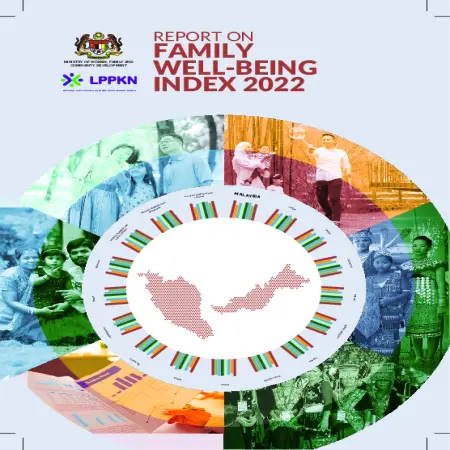
Report on Family Well-Being Index 2022
Item Type: Research Report
Editor:
Year: 00/05/2026
Abstract: Family is the foundation of a prosperous society. The well-being of the family institution is a key element in the development of a nation. Therefore, the family perspective must always be prioritised to ensure that this institution remains prosperous and continues to contribute to the country’s socio-economic development. Family well-being encompasses various dimensions that influence the harmony of a family’s life. The Family Well-Being Index 2022 (FWBI 2022) serves as an objective and scientific benchmark for monitoring the level of family well-being in Malaysia.
With a recorded score of 7.93 on a maximum scale of 10.00, FWBI 2022 indicates a moderate level of family well-being. The FWBI 2022 score shows an increase of 0.21 points (2.7%) from the FWBI 2019 score. This increase in the score was contributed by five domains that recorded scores above 8.00, namely (i) Family Relationship Domain, (ii) Family, Role of Religion, and Spiritual Practices Domain, (iii) Family and Community Involvement Domain, (iv) Family and Communication Technology Domain, and (v) Family Health Domain.
|
|
|
|
|