PUBLICATIONS
Results for Item type : "Research Report"
|
Enhancing Pregnancy Outcomes in Women with Polycystic Ovary Syndrome
Item Type: Research Report
Editor:
Year: 00/01/2023
Abstract: Polycystic ovary syndrome or known as polycystic ovarian syndrome (PCOS) is an endocrine disorder and one of the main causes of anovulatory infertility in women of reproductive age, which is 15 to 49 years (Balen et al., 2016). The main characteristics of women with PCOS are ovarian dysfunction, hyperandrogenism and polycystic ovaries (Balen and Michelmore., 2002). This syndrome is associated with metabolic syndromes such as obesity, insulin resistance, diabetes mellitus type 1 (Barthemess and Naz., 2014) and arteriosclerosis (Orio et al., 2004).
The general objective of this study is to identify the demographic characteristics, clinical and medical history, of PCOS sufferers as well as appropriate treatment methods among clients seeking fertility treatment at the LPPKN Subfertility Clinic.
This study is an experimental, case control study involving female clients who come to seek fertility treatment at the LPPKN Subfertility Clinic. The chosen location is LPPKN Headquarters, Kuala Lumpur. Every female client who attends needs to meet the patient selection criteria, namely a Malaysian couple, trying to conceive for more than a year and aged between 25 to 38 years old. Every patient who faces subfertility problem is divided into two groups, namely PCOS and no PCOS.
Patients who are eligible and agree to participate in the study have gone through at least five (5) series of appointments with medical officers and nurses. A total of 167 patients participated in this study with an average age of 30 years.
|
|
|
|
|
|
Executive Summary: youth intervention study: best practices of youth intervention programmes in Malaysia
Item Type: Research Report
Editor:
Year: 01/07/2020
Abstract: In the decades, Malaysia has undergone rapid economic, social and cultural changes which impacted not only the daily lives of its people but also their worldview and values. This is particularly so for young people, as excessive exposure to information from the social media, internet and pornography had inevitably influence their lifestyle and behaviour. The socio-cultural changes are likely associated with an increased rates of non-marital sexual activity, increased rates of sex partner change and increased rates of sexually transmitted infections (STIs). In 2005, the Ministry of Women, Family and Community Development through NPFDB introduced the PEKERTI Programme to be implemented at KafeTEEN adolescents centres. The programme provides reproductive health services, counseling services and education and skill building to promote a healthy life and inculcate positive attitudes and moral values among young people.
|
|
|
|
|
|
Report on Malaysia Family Well-Being Index 2019
Item Type: Research Report
Editor:
Year: 00/00/2020
Abstract: The Family Well -Being Index (FWI) is a multi -dimensional benchmark specially developed to measure the level of family well -being in Malaysia. This index is generated through a mother’s or father’s assessment of their family’s well -being. The 2019 Malaysian Family Well -Being Index score recorded in this study is 7.72 out of a maximum scale of 10. Of the eight domains that have been identified, the Family Relationship Domain recorded the highest domain score of 8.35. This is followed The study also found that the 2019 FWI score is increasing according to household income group. The 2019 FWI score is higher in families living in rural areas. In terms of family type, FWI 2019 scores were higher in family groups by Family Domain, Role of Religion and Spiritual Practice (8.25), Family Domain and Community Involvement (8.00), Family Safety Domain (7.86), Family Economics Domain (7.67), Family Health Domain (7.44), Housing and Environment Domain (7.35) and Family and Communication Technology Domain (6.82). Although the score of FWI 2019 is still at a moderate level but it has shown an increase of 0.39 points compared to 7.33 for FWI 2016.
|
|
|
|
|
|
Situational analysis on family planning and reproductive health education in Malaysia and other selected Muslim countries Part I: needs analysis on family planning policy Part II: reproductive health education: policy and plan of action
Item Type: Research Report
Editor:
Year: 00/00/2020
Abstract: This study is an initiative by the Ministry of Women, Family and Community Development (MWFCD) through the National Population and Family Development Board (NPFDB) in collaboration with the United Nations Population Fund (UNFPA), who has been a strategic partner of NPFDB since the 1990s in the Sexual and Reproductive Health (SRH) programmes. This study was conducted at where there are rapid changes in the population dynamics and demographic trends together with the advancement in human capacity development and new communication technologies.
It is an effort that enables the nation to achieve its commitment locally towards Malaysia’s Shared Prosperity Vision 2030 agenda and internationally, such as the ICPD Plan of Action. The objective of the study is to identify the best practices of reproductive and sexual health (SRH) programs including family planning and reproductive and sexual health education (SRHE) among selected Islamic countries that practice sunni sects to provide direction to Malaysia. Five (5) countries were selected for the purpose of comparison with Malaysia are Turkey, Egypt, Morocco and Bangladesh.
The report of this study proposes several strategies and improvements as a result of a gap analysis with other Muslim countries that can help strengthen the strategy and implementation of the National Sexual and Reproductive Health programmes to improve reproductive health indicators such as Maternal Mortality Rate, Infant Mortality Rate and Age Specific Fertility Rate, as well as reducing the number of cases of teenage pregnancy, abortion, sexual abuse and sexual crimes.
|
|
|
|
|
|
Analisis situasi kependudukan dan kekeluargaan di Malaysia
Item Type: Research Report
Editor:
Year: 01/12/2018
Abstract: The evolution of population and family policy in this country has begun since the implementation of the National Family Planning Programme by the National Family Planning Board (NFPB) in 1966. The main purpose of the programme was to reduce the population growth rate from 3% to 2% by 1985. Apart from Malaysia, other Asian countries also introduced
a family planning programme to its population in the 1960s where the earliest country to introduce the programme was India around the 1950s. As a result of the introduction of the family planning programme in the 1960s, the country’s gross birth rate has decreased from 36.7 babies in 1966 to 31.5 babies per 1,000 population in 1985. This directly makes the average annual population growth rate of the country declined from 3.0% per annum in 1966 to 2.8% per annum in 1980.
|
|
|
|
|
|
Laporan fertility at the crossroad-children now, later or never
Item Type: Research Report
Editor:
Year: 00/00/2018
Abstract: This study was to identify the socio-economic and psychological factors that influence the decision of women working in the public and private sectors to want to have children now, postpone pregnancy or do not want to have another child/children. It also to identify forms of support that can be provided by employers in an effort to create a family -friendly work environment. Nowadays, the issue of declining fertility rates is becoming a global issue, not just in among developed countries even in developing countries. Most countries have experienced fertility decline since the 1970s. United Nations Projections (UN) indicates most countries in the Asia Pacific region will experience a decline total fertility rate (TFR) until 2015-2030. Countries like China, Japan and Singapore have achieved TFR below the substitution level for decades ago. Rapid socio -economic development in Malaysia over the past five decades
has resulted in a decrease in births and deaths as well as an increase in migration. Malaysia is currently in the second phase of a demographic transition where fertility rates are increasing decreased while the percentage of the elderly population increased. Decrease in rate
mortality and fertility are closely linked to improved quality of life giving
significant impact on the growth and size of the Malaysian population.
|
|
|
|
|
|
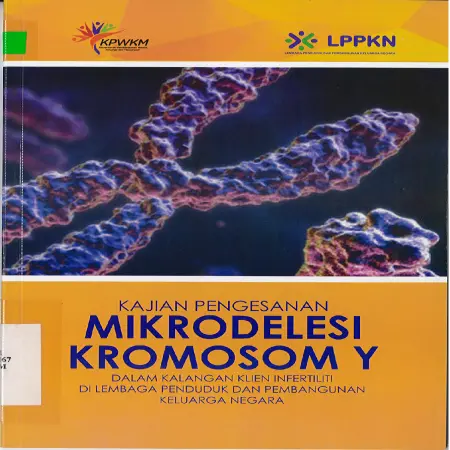
Kajian Pengesanan Mikrodelesi Kromosom Y dalam kalangan klien Infertiliti di Lembaga Penduduk dan Pembangunan Keluarga Negara
Item Type: Research Report
Editor:
Year: 02/01/2017
Abstract: The study "Microdelesi of Y Chromosome among NPFDB Infertility Clients" conducted by the Biomedical Unit, NFPDB is to identify infertility factors from a genetic aspect. Study samples were obtained from infertility patients referred to the Cytogenetic Laboratory, NPFDB from 2003 to 2010. A total of 100 blood samples of clients diagnosed as azoospermia (48), severe oligoasthenoteratozoospermia (24), oligozoospermia (15), severe oligozoospermia (6), Klinefelter Syndrome (3) and idiopathy (4) were performed Chromosome Analysis Tests to identify any abnormalities of the number and structure on the chromosome and subsequently Molecular Testing is performed to detect the microdeletion of the Y chromosome. Majority of ethnic groups involved in the study are Malays, which is 74 people (74%) followed by Chinese; nine (9) people (9%), Indians; seven (7) people (7%) and other ethnicities from Sabah and Sarawak as many as 10 people (10%) in the age range of 23 to 46 years.The chromosome analysis test results for the 100 samples were normal which is, 46, XY, no abnormalities in the structure or number of chromosomes were found. Results was found that 15 samples (15%) underwent Y chromosome microdeletion at the AZF locus in molecular test. From 15 samples, 10 samples were azoospermia, three (3) severe oligoasthenoteratozoospermia samples and two (2) oligozoospermia samples. Each sample experienced deletion at different locus and there were samples that experienced multiple deletion which involved deletion of more than one factor locus (AZF).The most common AZF factors found to experience deletion were AZFc (73.33%) followed by AZFb (53.33%), AZFd (40%) and AZFa (13.33%). In conclusion, it was found that genetic factors are one of the causes of infertility problems among clients came for subfertility treatment. Looking at the importance of undergoing genetic screening testing at an early stage, it is recommended that this test be tested for men diagnosed with azoospermia and severe oligozoospermia at the Subfertility Clinic, NPFDB. The information obtained has prognostic value and influences the medical therapy chosen to assist in the clinical management of the client and his descendant in the future.
|
|
|
|
|
|
Effects of socio-demographic, lifestyle and environmental factors on semen quality of men attending the sub fertility clinic in National Population and Family Development Board
Item Type: Research Report
Editor:
Year: 02/01/2017
Abstract: Couples are considered infertile if they are unable to conceive after one year of regular unprotected sex. The impact of lifestyle and environment on human fertility may vary depending on aetiology, demographic characteristics, genetic variation and other factors. As used by previous researchers, semen parameters were used to measure male infertility. Therefore, a decrease in semen quality is considered as a major factor in male infertility (http://en.wikipedia.org/wiki/Semen_quality). Previous studies (Kidd et al.2001,Eskenazi et al.2003, de La Rochebrochard and Thonneau 2003) have found that older men tend to have lower semen quality than younger ones. Testicular hyperthermia (elevated temperature) also has been known to affect male fertility. Men who like taking hot baths or sit in a sedentary position for a long time are at risk of having infertility. The objectives of this study are to identify the relationship between socio-demographic profile, lifestyle and environmental factors and semen quality, and to identify risk factors of poor semen quality among men attending the National Population and Family Development Board's (NPFDB) Subfertility Clinic. This study was done in Andrology Laboratory, NPFDB. Five hundred men from couples having their first infertility consultation between September 2010 abd June 2011 were recruited. Each patient was required to register, deposit semen and fill in the quesstionnaire. Sperm concentration, morphology and motility from semen analysis were used to study the relationship between semen quality and independent variables. Reference limits used were 15 cells x 10'6/ml, 4% and 40 %, respectively (World Health Organization, 2010). For statistical analysis, descriptive statistic, t test and ANOVA were used; 0.05 alpha value was chosen. Results showed that one-third of the study population were between 26 to 30 years of age and another one third were aged between 31 to 35 years old; mean age was 33.2. majority were Malays (71.2%), resided in Selangor (64.3%) and professionals (41.6%). Semen quality showed a negative relationship (p<0.05) with age. Meanwhile, sperm motility varied significantly for different ethnic group. Chinese (57.75%) had the highest motile-sperm compared to Malays (53.44%) and Indians (46.60%). Among lifestyles variables, frequency of sexual intercourse had a posive relationship (p<0.05) with sperm motility, whilst sedentary position had negative relationship (p<0.05) with the latter. Regression analysis was used to predict the risk factors of poor semen quality. This study found that men above 30 years old were two times more likely to have low sperm motility than men in the twenties. Moreover, less frequent sexual activity between couples was more likely (p<0.05) to have abnormal sperm compared to those who had sexual intercourse more frequently. In conclusion, this study suggested that age over 30 years and infrequent sexual activity were the risk factors to lower semen quality. Even though not regarded as a risk factor, sedentary work position had a negative impact on sperm motility. These factors may affect male fertility and cause difficulty in conception. Public awareness through advocacy programs and talks on infertility and its risk factors should be carried out regularly. Public education should be carried out to advice men to practice a healthy lifestyle and work life balance. This study has shown encouraging results, and should be replicated in the general population in Malaysia
|
|
|
|
|
|
Kajian perbandingan penggunaan tiga jenis rawatan hormon FSH dalam kalangan pesakit subfertiliti yang menjalani prosedur permanian beradas di Lembaga Penduduk dan Pembangunan Keluarga Negara
Item Type: Research Report
Editor:
Year: 02/01/2017
Abstract: Since 1979, the National Population and Family Development Board (NPFDB) has been providing subfertility management services to the public especially middle-income group. In line with the rapid pace of the latest technology and research developments, there are various types of fertility drugs in the form of injections which had been used in subfertility treatment. The main function of this injection is to mature the follicles where the main hormone contained in this injection is the follicle stimulating hormone (Follicle Stimulating Hormone, FSH). In general, there are three types of FSH injections, which is a recombinant FSH (rFSH) that have 100 percent synthetic hormone, urinary FSH (uFSH) that derived from menopausal urine and highly purified urinary FSH (hp-uFSH) that also derived from menopausal urine but more pure state than uFSH. All three hormones have FSH’s activities but uFSH and hp-uFSH also have Luteinizing Hormone’s activity (LH). Thus, NPFDB has taken initiative to conduct a comparative study on the use of three types of FSH hormone treatment, namely Gonal F (rFSH), Folliova (uFSH) and Menopur (hp-uFSH), among subfertilitie’s patient who’s undergoing Intrauterine Insemination Technique (IUI). Among others, the three types of hormones were studied in terms of effevtivenee and cost burden. The study sample was from patients with unknown cause of subfertilitie’s problem and they visit NPFDB Subfertilitie’s Clinic, Headquarters, from June 2010 to May 2012. The sampling method was random. The patient and researcher do not know the treatment regimen to be initiated until a closed sample containing the treatment regimen code number is opened by the patient before starting treatment. Data were collected, recorded and anlyzed using Statistical Package for the Social Sciences (SPSS) software. Although originally a total of 90 female patients were targeted to be recruited into this study. 30 patients for each type of FSH hormone, but at the end of the study only 39 patients met all eligibility criteria and agreed to participate in this study. The result showed that average of the patients was 28.3 years and the majority were ethnic Malays (76.9%). Most of the patients had a household income between RM 5,000.00 and RM 10,000.00 (51.4%). The percentage of patients requiring more than three injections to procedure mature follicles was lowest for Folliova (41.7%), compared with Menopur (50.0%) and Gonal F (55.6%). Similarly in terms of the number of follicles produced, the Folliova regime (58.3%) produced more follicles (more than three follicles) than other regimes. A total of 16.7 percent of patients who took Menopur injections were confirmed pregnant, while no pregnany occurred among patients who took Folliova and Gonal F. In terms of cost, at the time of this study, the price of three 75IU injections was RM 334.20 for Gonal F, RM 187.20 for Folliova and RM 271.20 for Menopur. In conclusion, this study shows that, hp-uFSH (Menopur) gives the highest pregnancy rate compared to Gonal F and Folliova. Furthemore, the price of Menopur is moderate (affordable) for patients. Therefore, highly purified urinary FSH is a good gonadotropin choice for couples with unexplained subfertility undergoing an IUI procedure and it may be the main choice for patients who need a combination fertility pill stimulation regimen and gonadotropin injections. As a suggestion, such a study should be conducted with a larger sample size to obtain more significant results and be representative of actual population.
|
|
|
|
|
|
Report on Malaysian Family Well-Being Index 2016
Item Type: Research Report
Editor:
Year: 00/00/2017
Abstract: The NPFDB (2011) defined family well-being as a safe, healthy, comfortable, harmonious and satisfying family condition. This definition covers various aspects, such as spiritual satisfaction and comfort in respect of their economy and finance; mental, psychosocial, and health; political: and sustainability. Family Well-Being Index (FWBI) 2016 measured the level of family well-being through a household's assessment by the father or mother regarding the well-being of their families. This index examined the level of well-being in terms of family relationships, family economy, family relationships, family economy, family health, family safety, family and community involvement, religious and spiritual practices, housing and the environment, and family and communications technologies in the country. The overall FWBI 2016 score was 7.33 out of a maximum score of 10.
|
|
|
|
|