Browse by Subject
|
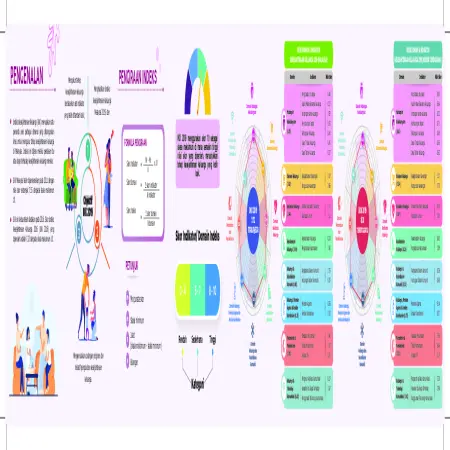
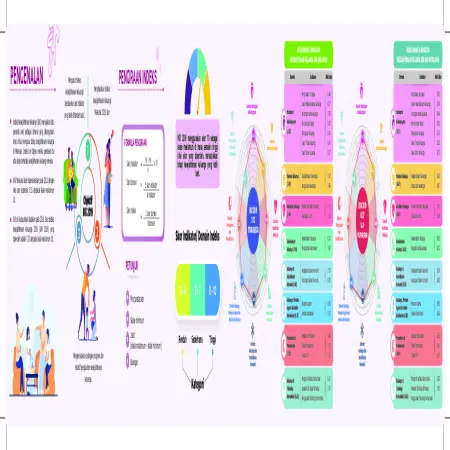
Indeks Kesejahteraan Keluarga Malaysia 2019 (IKK 2019) Negeri Terengganu
Item Type: Infographic
Editor:
Year: 00/00/2021
Abstract: The Family Well -Being Index (FWBI) is a multi -dimensional benchmark specially developed to measure the level of family well -being in Malaysia. This index is generated through a mother’s or father’s assessment of their family’s well-being. The Family Well-Being Index Score for Terengganu was 8.10 from a maximum score of 10, which was at the high level.
|
|
|
|
|
|
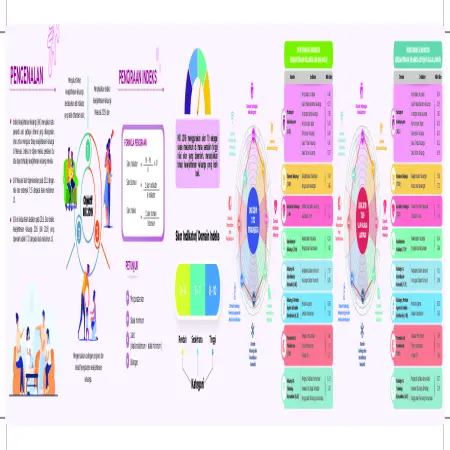
Indeks Kesejahteraan Keluarga Malaysia 2019 (IKK 2019) Wilayah Persekutuan Kuala Lumpur
Item Type: Infographic
Editor:
Year: 00/00/2021
Abstract: The Family Well -Being Index (FWBI) is a multi -dimensional benchmark specially developed to measure the level of family well -being in Malaysia. This index is generated through a mother’s or father’s assessment of their family’s well-being. The Family Well-Being Index Score for the Federal Territory of Kuala Lumpur was 7.59 from a maximum score of 10, which was at the moderate level.
|
|
|
|
|
|
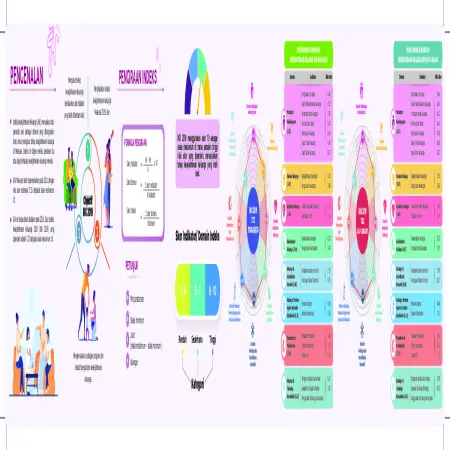
Indeks Kesejahteraan keluarga Malaysia 2019 (IKK 2019) Wilayah Persekutuan Labuan
Item Type: Infographic
Editor:
Year: 00/00/2021
Abstract: The Family Well -Being Index (FWBI) is a multi -dimensional benchmark specially developed to measure the level of family well -being in Malaysia. This index is generated through a mother’s or father’s assessment of their family’s well-being. The Family Well-Being Index Score for the Federal Territory of Labuan was 7.82 from a maximum score of 10, which was at the moderate level.
|
|
|
|
|
|
Indeks Kesejahteraan keluarga Malaysia 2019 (IKK 2019) Wilayah Persekutuan Putrajaya
Item Type: Infographic
Editor:
Year: 00/00/2021
Abstract: The Family Well -Being Index (FWBI) is a multi-dimensional benchmark specially developed to measure the level of family well -being in Malaysia. This index is generated through a mother’s or father’s assessment of their family’s well-being. The Family Well-Being Index Score for the Federal Territory of Putrajaya was 8.37 from a maximum score of 10, which was at the high level.
|
|
|
|
|
|
Keluarga dan cabaran norma baharu
Item Type: Conference or Workshop Item
Editor:
Year: 00/00/2021
Abstract: This slide describes the current situation in family institutions during the pre-pandemic COVID-19, by also showing the pattern of family well-being in the country through the Malaysian Family Well-Being Index (FWBI), a special measure introduced by the National Population and Family Development Board (NPFDB) since 2011. Despite the increase in scores in the third series of FWBI in 2019, the situation in family institutions seems to have changed with the onset of the COVID-19 epidemic in the country in early 2020. Sensitive to the increasing number of daily cases of the effects of the COVID-19 pandemic wave in the country, NPFDB has conducted a series of online public opinion poll studies to know some aspects of life including (i) the current situation of the pandemic era family; (ii) the family's behavior in facing a pandemic situation (iii) the role of mothers and fathers in the family during a pandemic; (iv) the level of well -being of mothers and fathers in the family institution; and (iv) the challenges and preparation of parents related to the use of digital technology. The results of this survey have been used as the main input to assist the Ministry of Women, Family and Community Development (MWFCD), especially NPFDB to develop appropriate programs and services as well as disseminate findings through existing social media platforms to the general public. Various initiatives including economic and social stimulus packages have been implemented by the Government to address the issue of the COVID-19 pandemic, particularly to the affected groups, in line with the "No One Left Behind" statement. With the allocation that has been channeled, MWFCD through its agencies including the Social Welfare Department (JKM) and NPFDB has intensified efforts to help the affected target groups, in addition to continuing existing activities, programs and services. In general, these stimulus and assistance packages have not only had a positive impact on economic recovery, but also on the social development of the community. Recently, with the concept of "Malaysian Family" introduced by YAB Dato 'Sri Ismail Sabri Yaakob, the Prime Minister of Malaysia is seen to be able to be a medium for the unification of society across religious, racial and ethnic boundaries to work together to solve the big problems facing the country when this. In addition, it can indirectly help further strengthen the family institution, as a basic unit that produces quality human capital for national development.
|
|
|
|
|
|
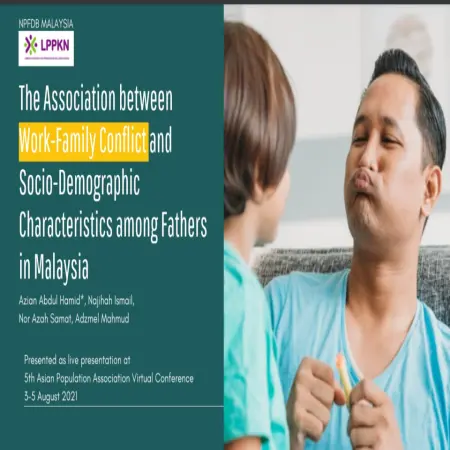
The association between work family conflict and social demographic characteristics among fathers in Malaysia
Item Type: Conference or Workshop Item
Editor:
Year: 00/00/2021
Abstract: Those living in urban, Indian, age 30-44 years, higher educational level, single father, and non Muslim’s tend to face Work Family Conflict than their counterparts. More hectic/busy environment and higher cost of living in urban area compared to the rural area may contribute to the Work Family Conflict among fathers.
|
|
|
|
|
|
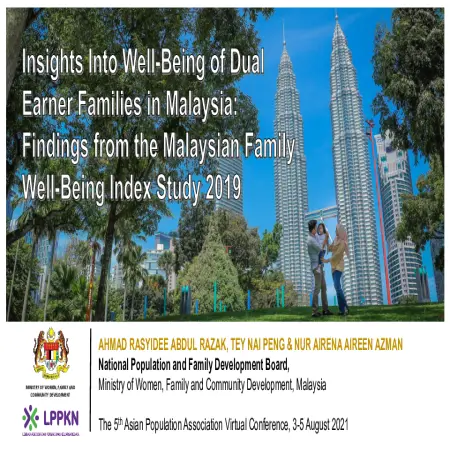
Insights into the well-being of dual earner families in Malaysia: findings from the Malaysian Family Well-Being Index Study 2019
Item Type: Conference or Workshop Item
Editor:
Year: 00/00/2021
Abstract: Traditionally, GDP has been used as a measure of a country’s level of development, and the quality of life of citizens. Of late, the happiness index has gained increasing attention, as a measure of well-being, to include income distribution and non-financial aspects, such religious and spiritual well-being, and inter-personal relationship. Malaysia has conducted three rounds of the family well-being surveys to provide inputs for the five-year development plans. The overall family well-being score among dual earner families in Malaysia was 7.84 out of a maximum scale of 10, which is at the moderate level.
|
|
|
|
|
|
Kajian masa depan mengenai matlamat kependudukan 70 juta dan hubungannya dengan pembangunan umat digital di Malaysia
Item Type: Book Section
Editor:
Year: 00/00/2021
Abstract: This paper highlights the discussion of future studies on the population goal of 70 million people and its relationship with the development of the digital community in Malaysia. The total population of Malaysia is still small which is 32.75 million in the first quarter of 2021 with an area of 334,000 square kilometers. The rationale for achieving the population goal of 70 million is to provide a base of demand and market for the products of local industries in addition to receiving many greater benefits and preparing Muslims towards mastering technology.
|
|
|
|
|
|
Keluarga dan cabaran norma baharu
Item Type: Book Section
Editor:
Year: 00/00/2021
Abstract: This paper describes the current situation in family institutions during the pre-pandemic period of Covid-19 by also showing the pattern of family well-being in the country through the Malaysian Family Well-being Index (FWI), a special measurement that has been introduced by the National Population and Family Development Board (NPFDB) since 2011. Although there was an increase in scores in the third series of FWI in 2019, the situation in family institutions seemed to change with the start of the outbreak of the Covid-19 in the country at the beginning of 2020.
|
|
|
|
|