Browse by Division/Agency
|
Laporan Research-To-Development (R2D) Badan Pendamai LPPKN
Item Type: Report
Editor:
Year: 00/06/2026
Abstract: Recognizing the importance of strengthening the institution of marriage and family stability in facing today's social challenges, the National Population and Family Development Board (LPPKN) conducted a Research-to-Development (R2D) session focusing on the development and strengthening of the LPPKN Mediation Body. This initiative is part of the post-LPPKN Research Grant (GP LPPKN) 2025 efforts to ensure that research findings don't just stay at the academic level, but are translated into policy recommendations, programs, and practical interventions. Through the R2D session, several strategic outcomes are expected, including improvements to the guidelines and standard operating procedures (SOPs) of the Mediation Body, the development of a more comprehensive intervention model covering both pre- and post-divorce phases, and the strengthening of early mediation approaches as a more effective conflict prevention mechanism.
|
|
|
|
|
|
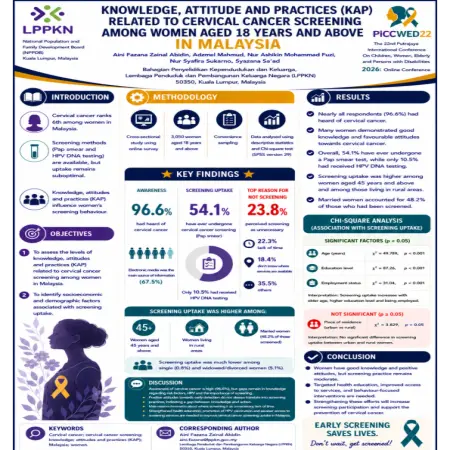
Knowledge, Attitude and Practices (KAP) related to cervical cancer screening among women Aged 18 years and above in Malaysia
Item Type: Scientific Poster
Editor:
Year: 16/05/2026
Abstract: Cervical cancer ranks 6th among women in Malaysia. Screening methods (Pap smear and HPV DNA testing) are available, but uptake remains suboptimal. Knowledge, attitudes and practices (KAP) influence women’s screening behaviour. Overall, 54.1% have ever undergone a pap smear test, while only 10.5% had received HPV DNA testing. Many women demonstrated good knowledge and favorable attitudes towards cervical cancer. Targeted health education, improved, access to services, and behaviour-focused interventions are needed.
|
|
|
|
|
|
Choosing not to mother? childfree and childless women and their contribution to fertility decline in Malaysia
Item Type: Conference or Workshop Item
Editor:
Year: 16/05/2026
Abstract: In Malaysia, the Total Fertility Rate (TFR) has declined to 1.6 births per woman (2024), which is below the replacement level of 2.1. Over the past decade, the world has experienced significant demographic and cultural changes, particularly in family structures, including declining fertility rates and shifting norms around marriage. Globally, there is a growing trend of individuals choosing not to have children – not due to infertility or delayed marriage, but based on personal choice. This study aims to explore the contribution of childfree and childless women to fertility decline in Malaysia. The findings show that childfree and childless women experience non-motherhood differently, with childfree women often associating it with autonomy and emotional fulfilment, while childless women experience greater emotional vulnerability and social pressure.
|
|
|
|
|
|
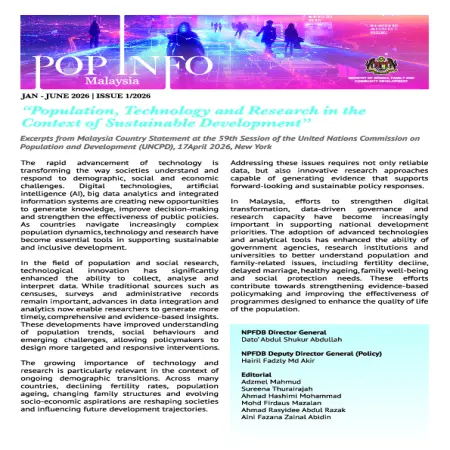
Population, Technology and Research in the Context of Sustainable Development
Item Type: Newsletter
Editor:
Year: 00/05/2026
Abstract: The rapid advancement of technology is transforming the way societies understand and respond to demographic, social and economic challenges. Digital technologies, artificial intelligence (AI), big data analytics and integrated information systems are creating new opportunies to generate knowledge, improve decision-making and strengthen the effectiveness of public policies. As countries navigate increasingly complex population dynamics, technology and research have become essential tools in supporting sustainable and inclusive development.
|
|
|
|
|
|
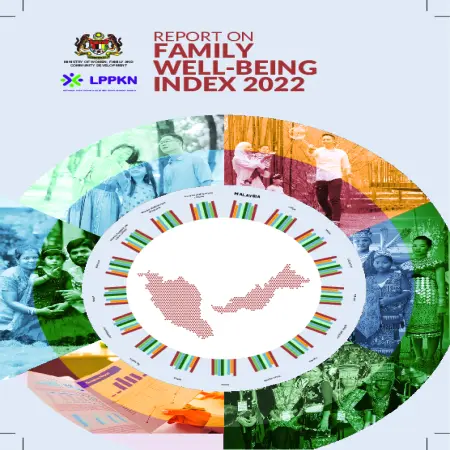
Report on Family Well-Being Index 2022
Item Type: Research Report
Editor:
Year: 00/05/2026
Abstract: Family is the foundation of a prosperous society. The well-being of the family institution is a key element in the development of a nation. Therefore, the family perspective must always be prioritised to ensure that this institution remains prosperous and continues to contribute to the country’s socio-economic development. Family well-being encompasses various dimensions that influence the harmony of a family’s life. The Family Well-Being Index 2022 (FWBI 2022) serves as an objective and scientific benchmark for monitoring the level of family well-being in Malaysia.
With a recorded score of 7.93 on a maximum scale of 10.00, FWBI 2022 indicates a moderate level of family well-being. The FWBI 2022 score shows an increase of 0.21 points (2.7%) from the FWBI 2019 score. This increase in the score was contributed by five domains that recorded scores above 8.00, namely (i) Family Relationship Domain, (ii) Family, Role of Religion, and Spiritual Practices Domain, (iii) Family and Community Involvement Domain, (iv) Family and Communication Technology Domain, and (v) Family Health Domain.
|
|
|
|
|
|
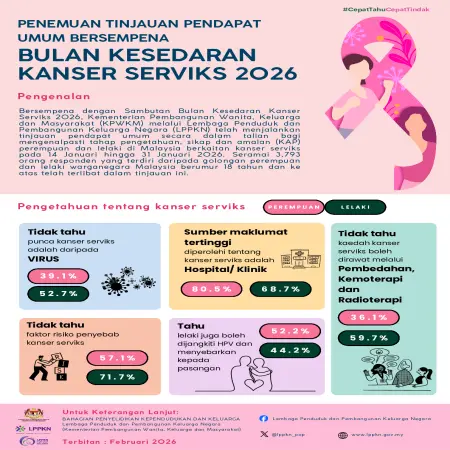
Penemuan Tinjauan Pendapat Umum Bersempena Bulan Kesedaran Kanser Serviks 2026
Item Type: Infographic
Editor:
Year: 00/02/2026
Abstract: In conjunction with the 2026 Cervical Cancer Awareness Month, the Ministry of Women, Family and Community Development (MWFCD), through the National Population and Family Development Board (NPFDB), conducted an online public opinion survey to identify the level of knowledge, attitudes, and practices (KAP) of women and men in Malaysia regarding cervical cancer from January 14 to January 31, 2026. A total of 3,793 respondents, consisting of Malaysian men and women aged 18 and above, participated in this survey.
|
|
|
|
|
|
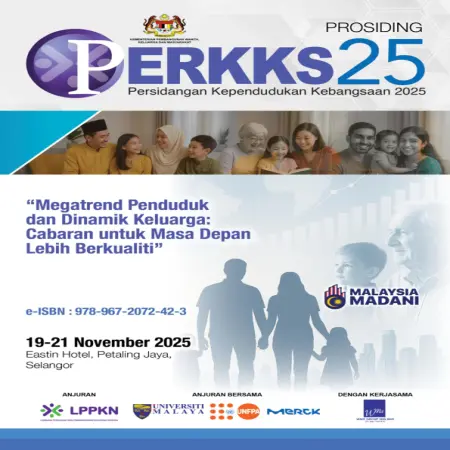
Prosiding Persidangan Kependudukan Kebangsaan 2025 (PERKKS 25): “Megatrend Penduduk dan Dinamik Keluarga: Cabaran untuk Masa Depan Lebih Berkualiti”
Item Type: Book
Editor:
Year: 13/01/2026
Abstract: Collection of papers presented during the 2025 National Population Conference (PERKKS 25), 19-21 November 2025, Eastin Hotel, Petaling Jaya, Selangor.
|
|
|
|
|
|
Country context and family research : trends from Malaysia
Item Type: Conference or Workshop Item
Editor:
Year: 00/01/2026
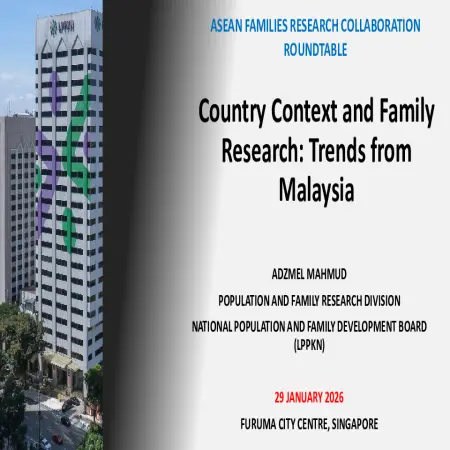
Abstract: Malaysia demographic transition: youth population shrinking, senior population growing and Malaysia entering an ageing society. Senior live longer, creating higher dependency ratios. For marriage and family trends there are declining marriage rates, delayed family formation. Divorce rates increasing, reshaping household stability. For household structure it shift from extended families to smaller nuclear households. Rising living costs discourage larger families. For fertility, Total Fertility Rate (TFR) is now below the replacement level (2.1)
|
|
|
|
|
|
Penemuan tinjauan pendapat umum bersempena November Bulan Keluarga Kebangsaan 2025
Item Type: Infographic
Editor:
Year: 00/12/2025
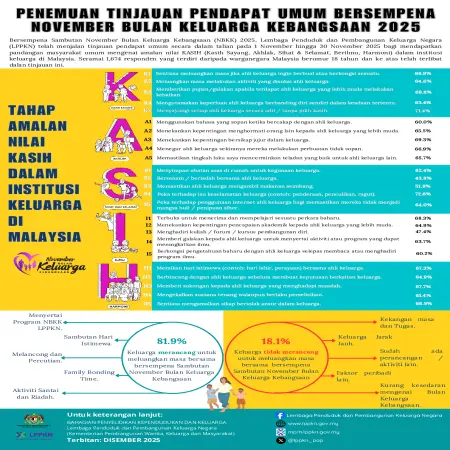
Abstract: In conjunction with the November National Family Month (NBKK) Celebration 2025, the National Population and Family Development Board (NPFDB) conducted an online public opinion survey from 1 November to 30 November 2025 to gather the public's views on the practice of the KASIH values (Love, Morality, Health & Safety, Knowledgeable, Harmony) within family institutions in Malaysia. A total of 1,674 respondents, consisting of Malaysian citizens aged 18 and above, participated in this survey.
|
|
|
|
|
|
Dasar KASIH Keluarga Negara
Item Type: Act & Policy
Editor:
Year: 00/12/2025
Abstract: DKKN is a comprehensive social policy framework that recognizes the family as the basic unit of social stability and national resilience, especially in facing the challenges of socio-economic change, demographic transition and the impact of digital transformation on community life. This policy aims to strengthen the role of all family members as the pillar of balance in the family institution to ensure social stability.
|
|
|
|
|