Browse by Author
|
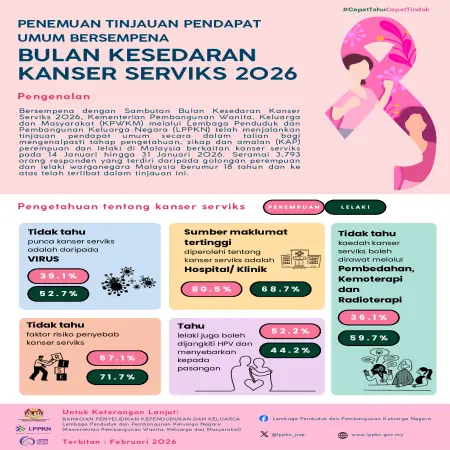
Penemuan Tinjauan Pendapat Umum Bersempena Bulan Kesedaran Kanser Serviks 2026
Item Type: Infographic
Editor:
Year: 00/02/2026
Abstract: In conjunction with the 2026 Cervical Cancer Awareness Month, the Ministry of Women, Family and Community Development (MWFCD), through the National Population and Family Development Board (NPFDB), conducted an online public opinion survey to identify the level of knowledge, attitudes, and practices (KAP) of women and men in Malaysia regarding cervical cancer from January 14 to January 31, 2026. A total of 3,793 respondents, consisting of Malaysian men and women aged 18 and above, participated in this survey.
|
|
|
|
|
|
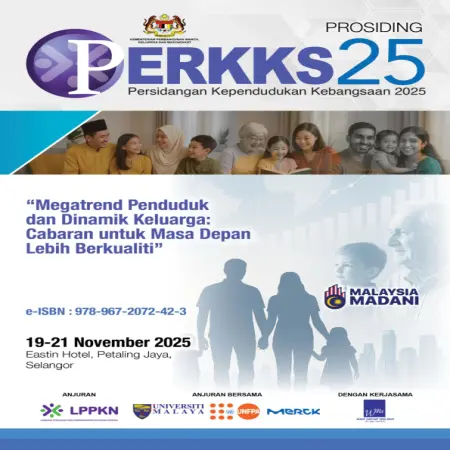
Prosiding Persidangan Kependudukan Kebangsaan 2025 (PERKKS 25): “Megatrend Penduduk dan Dinamik Keluarga: Cabaran untuk Masa Depan Lebih Berkualiti”
Item Type: Book
Editor:
Year: 13/01/2026
Abstract: Collection of papers presented during the 2025 National Population Conference (PERKKS 25), 19-21 November 2025, Eastin Hotel, Petaling Jaya, Selangor.
|
|
|
|
|
|
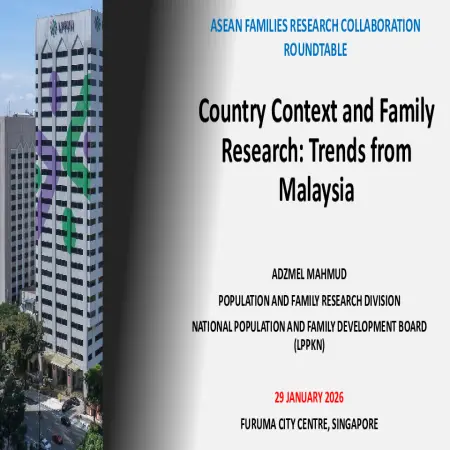
Country context and family research : trends from Malaysia
Item Type: Conference or Workshop Item
Editor:
Year: 00/01/2026
Abstract: Malaysia demographic transition: youth population shrinking, senior population growing and Malaysia entering an ageing society. Senior live longer, creating higher dependency ratios. For marriage and family trends there are declining marriage rates, delayed family formation. Divorce rates increasing, reshaping household stability. For household structure it shift from extended families to smaller nuclear households. Rising living costs discourage larger families. For fertility, Total Fertility Rate (TFR) is now below the replacement level (2.1)
|
|
|
|
|
|
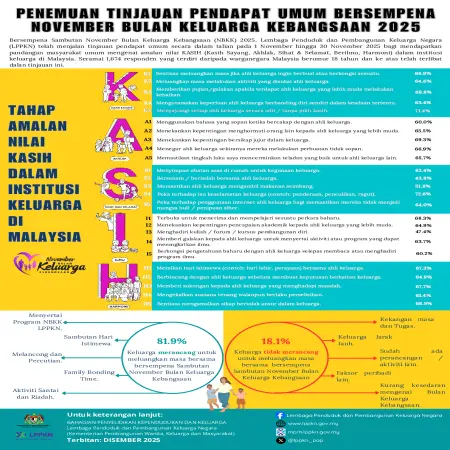
Penemuan tinjauan pendapat umum bersempena November Bulan Keluarga Kebangsaan 2025
Item Type: Infographic
Editor:
Year: 00/12/2025
Abstract: In conjunction with the November National Family Month (NBKK) Celebration 2025, the National Population and Family Development Board (NPFDB) conducted an online public opinion survey from 1 November to 30 November 2025 to gather the public's views on the practice of the KASIH values (Love, Morality, Health & Safety, Knowledgeable, Harmony) within family institutions in Malaysia. A total of 1,674 respondents, consisting of Malaysian citizens aged 18 and above, participated in this survey.
|
|
|
|
|
|
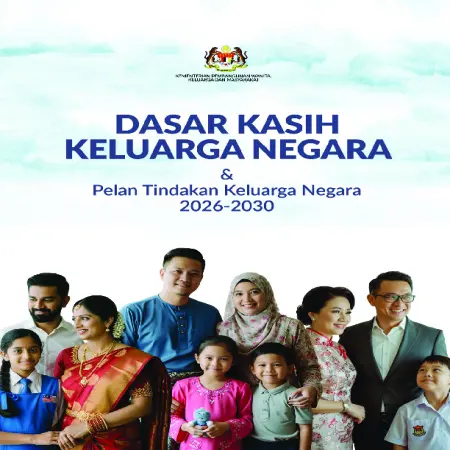
Dasar KASIH Keluarga Negara
Item Type: Act & Policy
Editor:
Year: 00/12/2025
Abstract: DKKN is a comprehensive social policy framework that recognizes the family as the basic unit of social stability and national resilience, especially in facing the challenges of socio-economic change, demographic transition and the impact of digital transformation on community life. This policy aims to strengthen the role of all family members as the pillar of balance in the family institution to ensure social stability.
|
|
|
|
|
|
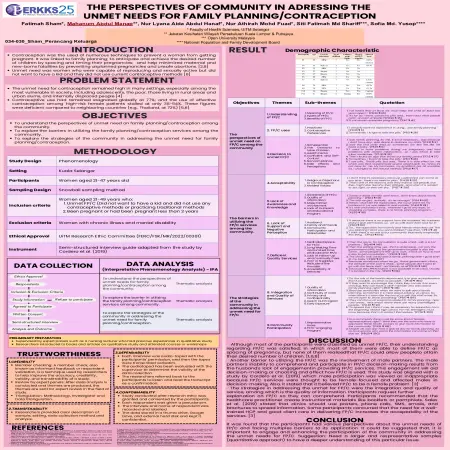
The perspectives of community in addressing the unmet needs for family planning/contraception
Item Type: Scientific Poster
Editor:
Year: 00/11/2025
Abstract: Contraception was the used of numerous techniques to prevent a woman from getting pregnant it was linked to family planning; to anticipate and achieve the desired number of children by spacing and timing their pregnancies; and help minimized maternal and new-borns fatalities by preventing unplanned pregnancies and unsafe abortions. Unmet need was women who were capable of reproducing and sexually active but did not want to have a kid and they did not use current contraceptive methods. Objectives of this study are to understand the perspectives of unmet need on family planning/contraception among the community; to explore the barriers in utilizing the family planning/contraception services among the community and to explore the strategies of the community in addressing the unmet need for family planning. It was found that the participants had various perspectives about the unmet needs of family planning/contraception and facing multiples barriers to its application. It could be suggested that, it is important to engage and enhancing the participation of the community in addressing the unmet needs for family planning/contraception.
|
|
|
|
|
|
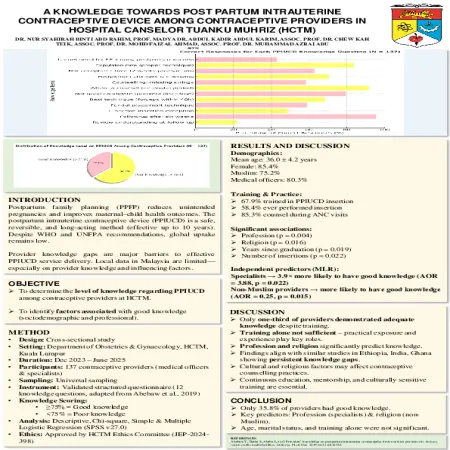
A knowledge towards post partum intrauterine contraceptive device among contraceptive providers in Hospital Canselor Tuanku Muhriz (HCTM)
Item Type: Scientific Poster
Editor:
Year: 00/11/2025
Abstract: Postpartum family planning (PPFP) reduces unintended pregnancies and improves maternal-child health outcomes. The postpartum intrauterine contraceptive device (PPIUCD) is a safe, reversible, and long-acting method(effective up to 10 years). Despite WHO and UNFPA recommendations, global uptake remains low. Objectives of this study are to determine the level of knowledge regarding PPIUCD among contraceptive providers at HCTM and to identify factors associated with good knowledge (Sociodemographic and professional). Conclusion only 35.8% of providers had good knowledge.
|
|
|
|
|
|
Coconut water: a natural remedy unlocking new hope for male fertility
Item Type: Scientific Poster
Editor:
Year: 00/11/2025
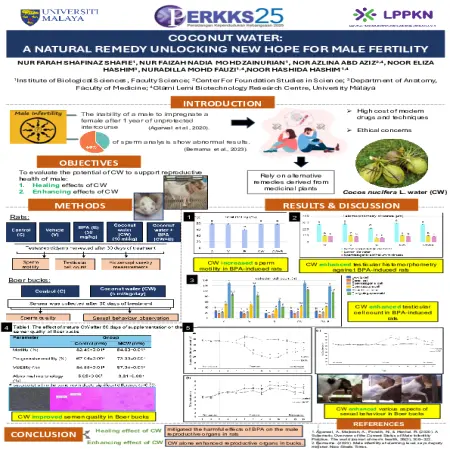
Abstract: Male infertility are the inability of a men to impregnate a female after 1 year of unprotected intercourse. It high course of modern drugs and techniques to heal and involve ethical concerns. Then rely in alternative remedies derived from medicinal plants. Objectives of this study are to evaluate the potential of coconut water to support reproductive health of male for healing effects of coconut water and enhancing effects of coconut water. The conclusion oh healing effect of coconut water are mitigated the harmful effects of BPA on the male reproductive organs in rats. Enhancing effects of coconut water is coconut water alone enhanced reproductive organs in bucks.
|
|
|
|
|
|
Understanding children with autism in Asean and Malaysia through a public health lens: a scoping review of current research
Item Type: Scientific Poster
Editor:
Year: 00/11/2025
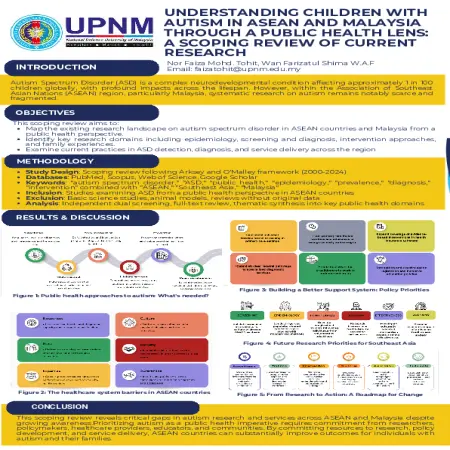
Abstract: Autism Spectrum Disorder (ASD) is a complex neurodevelopmental condition affecting approximately 1 in 100 children globally, with profound impacts across the lifespan. However. Within the Association of Southeast Asian Nations (ASEAN) region, particularly Malaysia, systematic research on autism remains notably scarce and fragmented. This scoping review reveals critical gaps in autism research and services across ASEAN and Malaysia despite growing awareness. Prioritizing autism as a public health imperative requires commitment from researchers, policymakers, healthcare providers, educators, and communities. By committing resources to research, policy development, and service delivery, ASEAN countries can substantially improve outcomes for individuals with autism and their families.
|
|
|
|
|
|
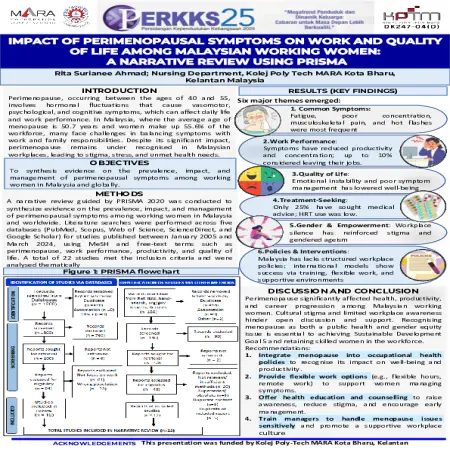
Impact of perimenopausal symptoms on work and quality of life among Malaysian working women: a narrative review using prisma
Item Type: Scientific Poster
Editor:
Year: 00/11/2025
Abstract: Perimenopause, occurring between the ages of 40 and 55, involves hormonal fluctuations that cause vasomotor, psychological, and cognitive symptoms, which can affect daily life and work performance. In Malaysia, where the average age of menopause is 50.7 years and women make up 55.6% of the workforce, many face challenges in balancing symptoms with work and family responsibilities. Despite its significant impact, perimenopause remains under recognised in Malaysian workplaces, leading to stigma, stress and unmet health needs.
|
|
|
|
|