Browse by Author
|
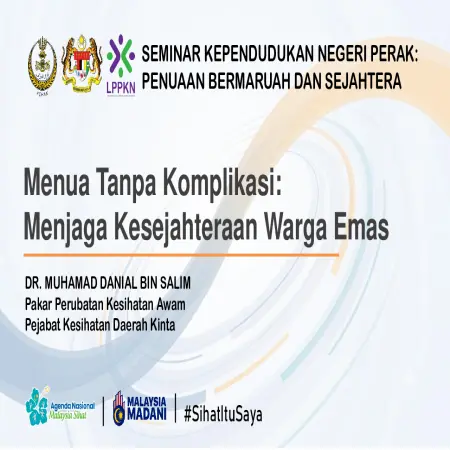
Menua Tanpa Komplikasi: Menjaga Kesejahteraan Warga Emas
Item Type: Conference or Workshop Item
Editor:
Year: 00/08/2026
Abstract: Ageing is a normal biological process, but disease complications can be prevented. Older people age well if they meet all of the following: strong social support; no cognitive limitations; no depression; able to live independently in daily activities; and have no chronic diseases or well-controlled chronic conditions. Preparing to age healthily doesn’t start at 60. It’s a lifestyle investment that begins when you’re young.
|
|
|
|
|
|
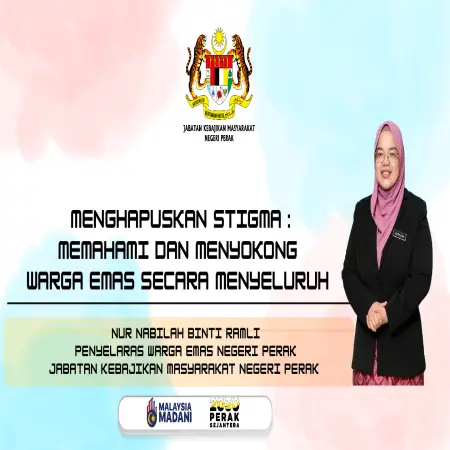
Menghapuskan Stigma: Memahami dan Menyokong Warga Emas Secara Menyeluruh
Item Type: Conference or Workshop Item
Editor:
Year: 00/08/2026
Abstract: Malaysia needs to have a structured policy in terms of social support and elderly welfare, as well as plan a sustainable financial support system before becoming an aging nation. This planning aims to ensure that everyone can have a healthy and prosperous life in their later years. The National Elderly Policy (DWEN) and the National Elderly Action Plan (PTWEN) 2026-2030 are Malaysia's official commitment to creating independent, dignified, and well-being elderly citizens.
|
|
|
|
|
|
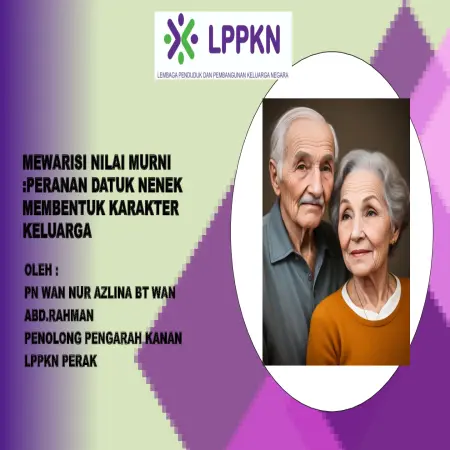
Mewarisi Nilai Murni: Peranan Datuk Nenek Membentuk Karakter Keluarga
Item Type: Conference or Workshop Item
Editor:
Year: 00/08/2026
Abstract: The definition of successful ageing is an individual who has a high level of social support, no cognitive limitations, no depression (mental issues), is able to be independent in daily activities, and has no chronic or controlled illnesses. The role of grandparents in building family character includes being a source of advice and guidance; emotional support (for children, in-laws, grandchildren); introducing traditions and culture; sharing ideas and experiences; taking care of grandchildren; and instilling good values and discipline.
|
|
|
|
|
|
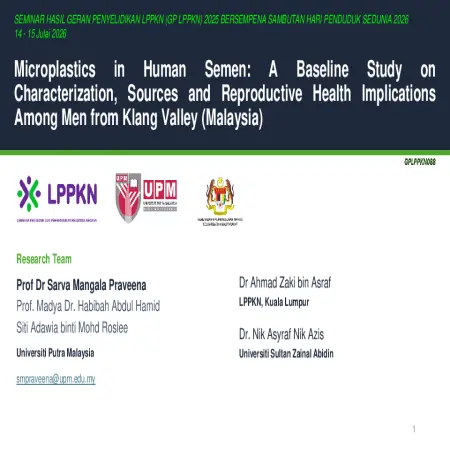
Microplastics in Human Semen: A Baseline Study on Characterization, Sources and Reproductive Health Implications Among Men from Klang Valley (Malaysia)
Item Type: Conference or Workshop Item
Editor:
Year: 00/07/2026
Abstract: These microplastics (MPs) have been identified as concerning pollutants due to their presence being documented in several human biological matrices, including blood, placenta, lung tissue, feces, and more recently, semen. This study is the first systematic research in Malaysia to assess the presence of MPs in male semen and their relationship with semen quality. These findings directly benefit LPPKN by strengthening the evidence base on environmental factors affecting reproductive health and align with the PEKERTI Policy and Action Plan, especially the emphasis on empowering research in the field of reproductive health.
|
|
|
|
|
|
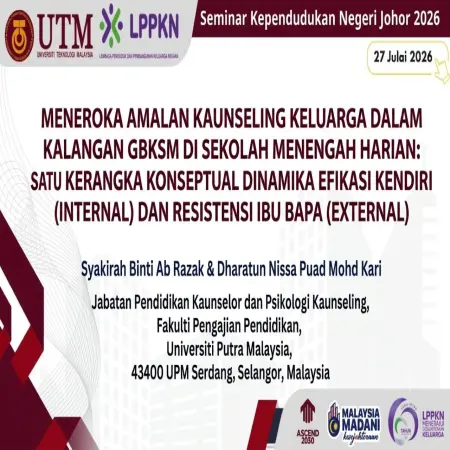
Meneroka Amalan Kaunseling Keluarga Dalam Kalangan GBKSM di Sekolah Menengah Harian: Satu Kerangka Konseptual Dinamika Efikasi Kendiri (Internal) dan Resistensi Ibu Bapa (External)
Item Type: Conference or Workshop Item
Editor:
Year: 00/07/2026
Abstract: The challenge of family counselling practice is not just a technical issue or scheduling problem. It is a profound psychological clash between GBKSM Self-Efficacy and the parent's defensive bulwark. Systemic implications of empowering GBKSM clinically alone will continue to fail if the dynamics of parental resistance and stigma are left unaddressed. Policy alignment, breaking down psychological walls is a prerequisite for achieving the goals of the Malaysia Education Plan (2026-2035) which demands full collaboration between schools, families and communities.
|
|
|
|
|
|
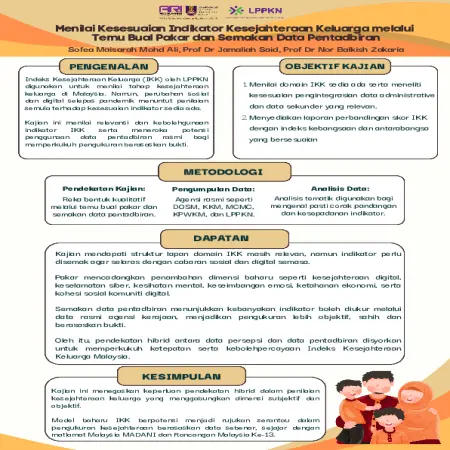
Menilai kesesuaian indikator kesejahteraan keluarga melalui temu bual pakar dan semakan data pentadbiran
Item Type: Scientific Poster
Editor:
Year: 00/11/2025
Abstract: The Family Well-being Index (FWI) by the NPFDB is used to assess the level of family well-being in Malaysia. However, social and digital changes after the pandemic require a reassessment of the suitability of existing indicators. This study assesses the relevance and usability of the FWI indicator and explores the potential of using official administrative data to strengthen evidence-based measurement.
|
|
|
|
|
|
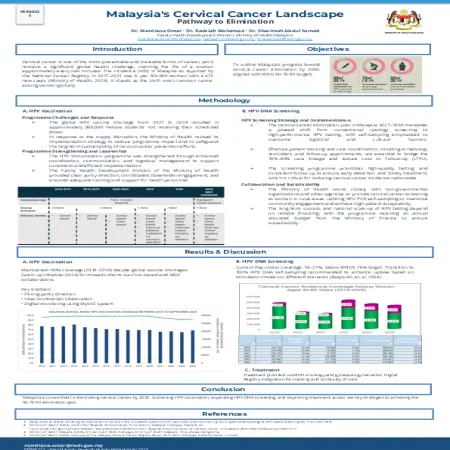
Malaysia’s cervical cancer landscape pathway to elimination
Item Type: Scientific Poster
Editor:
Year: 00/11/2025
Abstract: Cervical cancer is one of the most preventable and treatable forms of cancer, yet it remains a significant global health challenge, claiming the life of a woman approximately every two minutes. The incidence (ASR) in Malaysia as reported by the National Cancer Registry in 2017-2021 was 6 per 100,000 women with 4,473 new cases (Ministry of Health). It stands as the sixth most common cancer among women globally. The objective of this study is to outline Malaysia’s progress toward cervical cancer elimination by 2030, aligned with WHO 90-70-90 targets. Conclusion, Malaysia is commited to eliminating cervical cancer by 2030. Sustaining HPV vaccination, expanding HPV DNA screening, and improving treatment access are key strategies to achieving the 90-70-90 elimination goal.
|
|
|
|
|
|
Malaysia makin menua dan masa depan sumber manusia
Item Type: Conference or Workshop Item
Editor:
Year: 00/08/2025
Abstract: Malaysia is heading towards an aging country where by 2030, 5.8 million of Malaysia's total population will be aged 60 and above. The total fertility rate is also decreasing. Various initiatives from the government need to be planned and implemented to face the aging era.
|
|
|
|
|
|
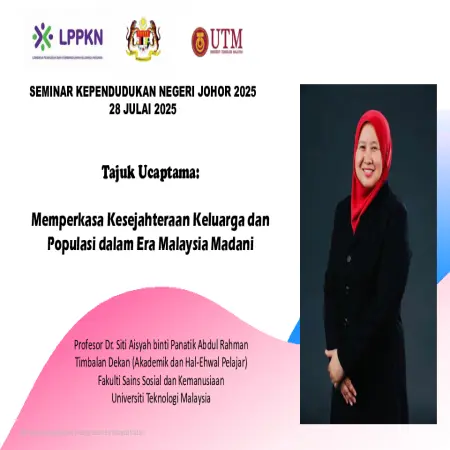
Memperkasa kesejahteraan keluarga dan populasi dalam era Malaysia Madani
Item Type: Conference or Workshop Item
Editor:
Year: 00/08/2025
Abstract: Family well-being encompasses the balance of physical, emotional, social, and spiritual aspects as well as environmental support. It creates a harmonious and happy atmosphere within the family. Statistics indicate that prosperous families improve the quality of life. It also contributes to the social stability of the country. The concept of Malaysia Madani emphasizes inclusive development based on noble values and social well-being. It is in line with Islamic principles that prioritize the welfare of the people and national harmony.
|
|
|
|
|
|
Meniti usia, menunda jodoh: mengupas punca dan kesan kadar kesuburan rendah di Pulau Pinang
Item Type: Conference or Workshop Item
Editor:
Year: 00/08/2025
Abstract: Penang is currently facing persistently low fertility rates as well as rapid population aging. The main factor identified is the low marriage rate, especially among non-Muslims. Policy suggestions to address the low marriage rate include exposing the public to the importance of having more than two children; implementing affordable housing schemes specifically for young couples and newlyweds; and fostering the value of marriage through awareness and educational programs, educating young people about the benefits of marriage, as well as addressing misconceptions about marriage.
|
|
|
|
|