Browse by Type
|
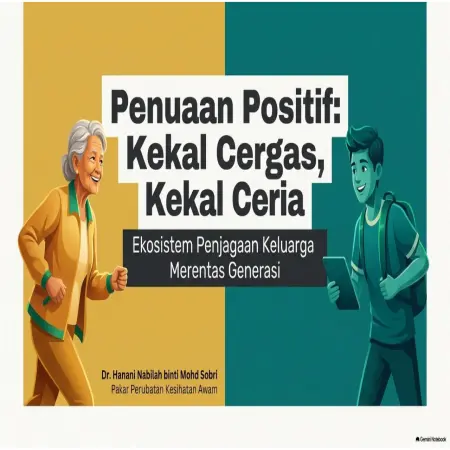
Penuaan Positif: Kekal Cergas, Kekal Ceria
Item Type: Conference or Workshop Item
Editor:
Year: 00/08/2026
Abstract: Malaysia is aging rapidly. This rapid change led to the Elderly Health Program under the 7th Malaysia Plan. The responsibility of caring is a shared commitment. In terms of formal support, it involves government and private agencies. Informal support comes from family, children, teenagers, and the involvement of the community and neighbors. The main goal is to achieve elderly people who are well, independent, and productive through proper knowledge and caregiving skills at home.
|
|
|
|
|
|
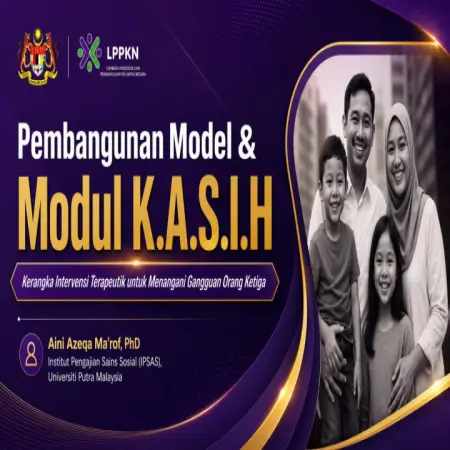
Pembangunan model dan modul terapeutik berasaskan kaunseling untuk menangani gangguan orang ketiga dalam perkahwinan
Item Type: Conference or Workshop Item
Editor:
Year: 00/07/2026
Abstract: This study aims to develop a therapeutic model and module based on family counseling to address third-party interference in marriages in Malaysia. Using a qualitative approach through semi-structured interviews with 17 couples and three expert counselors, the study identifies contributing factors to the interference, its effects on the well-being of couples and families, as well as the therapeutic elements needed in the intervention. The findings of the study produced the Marital Relationship Interference Cycle Model (KGHP) and the K.A.S.I.H Intervention Model, complete with the K.A.S.I.H Therapeutic Counseling Module, a module that tackles third-party interference in a structured, integrative, and culturally sensitive way to Malaysia.
|
|
|
|
|
|
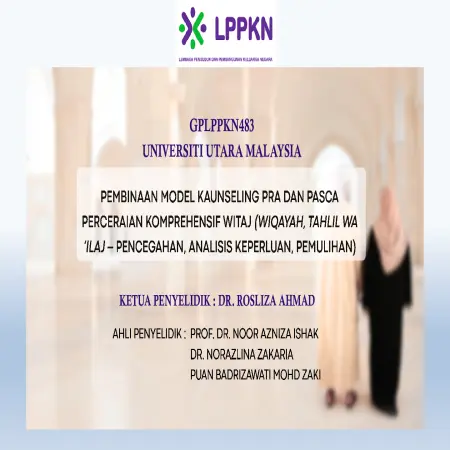
Pembinaan model kaunseling pra dan pasca penceraian komprehensif Witaj (Wiqayah, Tahlil Wal’ilaj – Pencegahan, Analisis Keperluan, Pemulihan)
Item Type: Conference or Workshop Item
Editor:
Year: 00/07/2026
Abstract: The increase in divorce rates, especially among young families, has had significant implications on psychological, social, and economic well-being, and calls for more systematic, contextual, and evidence-based counseling interventions. This study aims to develop the WITAJ Comprehensive Pre- and Post-Divorce Counseling Model, which integrates prevention (wiqayah), needs analysis (tahlil), and recovery (‘ilaj’) elements in addressing divorce issues in Malaysia. The study successfully produced two counseling models, two intervention guidelines, and valid and reliable pre- and post-divorce screening instruments. Significantly, the WITAJ model contributes to the development of a holistic, integrative, and contextual counseling intervention framework, with the potential to strengthen professional counseling practice and evidence-based family policy development in Malaysia.
|
|
|
|
|
|
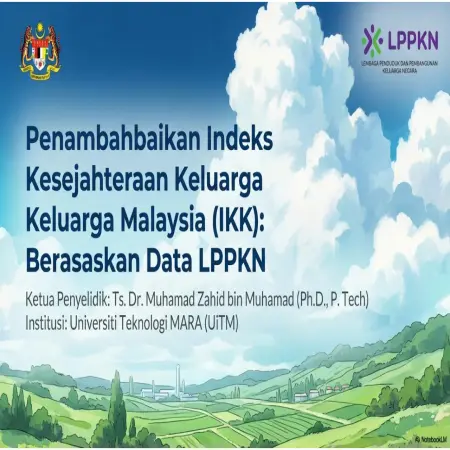
Penambahbaikan Indeks Kesejahteraan Keluarga Malaysia (IKK): berasaskan data LPPKN
Item Type: Conference or Workshop Item
Editor:
Year: 00/07/2026
Abstract: This study aims to assess the strengths and weaknesses of the existing IKK and to suggest strategic improvements that are more responsive and inclusive. The study uses a mixed-method approach, involving secondary analysis of FWI data from 2011-2022, systematic literature review, in-depth interviews with seven expert informants, and a comparative analysis with international wellbeing indices. To address the issue of score instability, the study proposes a strategic shift from purely subjective measurement to the integration of Administrative Data (objective) such as JKM aid statistics, PDRM crime indices, and local authority infrastructure data as triangulation agents. The study also recommends conducting Local Situation Analyses, Longitudinal Panel Studies, and pilot studies of new instruments before full implementation.
|
|
|
|
|
|
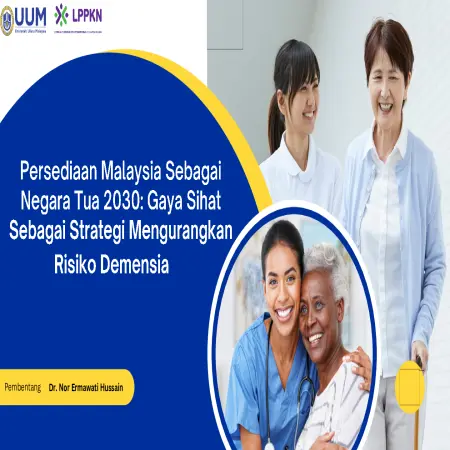
Persediaan Malaysia sebagai negara tua 2030: gaya sihat sebagai strategi mengurangkan risiko demensia
Item Type: Conference or Workshop Item
Editor:
Year: 00/07/2026
Abstract: The issue of dementia is not a new matter, but if it is not managed, it can affect the health of the population and subsequently lead to increased dementia treatment costs. Therefore, this study aims to analyze the relationship between a healthy lifestyle and the risk of dementia among the elderly in the northern zone as a preparation for the aging nation in 2030. The study findings show that the majority of the elderly face chronic health problems and rely on caregivers. The results also found that the effects of a healthy lifestyle and social well-being can reduce the risk of dementia. Thus, to ensure the well-being of the elderly is maintained and to reduce dementia problems among them, the development of inclusive community programs, increasing health literacy, as well as physical, mental, and social well-being programs to maintain the quality of life need to be carried out. Cooperation from various parties is very important to ensuring that the quality of life for the elderly is maintained.
|
|
|
|
|
|
Pembangunan Model Kerangka Penjagaan Berpusatkan Pesakit untuk Mengatasi Cabaran dan Meningkatkan Keberkesanan Pengesanan Awal Kanser Payudara
Item Type: Conference or Workshop Item
Editor:
Year: 00/07/2026
Abstract: This study aims to develop a Patient-Centered Care (PCC) framework model to tackle challenges and improve the effectiveness of early breast cancer detection in Malaysia. The study uses a retrospective trend analysis design based on secondary data from the LPPKN Mammogram Screening Program over a 5-year period from 2020 to 2024, involving women aged 35 to 70. Analysis was conducted to identify participation patterns, implementation gaps, sociodemographic factors, as well as the effectiveness of screening and early breast cancer detection. Based on the findings, a PCC framework was developed covering four main domains: service accessibility and availability, patient engagement and empowerment, sociodemographic context, and continuity and coordination of care. This framework provides an evidence-based strategic approach to increase screening participation, strengthen follow-up compliance, and promote early cancer detection. Overall, this study contributes to the improvement of a more inclusive, responsive, and effective national screening system in enhancing women's health outcomes in Malaysia.
|
|
|
|
|
|
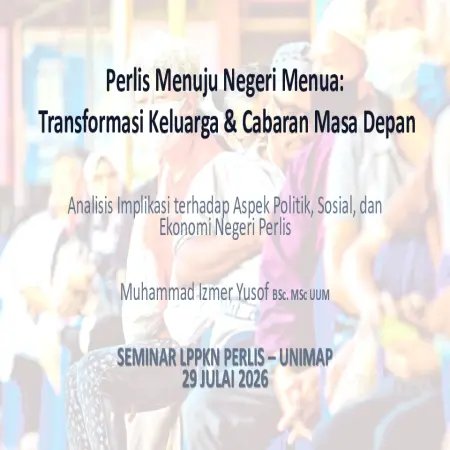
Perlis menuju negeri menua: transformasi keluarga dan cabaran masa depan
Item Type: Conference or Workshop Item
Editor:
Year: 00/07/2026
Abstract: Population Dynamics of Perlis – With a small demographic scale and a population of around 297,800 people, even small changes in birth rates or migration have a big impact on the age structure. There's also the phenomenon of out-migration, where young people leave to look for career opportunities in more developed states, leaving an increasingly older community in Perlis. The aging process is speeding up because the combination of a low Total Fertility Rate (TFR) and youth migration causes the elderly dependency ratio to rise faster. Perlis is at risk of being one of the states to age earlier in Malaysia if there are no long-term strategic interventions. Some suggested policies and strategic directions include Perlis population policy, which is about integrating fertility, migration, and aging issues into the state's development planning.
|
|
|
|
|
|
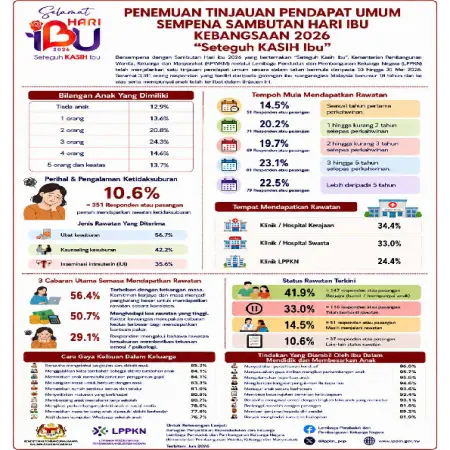
Penemuan Tinjauan Pendapat Umum Sempena Sambutan Hari Ibu Kebangsaan 2026 “Seteguh KASIH Ibu”
Item Type: Infographic
Editor:
Year: 00/06/2026
Abstract: In conjunction with the 2026 Mother's Day celebration themed “As Strong as a Mother's Love,” the Ministry of Women, Family and Community Development (MWFCD), through the National Population and Family Development Board (NPFDB), conducted an online public opinion survey from May 10 to 31, 2026. A total of 3,311 respondents, consisting of Malaysian mothers aged 18 and above who have children, participated in this survey.
|
|
|
|
|
|
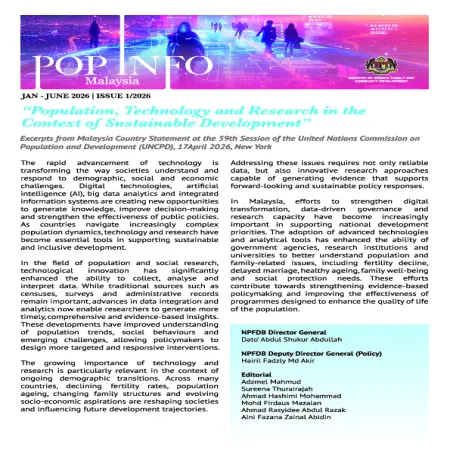
Population, Technology and Research in the Context of Sustainable Development
Item Type: Newsletter
Editor:
Year: 00/05/2026
Abstract: The rapid advancement of technology is transforming the way societies understand and respond to demographic, social and economic challenges. Digital technologies, artificial intelligence (AI), big data analytics and integrated information systems are creating new opportunies to generate knowledge, improve decision-making and strengthen the effectiveness of public policies. As countries navigate increasingly complex population dynamics, technology and research have become essential tools in supporting sustainable and inclusive development.
|
|
|
|
|
|
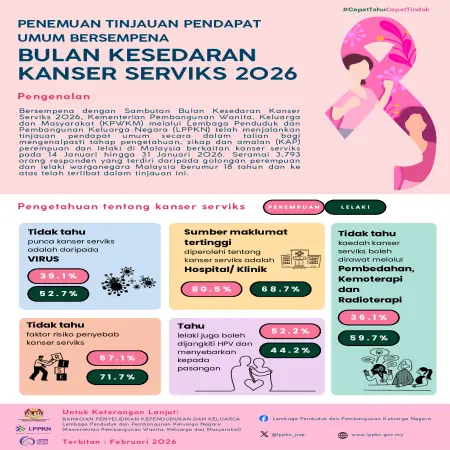
Penemuan Tinjauan Pendapat Umum Bersempena Bulan Kesedaran Kanser Serviks 2026
Item Type: Infographic
Editor:
Year: 00/02/2026
Abstract: In conjunction with the 2026 Cervical Cancer Awareness Month, the Ministry of Women, Family and Community Development (MWFCD), through the National Population and Family Development Board (NPFDB), conducted an online public opinion survey to identify the level of knowledge, attitudes, and practices (KAP) of women and men in Malaysia regarding cervical cancer from January 14 to January 31, 2026. A total of 3,793 respondents, consisting of Malaysian men and women aged 18 and above, participated in this survey.
|
|
|
|
|