Browse by Type
Results for Item type : "Article"
|
Memperkasakan keusahawan sosial produk menstruasi bagi membasmi kemiskinan haid
Item Type: Article
Editor:
Year: 00/12/2021
Abstract: The Sustainable Development Goals (SDGs) set Goal-1 to end poverty in all its forms everywhere. However, menstrual poverty still happens to teenage girls and women from the past until now. It is not easy for them to get or buy menstrual products due to financial constraints. Based on a focus group discussion research session, the main objective of the study is to review the social entrepreneurship strategies carried out by three social entrepreneurship organizations – BunPad, KotMe and AntPower (pseudonym of the study) in dealing with the issue of menstrual poverty among underprivileged women.
|
|
|
|
|

|
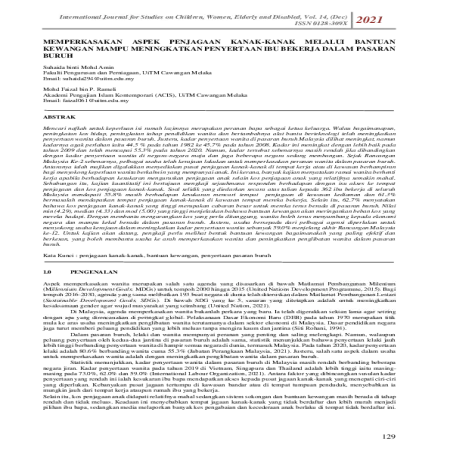
Memperkasakan aspek penjagaan kanak-kanak melalui bantuan kewangan mampu meningkatkan penyertaan ibu bekerja dalam pasaran buruh
Item Type: Article
Editor:
Year: 00/12/2021
Abstract: Since the 2nd Malaysia Plan in fact, various efforts have been made by the government to empower the role of women in the labour market. One of that is employers are encouraged to provide childcare centers at work or in nearby areas to support the needs of married women with children. This is because, many studies state that many women quit their jobs when faced with difficulties of managing childcare in addition to the relatively increasing cost of childcare. Therefore, this quantitative study aims to examine the extent to which respondents are faced with the issue of access to childcare and the cost of childcare. The survey distributed online to 362 working mothers across Malaysia found that 55.8% still faced difficulties in finding childcare in their residential areas and 61.3% had problems finding childcare in their working area.
|
|
|
|
|
|
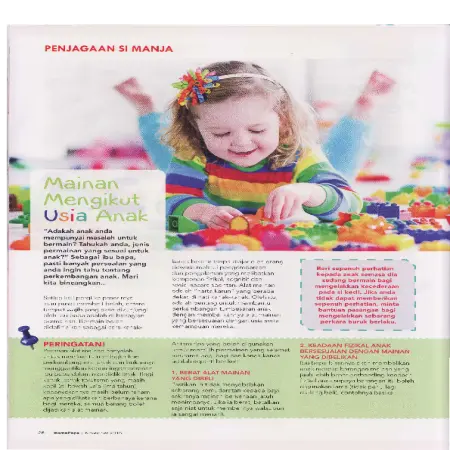
Mainan mengikut usia anak
Item Type: Article
Editor:
Year: 00/11/2016
Abstract: The role of toys is only to help improve the development of the child and not to replace the importance of the role of parents in educating the child. For children, especially those who are still young (under the age of five), most of them still do not understand what is said to be dangerous because for them, all items can be used as toys. Among the tips that can be used to choose games that are safe, especially for babies and children are such as the weight of the toy purchased, not easily removable or broken, suitable for the child's age and others.
|
|
|
|
|
|
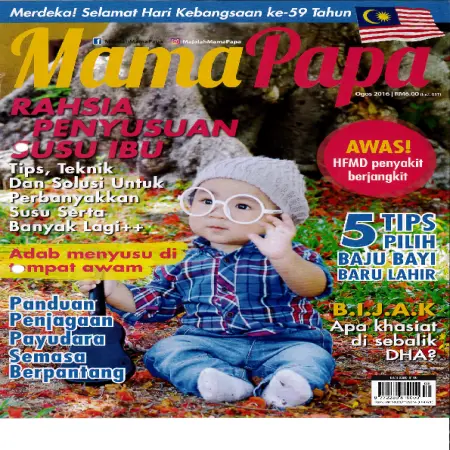
Memilih jantina bayi: bahagian 2
Item Type: Article
Editor:
Year: 00/08/2016
Abstract: From time immemorial, our ancestors practiced certain tips and diets to get the desired gender of the child. However, there is still no scientific explanation of the effectiveness and accuracy of the practice. Learn how to determine the sex of a baby from a scientific point of view.
|
|
|
|
|
|
Memilih jantina bayi: bahagian 3
Item Type: Article
Editor:
Year: 00/00/2016
Abstract: The tendency to choose the sex of the baby by the couple on several factors has been discussed in the previous article (part 1 and part 2) while in this part 3 shares about other methods in science that are also said to be a factor to the determination of the sex of the baby. Among them are the "time" technique together (intercourse time), pre-implantation genetic diagnosis technique (PGD/PGS) to determine the quality of the embryo and the technique of 'prenatal sex identification' where through this technique, the sex of the baby in the womb is determined by taking blood samples from the mother and DNA tests were performed on the samples.
|
|
|
|
|
|
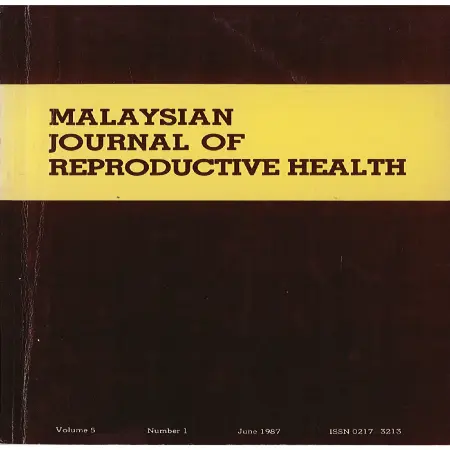
Maternal reciprocal translocation t(1p;6p) in a couple with recurrent spontaneous abortion
Item Type: Article
Editor:
Year: 00/06/1987
Abstract: G-banded chromosome complements were analyzed from peripheral blood lymphocytes of a couple who had experinced for spontaneous abortions. The karyotype of the husband was designated as 46,XY, while the wife's karyotype was designated as 46,XX, t(1p;6p). Balanced reciprocal translocations appear to be associated with the recurrent spontaneous abortions experienced by the couple. We report here a case of a maternal (1p;6p) reciprocal translocation in a couple with repeated fetal loss.
|
|
|
|
|