PUBLICATIONS
|
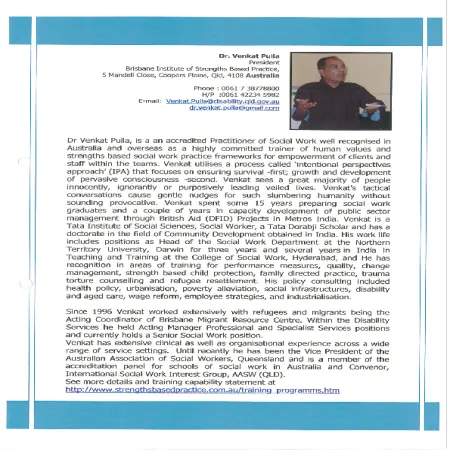
Profil keluarga di Malaysia & kesannya kepada masyarakat
Item Type: Conference or Workshop Item
Editor:
Year: 00/00/2009
Abstract: Family institution in Malaysia is facing many changes and challenges. Functional families and the role of institutions is crucial to the development of human capital formation, human and potential development of each family members and influence the development and well-being of the people. Formation patterns and family relationships as well as family lifestyle can be seen in the demographic trends in Malaysia. Formation and family structure that encountered evolution has influenced some aspects of family life. Now family institutions are required to be more resilient in dealing with the challenges of life such as child care, dual-career couples, financial management, parenting teens and responsibilities to elderly parents.
|
|
|
|
|
|
Penduduk dan keluarga: penemuan Kajian Penduduk dan Keluarga Keempat
Item Type: Conference or Workshop Item
Editor:
Year: 00/00/2009
Abstract: This paper discusses the important findings of the Fourth Population and Family Survey conducted by NPFDB in 2004. This study is the fourth in a series of Malaysian Population and Family Survey (MPFS) conducted every ten years since 1974. In 2004, this study was for the first time conducted simultaneously for the whole of Malaysia. In contrast to the previous MPFS, MPFS-4 interviewed households consisting of five (5) categories, (a) Women aged 15 to 49 years, (b) Husbands of married women, (c) Adolescents aged 13 to 24 years, (d) Citizens aged 50 years and above, and (e) single residents aged 25 to 49 years. This study aims to provide time series data related to demographic and socio-economic information in particular the relationship between population, family and human reproduction with development. The results of the study are used to evaluate the effectiveness of existing development programs and also used as input in the preparation of the Ninth Malaysia Plan (9MP). In this study data analysis was performed for the three areas separately. Among the important findings include: 1) Age structure of the population, 2) burden of dependents, 3) Delayed marriages, 4) Fertility, 5) Family planning, 6) Health practices, 7) Household composition, 8) Female labor force participation, 9) Child care, 10) The elderly, and 11) Adolescent social and sexual behavior.
|
|
|
|
|

|
Families resilience and children and families of low income: maximizing opportunities through PERMATA ECEC Program
Item Type: Conference or Workshop Item
Editor:
Year: 00/00/2009
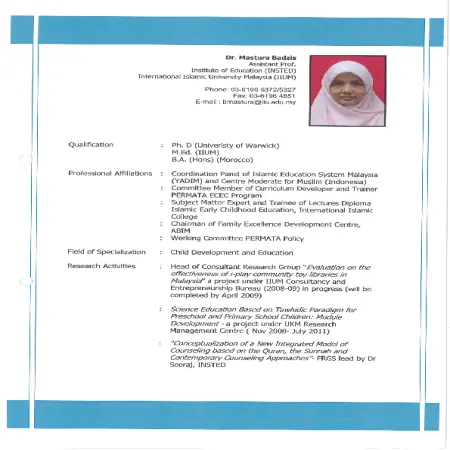
Abstract: PERMATA Early Childhood Education and Care (ECEC) Program in Malaysia was launched on the basis of evidence from research and practice which illustrates that early intervention through high quality program enhances children's social, emotional, spiritual, physical, and cognitive development. PERMATA is a child-focused, community integrated program with the overall goal of increasing school readiness in young children in low-income families, particularly in deprived areas. Despite its various learning outcomes, ECEC main underpinning goal is to produce generations of youth who are able to manage and regulate emotion, possess high EQ skill, and resillient in facing different challenges in life. Its long-term effect can be better understood as children develop into responsible citizens who will take a much more positive role in the society and are free of social ills that now seem to beset the country. This paper presents some strategies of best practices that have been applied in this program to foster and instill resilience in children mainly, increasing caring relationship, developing social competence, encouraging, self-help skills, create partnerships with family and community, and awareness of the existence and supremacy of God.
|
|
|
|
|
|
Resilient families coping with sudden demise husband: an exploratory and empirical study of 50 nuclear urban middle class families in North India
Item Type: Conference or Workshop Item
Editor:
Year: 00/00/2009
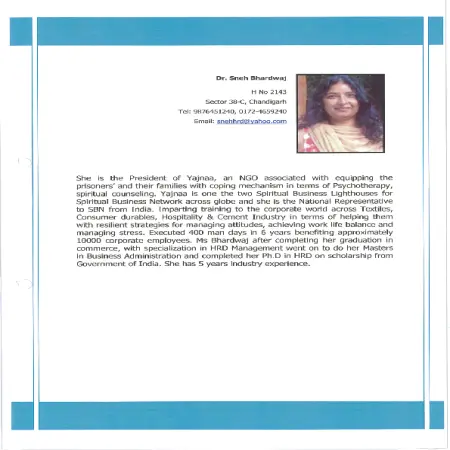
Abstract: The paper offers research based Resilient Indian Family Template' culled from the coping practices adopted by 50 Nuclear Urban Middle Class Families in North India in the eventuality of sudden loss of husband. Convenient random sampling technique of data collection was employed for choosing the 50 families in question. Further interview and narrative methodology was used to elicit information from the families. Sudden loss of husband was accompanied by emotional and health problems for the surviving spouse, acute feeling of loneliness, decreased standard of living for the family, increased moral support from close relatives, children especially grown ups showing more restraint and responsibility in their habits and one member (in most cases it was wife) taking up income generating activity. Coping practices adopted by these families helped them rebound from crisis.
|
|
|
|
|
|
Family functioning and child well-being amongst urban Malay single mother families: resilence despite challenges
Item Type: Conference or Workshop Item
Editor:
Year: 00/00/2009
Abstract: This study was designed to determine the contribution of risk and protective factors in predicting urban Malay single mother's family functioning and child well being. In addition, this study examine the moderating role of protective factors (risk x protective factor interaction) on the relationship between risk factors and family functioning and child well-being. Result highlight the role of protective factors in promoting better family functioning and child well-being and the extent to which protective factor buffer risk factors in the design of intervention aimed at strengthening family functioning and enhancing child well-being in urban Malay single mother families.
|
|
|
|
|
|
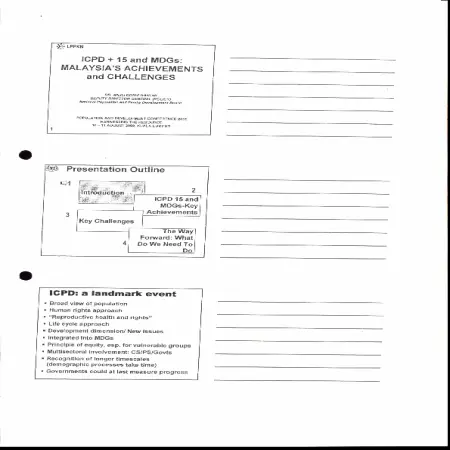
ICPD + 15 and MDGS: Malaysia's achievement and challenges
Item Type: Conference or Workshop Item
Editor:
Year: 00/00/2009
Abstract: Population and development are inextricably linked. The ICPD helped place population concerns at the heart of sustainable development. Meeting the needs of women and men rather than on achieving demographic targets. Interrelationships between population, sustained economic growth and sustainable development: Population factors incorporated into development planning. Poverty alleviation programmes since the 1st OPP. This slides presentation is talk about ICPD + 15 and MDGS: Malaysia’s achievement and challenges.
|
|
|
|
|
|
New Zealand indigenous people and resilience
Item Type: Conference or Workshop Item
Editor:
Year: 00/00/2009
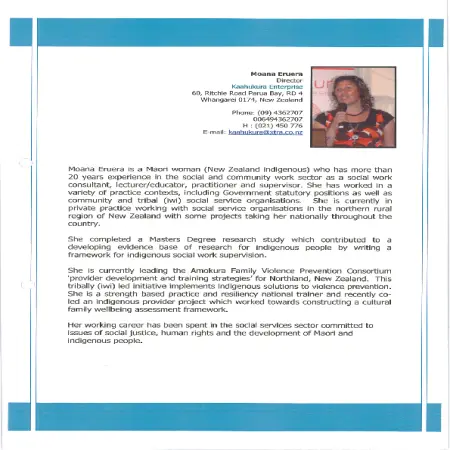
Abstract: Indigenous peoples throughout the world have used strengths and resiliency to preserve the ongoing effects of colonizations and as tools for sovereignty. The 'Tangata Whenua' of New Zealand, along side other indigenous and minority groups throughout the world, continue to progress the development of their own cultural frameworks and models of practice. More recently in New Zealand, particularly within the health and social services sectors, 'tangata whenua' have begun to examine resiliency research and practices which contribute to the body of knowledge in the area of 'whanau ora', and the cultural capacities and capabilities which assist families to build resiliency and protective factors and processes. This presentation examines what has been learned from the theory and practice experiences of a 'Tangata Whenua' social work practitioner and trainer.
|
|
|
|
|
|
Coping mechanisms of families in transition: insights from Kathmandu Valley, Nepal
Item Type: Conference or Workshop Item
Editor:
Year: 00/00/2009
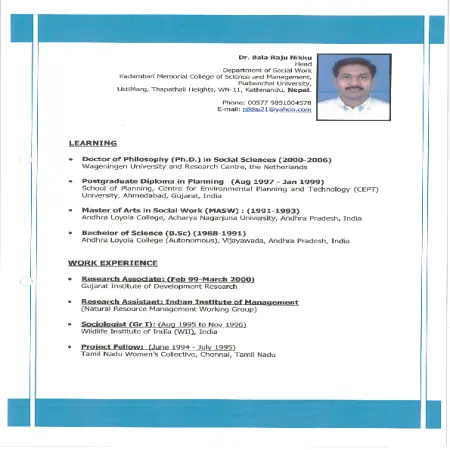
Abstract: The main purpose is to document and analyze the families that are migrated to Kathmandu City during the decade long in surgency in Nepal and their coping strategies. With in the family the children were the most effected. The analysis indicates that families have used different coping mechanisms. One of that is surprisingly offering children for adoptions outside the country. Children under 18 comprise almost 50 percent of Nepal's populations. As research evidence shows more than 300,000 orphans are in Nepal. There are various reasons behind the increasing trend of orphan and abandoned children. It includes armed conflict, domestic violence, natural disasters and displacement. These reasons directly or indirectly have an influence on the structure, size and coping mechanism of families in Nepal. The other mechanisms are earning daily wages, leaving old members of the family back home, male and female out migration. There are important policy lessons can also be derived and as a result government and non governmental programs can be designed that will enhance the resilience of families in transition. The paper is structured in five sections. After a brief introduction, section one presents the Statement of Problem and Objectives of the Study. The second section presents the findings from a brief literature review. Third section presents the analysis and findings for the primary research. Fourth section is about structures and process that are required to enhance the coping mechanism of the families in question. The paper is concluded in the fifth section.
|
|
|
|
|
|
Factors contributing to resilient attitude formation among excellent children from low SES single parent family
Item Type: Conference or Workshop Item
Editor:
Year: 00/00/2009
Abstract: The present study aims to identify the factors that contribute to resilient attitude formation among children who scored excellent results in UPSR. This study used a descriptive research design (Issac, 1995; Kerlinger, 1979). Samples were selected using purposive sampling since the study is only limited to single parent's family from low sosio-economic status (SES). Samples consisted of low SES single parents (mothers) from rural areas. This study was carried out in two phases; (i) structed interview with single parents (n=15) and (ii) handing out questionnaires and interviewing children (boys, n=6 and girls, n=9). The researcher has divided the interview into two types, namely the unstructured interview and the structured interview. Samples were interviewed and their stories were analyzed using the constant comparative method. Transcript data were coded and analyzed using the grounded theory approach (Strauss & Corbin, 1998). Recurring words, phrases and themes in the transcripts were coded commonalities and contradictions within and among the interviews were noted. While constantly comparing the data, themes and meanings were analyzed to develop theoretical, interpretations and implications of the data. After the data had been analyzed, results were compared with the literature to determine the degree to which the findings confirmed prior research.
|
|
|
|
|
|
Understanding coping and resilience of children and adolescents
Item Type: Conference or Workshop Item
Editor:
Year: 00/00/2009
Abstract: The objectives of this paper are to identify and define key concepts and models related to stress, coping, and resilience amongst children and adolescents and also to make us mindful to area wise gaps in our evidence based practice in this context. Amidst the growing evidence that depression and other mental health issues are surfacing amongst children and adolescents in several societies, the author focuses on the transactional nature of coping and resilience and how children and adolescents process a variety of stresses that they see in their day to day lives. Given that children and adolescents attempt to cope well in stressful situations being a fact, the author considers constructing and reviewing this stressful experiences in a person-environment transaction context to be a useful strategy. The paper presents this strategy.
|
|
|
|
|