PUBLICATIONS
|
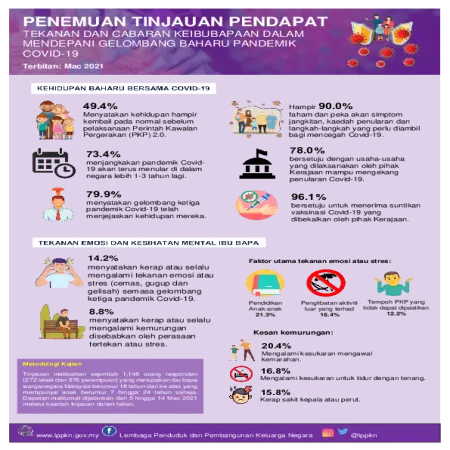
Penemuan tinjauan pendapat tekanan dan cabaran keibubapaan dalam mendepani gelombang baharu pandemik Covid 19
Item Type: Infographic
Editor:
Year: 00/03/2021
Abstract: This infographic is about of the findings of the Opinion Survey "Stresses and challenges of parenting in the face of the new wave of the Covid-19 pandemic".
|
|
|
|
|
|
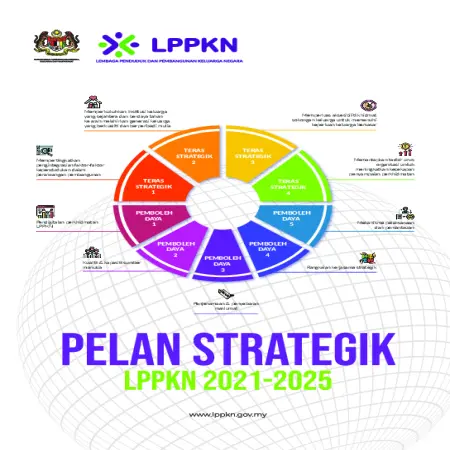
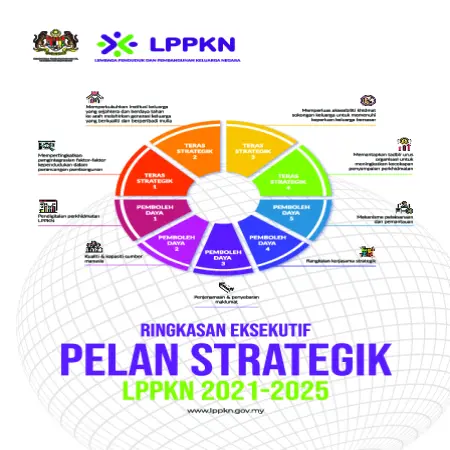
Pelan Strategik LPPKN 2021-2025
Item Type: Book
Editor:
Year: 00/01/2021
Abstract: NPFDB was established under the Population and Family Development Act 1966 as a leader in the field of family development, population and human reproductive in Malaysia and in 2021 is NPFDB’s 55th anniversary celebration. During more than five decades of its establishment, NPFDB has faced several changes in organizational structure, but this agency has remained steadfast in its mandate and responsibility in strengthening family institutions to produce quality Malaysians in the era of change and current challenges. Various high-impact studies, programs and services have been introduced and will be implemented from year to year with the aim of ensuring the well-being of Malaysians regardless of race, religion and socioeconomics. NPFDB’s flagship programs such as the Family and Community Empowerment Program (FACE), Mamacare and KafeTEEN have recognition from the public in dealing with social problems among target groups at the community level, thus elevating NPFDB as a family and population leader.
|
|
|
|
|
|
Peranan, tahap kesejahteraan, cabaran dan persediaan ibu bapa dalam menghadapi situasi pandemik covid-19 di Malaysia
Item Type: Book Section
Editor:
Year: 00/00/2021
Abstract: This paper describes the current situation in family institutions in particular related to the role, level of well-being, challenges and preparation of mothers and fathers in facing the COVID-19 pandemic that has spread in the country since early 2020. The subtopics in this paper are based on 10 public opinion polls conducted by the National Population and Family Development Board (NPFDB) throughout 2020 and 2021. The survey, which involved nearly 13,000 respondents, focused on Malaysian mothers and fathers, who have children aged 3 to 24 years only. There are seven subtopics in this paper, namely (i) Introduction; (ii) Literature Review; (iii) New Norma Family; (iv) The Role of Parents in the Family; (v) Level of Parental Well -Being in Family Institutions; (vi) Challenges and Parental Preparation Related to the Use of Digital Technology; and (vii) Recommendations and Conclusions. The findings show that despite facing various issues and challenges such as health and safety of family members, education of children and family financial/economic management, majority of mothers and the father was found to still remain in a state of well -being good. Mothers and fathers as the main pillars of the family are seen continues to play an important role for adapting family members to a normative lifestyle new. However, some detailed assessments and assistance support needs to be reconsidered by the Government to help mothers and fathers especially in the home-based teaching and learning (PdPR), i.e. current methods and future learning for children. Based on the sharing of subtopics in this paper, it is hoped that various activities and programs can be planned as well as the formulation of new policies that are equally beneficial towards achieving the aspirations of the Malaysian Family. Generally, this paper contributes to the relevant knowledge about Malaysian Family well -being education in the face of new norm life. While in particular, this paper work contributes to role -related knowledge, well -being, challenges and preparation of parents in the situation of COVID-19.
|
|
|
|
|
|
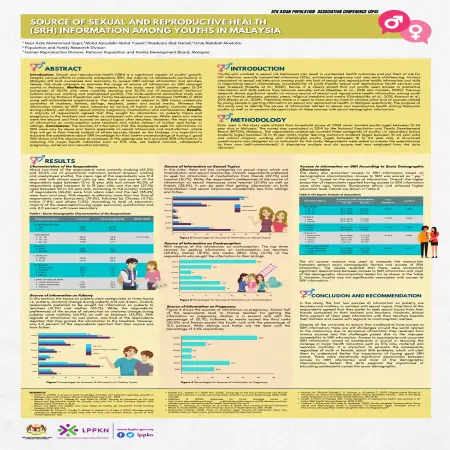
Source of sexual and reproductive health (SRH) information among youths in Malaysia
Item Type: Scientific Poster
Editor:
Year: 00/00/2021
Abstract: A majority of respondents agreed that they sought for information on puberty topics and pregnancy to the teachers and mother as compared with other sources. While, peers and media were the second and third sources on sexual topics after teachers. However, the main sources of information on contraception were teachers and media instead of mother and father or siblings.
|
|
|
|
|
|
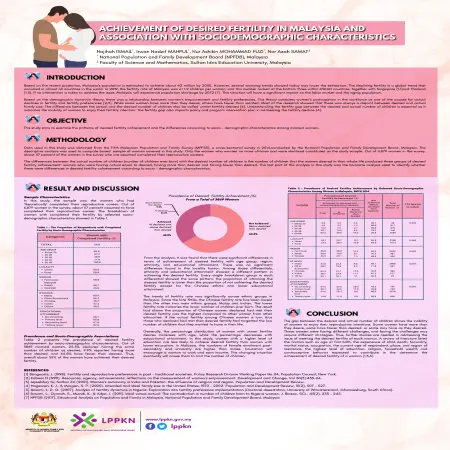
Achievement of desired fertility in Malaysia and association with sociodemographic characteristics
Item Type: Scientific Poster
Editor:
Year: 00/00/2021
Abstract: This study aims to examine the patterns of desired fertility achievement and the differences according to socio - demographic characteristics among married women.
|
|
|
|
|
|
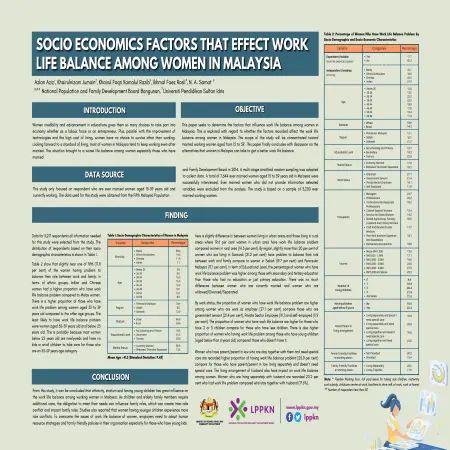
Socio economics factors that effect work life balance among women in Malaysia
Item Type: Scientific Poster
Editor:
Year: 00/00/2021
Abstract: This paper seeks to determine the factors that influence work life balance among women in Malaysia. This is explored with regard to whether the factors recorded affect the work life balance among women in Malaysia. The scope of the study will be concentrated toward married working women aged from 15 to 59. This paper finally concludes with discussion on the alternatives that women in Malaysia can take to get a better work life balance.
|
|
|
|
|
|
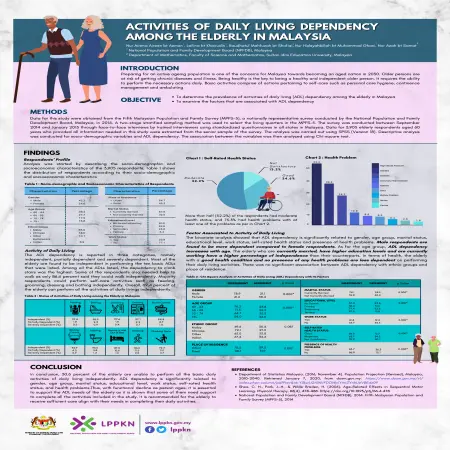
Activities of daily living dependency among the elderly in Malaysia
Item Type: Scientific Poster
Editor:
Year: 00/00/2021
Abstract: The objective of this study is to determine the prevalence of activities of daily living (ADL) dependency among the elderly in Malaysia and to examine the factors that are associated with ADL dependency.
|
|
|
|
|
|
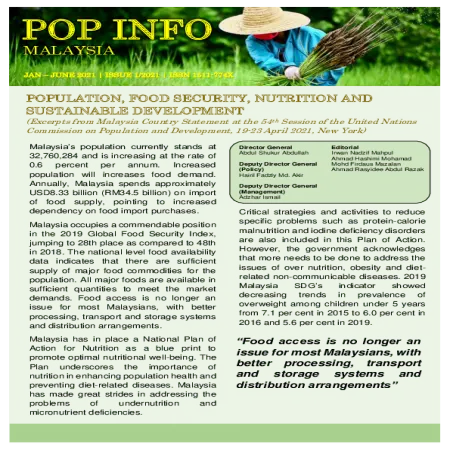
Population, food security, nutrition and sustainable development
Item Type: Newsletter
Editor:
Year: 00/00/2021
Abstract: Malaysia occupies a commendable position in the 2019 Global Food Security Index, jumping to 28th place as compared to 48th in 2018. The national level food availability data indicates that there are sufficient supply of major food commodities for the population. All major foods are available in sufficient quantities to meet the market demands. Food access is no longer an issue for most Malaysians, with better processing, transport and storage systems and distribution arrangements.
|
|
|
|
|