TOPICS
Results for Topics : "Marriage"
|
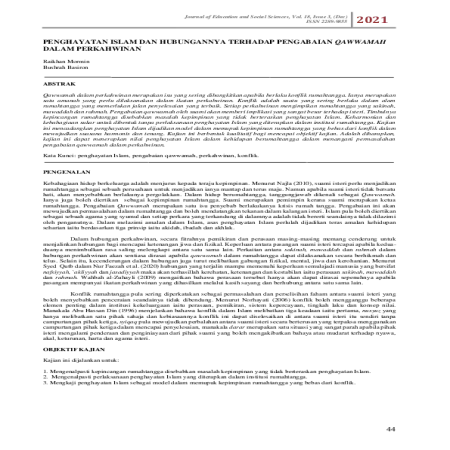
Penyakit Jangkitan Seksual= Sexual Transmitted Diseases (STD)
Item Type: Scientific Poster
Editor:
Year: 00/07/2024
Abstract: This study examines the extent of knowledge, attitudes, and practices (KAP) about Sexually Transmitted Diseases (STDs) among married women aged between 15-49 years. The findings of the study show that the level of knowledge about Sexually Transmitted Diseases (STDs) among women is moderate. Awareness campaigns about STDs that are more widespread and targeted especially at high-risk groups should be continued in an effort to increase their knowledge and awareness of the risks of STDs.
|
|
|
|
|
|
SDGS and the impact of megatrends on Families: perspectives from Malaysia
Item Type: Conference or Workshop Item
Editor:
Year: 00/05/2024
Abstract: 57th Commissions on Population and Development (CPD57): Assessing the status of implementation of the Programmed of Action of the International Conference on Population and Development and its contribution to the follow-up and review of the 2030 Agenda for Sustainable Development during the decade of action and delivery for sustainable development. Strengthening Malaysian Families in era of megatrends, National Population and Family Development Board Malaysia (NPFBD) had LPPKN Family Centre, Nur Sejahtera Clinic Services, Population and Family Research, Training and education (family), Counseling service and program, online accessibility etc.
|
|
|
|
|

|
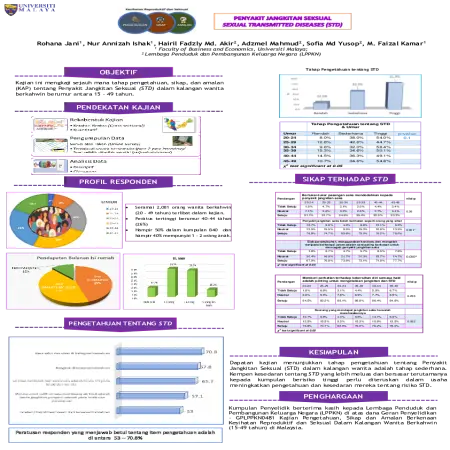
Prediction of Malaysian women divorce using machine learning techniques
Item Type: Article
Editor:
Year: 01/10/2022
Abstract: This paper discusses the performance of three machine learning techniques namely Decision Tree, Logistic Regression and Artificial Neural Network for predicting divorce among Malaysian women. Secondary data were obtained from the Fifth Malaysia Population and Family Survey (MPFS-5) conducted by the National Population and Family Development Board (LPPKN). The total number of instances in the dataset was 7,644 ever married Malaysian women aged 15 to 59 years old. Divorce is currently a serious problem among the Malaysian community due to various reasons. In 2019, the divorce rate in Malaysia rose by 12% from the previous year. During the first three months of the movement Control Order (MCO), i.e. from March 18 to June 18, 2020, the Syariah Court of Malaysia recorded 6,569 divorce cases. Worse, a total of 90,766 divorce cases were recorded from January to October 2020. Among the six predictive methods, The Decision Tree Model (C5.0) was found to be the best model in classifying divorce among Malaysian women. The accuracy of the C5.0 model was 77.96% followed by the Artificial Neural Network (Multi-Layer Perceptron) and Logistic Regression (Forward Stepwise) model (74.68% and 67.89%, respectively). The order of important predictors in predicting divorce among Malaysian women is the wives’ employment status (0.1531) followed by the husbands’ employment status (0.1396), type of marriage (0.1327), race/ethnicity (0.1327), distant relationship (0.1212). the wives’ qualification level (0.1115), age group (0.1053) and religion (0.0998)
|
|
|
|
|
|
Autonomy in household decision-making among Malaysia women
Item Type: Thesis
Editor:
Year: 00/06/2022
Abstract: The progress of Malaysian women has significantly improved since 1980, particularly in terms of educational achievement. However, women's labor force participation rate, level of women in decision-making at the household and industry levels, is still below that of men. These instances suggested that there were still obstacles to women's empowerment
in Malaysia, particularly in decision-making. Hence, this study aims to identify factors affecting women's autonomy in household decision-making among married women in Malaysia. Data on women's autonomy in household decision-making were obtained from Fifth Malaysian Population and Family Survey in 2014 and accounted for 2595 married women aged 15-59. Kishor's Conceptual Framework and Three-domains of Women's Empowerment were adopted as a research framework. The study framework consisted of ten exogenous factors and endogenous variables of women's autonomy in household decisions. The household decision-making was divided into eight domains: household expenses, buying a house, making assets, family savings, family holidays, children's discipline, children's education, and woman's career. Each household decision domain had responses of three levels of women's autonomy (not involved, joint and sole participation) and was analyzed individually using the Multinomial Logistics Regression method. The study provides evidence that women's characteristics can restrict the
autonomous power of women in a patriarchal society like Malaysia. All selected factors significantly impacted women's autonomy in at least one decision domain in the household. Women's education was the most substantial factor that positively influenced women's autonomy in all decisions in the household. In contrast, the spousal education gap and participation in the labor force could be a barrier to women's autonomy in the household. The family should be at the forefront of the empowering process as a woman's role in caring for the family's welfare is definite. Despite the continuous efforts to empower women, the study suggested that there is a need for a balance in shaping the positive patriarchal values among the communities, particularly among men. This can be achieved by promoting shared responsibility within a household, and this initiative has the same substantial weightage as a woman's education and economic status.
|
|
|
|
|

|
Modul Latihan Jurulatih SMARTSTART 2.0 "Pra Perkahwinan"
Item Type: Module
Editor:
Year: 00/01/2022
Abstract: Introduction:-
SMARTSTART 2.0 Pre-Marriage Training the Trainers Trainer Module is a new module that has been processed more neat and organized as a result of creative ideas through the compilation of contents and activities based on observations related to the latest issues that often being the cause of divorce. This module is a standard reference and guideline specially prepared for the use of trainers to facilitate the learning process, teaching and guide the preparation of programme materials. Through this module, it is hoped that it can provide positive benefits especially to individuals or couples who want to get married or who are planning to start a family in order to be more physically, mentally, emotionally, spiritually and financially prepared.
Objectives:
To provide knowledge and skills to the participants about preparations towards marriage.
Program Duration:
2 day program
Target Participants:
Individuals or couples who want/plan to get married.
Interactive Content:
Promising difference through learning and delivery methods. Full involvement of participants through skills training and group activities.
|
|
|
|
|
|
Policy response to the changing marriage institution in Malaysia
Item Type: Book Section
Editor:
Year: 00/00/2022
Abstract: In Malaysia, educational improvement, urbanization, modern sector employment, women empowerment, and migration have brought about dramatic changes in marriage institutions, with the surging of age at marriage, singlehood, and divorce. Between 1970 and 2010, the singulate mean age at marriage among men and women increased from 25.5 years and 22.0 years to 28.0 years and 25.7 years.
|
|
|
|
|
|
Redefining quality interpersonal communication in marriage from divorcees’ perspectives
Item Type: Book Section
Editor:
Year: 00/00/2022
Abstract: Quality interpersonal communication is essential in the development and maintenance of any relationship, including marriage. As society adapts to new avenues of communication, married couples often underestimate the relevance of interpersonal communication in their relationship due to their lack of understanding of quality interpersonal communication. Therefore, this study investigated the conceptualisation of quality interpersonal communication through the lens of Relational Dialectic Theory in marriage from the perspectives of divorcees.
|
|
|
|
|
|
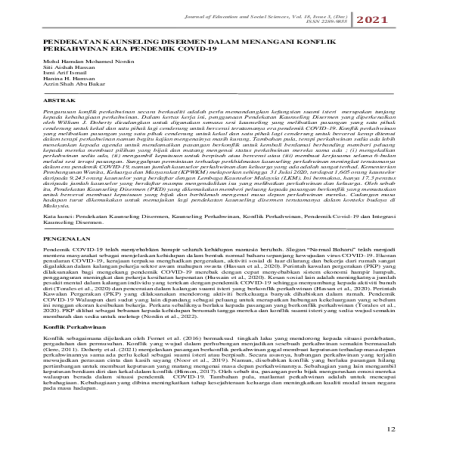
Pendekatan kaunseling disermen dalam menangani konflik perkahwinan era pendemik covid-19
Item Type: Article
Editor:
Year: 00/12/2021
Abstract: Marital conflict management in a quality manner is necessary considering the functionality of the husband and wife is the backbone
to marital bliss. In this paper, the use of the 'Pendekatan Kaunseling Disermen' introduced by William J. Doherty is proposed to be used during counseling sessions involving couples where one party tends to stay and the other tends to divorce, especially in the era of the COVID-19 pandemic.
|
|
|
|
|
|
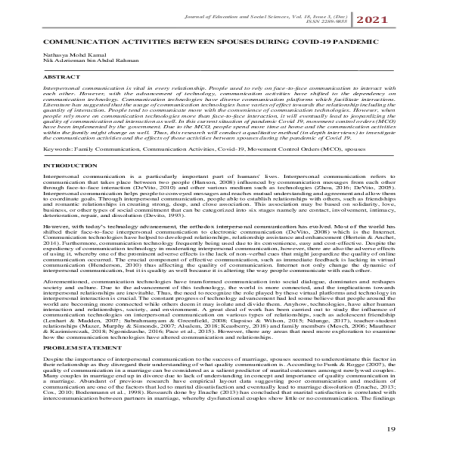
Communication activities between spouses during covid-19 pandemic
Item Type: Article
Editor:
Year: 00/12/2021
Abstract: Interpersonal communication is vital in every relationship. In this current situation of pandemic Covid 19, movement control orders (MCO) have been implemented by the government. Due to the MCO, people spend more time at home and the communication activities within the family might change as well. Thus, this research will conduct a qualitative method (in-depth interviews) to investigate the communication activities and the effects of those activities between spouses during the pandemic of Covid 19.
|
|
|
|
|
|
Penghayatan islam dan hubungannya terhadap pengabaian qawwamah dalam perkahwinan
Item Type: Article
Editor:
Year: 00/12/2021
Abstract: Qawwamah in marriage is an issue that is often raised when there is domestic conflict. Neglect of qawwamah by the husband will have very big implications for the wife. The emergence of domestic dysfunction is due to the problem of leadership that is not based on the appreciation of Islam. Harmony and happiness are difficult to form without the implementation of Islamic practices applied in household institutions. This study suggests that the appreciation of Islam be used as a model in fostering household leadership that is free from conflict in creating a harmonious and calm atmosphere.
|
|
|
|
|