Browse by Division/Agency
|
Population distribution, urbanisation, internal migration and development
Item Type: Newsletter
Editor:
Year: 00/07/2008
Abstract: Malaysia is currently experiencing an increase in population mobility mainly caused by industrialization and urbanization. Between 1970 and 2006, the proportion of population living in big cities such as Kuala Lumpur, Penang and Johor Bharu had doubled due to rapid urbanization mainly contributed by internal migration. This trend in internal migration has resulted in population redistribution due to an influx of people to the urban areas.
|
|
|
|
|
|
Population ageing
Item Type: Newsletter
Editor:
Year: 00/01/2008
Abstract: According to United Nation’s estimates, 21 percent of the population in the developed countries was aged 60 years or over in 2005. This proportion is projected to increase to 28 percent in 2025 and 32 per cent in 2050. In countries where economies are in transition, the average proportion of the population aged 60 years or over was estimated at only 8 percent in 2005 but is expected to reach 13 percent by 2025 and nearly 20 percent by 2050. Thus, the number of older persons in the developing countries will likely more than double between 2005 and 2025. This increase is much larger than in the developed countries compared to countries where the economies are in transition, where the number of older persons will grow by about 44 percent and 32 percent respectively during the same period.
|
|
|
|
|
|
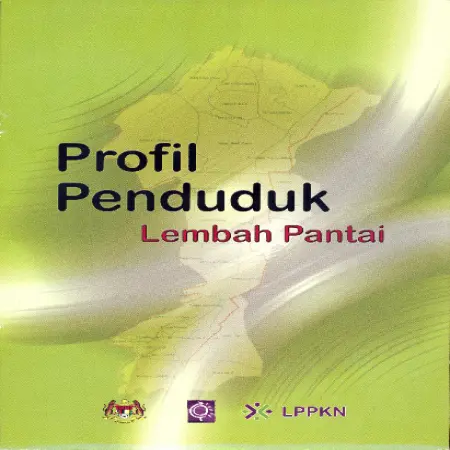
Profil penduduk Lembah Pantai
Item Type: Book
Editor:
Year: 00/00/2008
Abstract: A book that contains information on the residents and development of the residents of Lembah Pantai which is very suitable as a basis for program planning for the well -being of the people in this area. The Coastal Valley constituency is one of 222 Parliamentary constituencies. This division is located under the Federal Territory of Kuala Lumpur and has 14 areas within it. The areas consist of Bangsar Baru, Bukit Kerinchi, Jalan Maarof, Jalan Pantai Baru, Jalan Travers, Jalan Tun Sambanthan, Jalan Bukit Bangsar, Jalan Abdullah Hukum, Kg Sentosa, kg. Bohol, Pantai Dalam, Petaling Jaya, Taman Lucky and University of Malaya. The area of the Coastal Valley is 21.4 square kilometers.
|
|
|
|
|
|
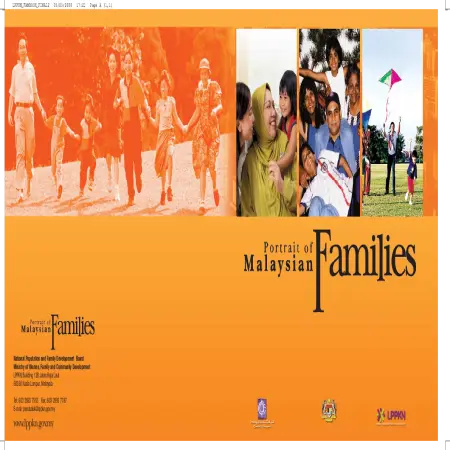
Protecting and strengthening families: challenges and strategies - Malaysian perspective
Item Type: Conference or Workshop Item
Editor:
Year: 00/00/2006
Abstract: Over the past decade rapid transitions in Malaysian family structure and family life have occurred due to globalization, industrialization and socio-economic development. Education, economic activities, infusion of cultures, religion, migration, urbanization plus improvements in living standards all tend to have an impact on families and loosen the traditional structure. Some of the key changes that have reshaped Malaysian families include a smaller family size due to declining birth rate, increase in nuclear families, rise in marital break-up and single parent households and increased participation of women in the labour force by women. The traditional picture of a male breadwinner and female homemaker characterizes a smaller proportion of Malaysian families today. This paper focuses on the profile, issues and challenges confronting Malaysian Families, marriage, family relationships, need for balancing work and family life, role of father and impact of technology on the family. The role of the family in Malaysia is very crucial as the development of the human potential is a key component of the nine challenges as promulgated in Vision 2020. Various promotive, preventive and advocacy programmes and activities have been initiatives undertaken together with NG0s, the private and public sector as well as education and training institutions to ensure the strengthening of the family unit as well as helping families cope with the demands of contemporary living.
|
|
|
|
|
|
Protecting and strengthening the family through National Family Planning Programme: Indonesia's experience
Item Type: Conference or Workshop Item
Editor:
Year: 00/00/2006
Abstract: Indonesia, similar to other countries in the region, has been experiencing problems that threaten family cohesiveness, such as: poverty, prolonged socio-economic crisis, modernization and globalization. If not addressed adequately these threats to family cohesiveness will also be potential threat to the development of human resources in Indonesia. Thus protecting the family becomes an important aspects for the development of the nation, requiring contribution of three major parties, namely: government commitment; family motivation; and community support. The paper examines the Indonesian government's efforts to protect and strengthen families through the national family planning program. The Indonesia's family Planning program was established in early 1970. After the ICPD 1994, the program has expanded its mission and dealt not only with contraceptive services and family welfare but also other aspects of reproductive health and reproductive rights as well, shifting its vision to become quality family, instead of small and happy family. High commitment of the Government towards promoting Family Planning and Welfare is expressed through legal policy aspects and the programmatic interventions.
|
|
|
|
|
|
Protecting and strengthening the family: challenges and opportunies
Item Type: Conference or Workshop Item
Editor:
Year: 00/00/2006
Abstract: Findings from the Malaysian Population and Family Survey 2004. Perceptions of relationships among family members found that as many as 98.5% of women said they had good family relationships comprising 99% Malays, 98% Chinese and 95% Indians. A total of 99% of men also stated that they have good family relationships, namely 99.2% Malays, 98.0% Chinese and 98.2% Indians. Meanwhile, 99.3% of women who did not have financial problems stated that they had good family relationships compared to 98.3% who had financial problems.
|
|
|
|
|
|
Population, poverty and HIV/Aids
Item Type: Newsletter
Editor:
Year: 00/07/2005
Abstract: By June 2004, the cumulative number of HIV infections was 60,621 with 8,840 cases of AIDS and 6,523 deaths. The main mode of transmission is intravenous drug use followed by heterosexual transmission. The HIV infection rate is highest among young adults aged 20-39 years while the proportion of women infected with HIV is also increasing. In this regard, more than 40 percent of those infected with HIV are fishermen and odd job workers, the occupation sectors that are often associated with those living in poverty. The major challenge for Malaysia is to increase the geographical coverage of HIV/AIDS-related services and their reach especially to vulnerable populations and those living in poverty.
|
|
|
|
|
|
Population growth and population ageing
Item Type: Newsletter
Editor:
Year: 00/01/2005
Abstract: Population ageing has significant implications on the communities, families and the individuals, in the context of social change. With increasing age at marriage, more and more people are delaying family formation such that many retirees still have to support their young children. This means that there will be fewer resources for the older persons becomes increasingly serious as their earnings diminish after retirement. As life expectancy increases, the families may have to cope with more that one generation of older persons.
|
|
|
|
|
|
Population, education and development
Item Type: Newsletter
Editor:
Year: 00/07/2003
Abstract: Malaysia is of the view that continuous efforts in education is required to develop the individual's potential to the fullest, thus contributing to the well-being and prosperity of society and the country at large. In Malaysia, the education sector has been regarded a priority sector since our independence.
|
|
|
|
|