Browse by Division/Agency
|
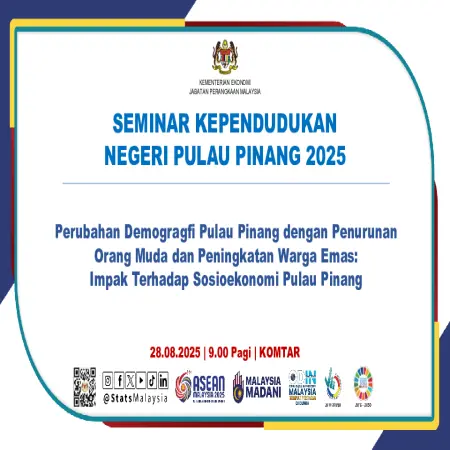
Perubahan demografi Pulau Pinang dengan penurunan orang muda dan peningkatan warga emas: impak terhadap sosioekonomi Pulau Pinang
Item Type: Conference or Workshop Item
Editor:
Year: 00/08/2025
Abstract: Population aging is a global phenomenon in which the number of elderly people contributes to a large part of the total population of a country. This scenario will occur when the birth rate decreases, the mortality rate stabilizes in line with advancements in healthcare services, and consequently, the life expectancy of the population in a country increases. Globally, we have reached an aging society where the growth of the elderly population exceeds that of the working-age population. An aging population impacts the reduction of productive labor; changes in the economic structure; increased government financial expenditure; pressure on the healthcare system; changes in social and demographic structures; and the preservation of culture and traditions.
|
|
|
|
|
|
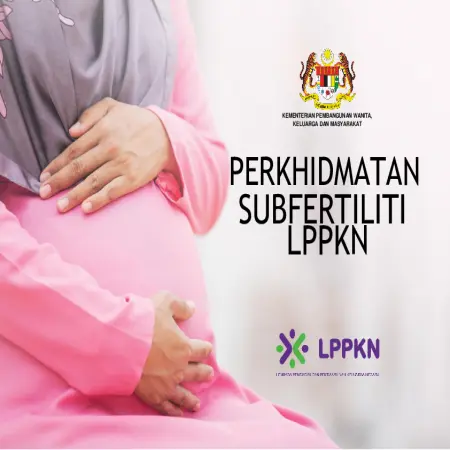
Perkhidmatan subfertiliti LPPKN
Item Type: Conference or Workshop Item
Editor:
Year: 00/08/2025
Abstract: LPPKN provides subfertility services to raise awareness and education on fertility and reproductive health; empower access to fertility treatments and reproductive health services; organize community engagement programs and support services focused on fertility issues and family well-being; establishment of the National Subfertility Center and others. The subfertility treatments provided are Intrauterine Insemination (IUI) and In Vitro Fertilisation (IVF)
|
|
|
|
|
|
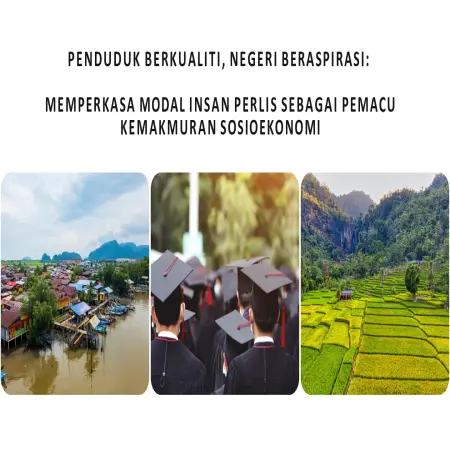
Penduduk berkualiti, Negeri beraspirasi: memperkasa modal insan Perlis sebagai pemacu kemakmuran sosioekonomi
Item Type: Conference or Workshop Item
Editor:
Year: 00/08/2025
Abstract: Human capital development is one of the holistic efforts that emphasize the well-being of individuals and society. Socioeconomic development in Perlis can only be achieved if the potential of human capital is widely utilized. Investment in human capital needs to consider the unique demographics, local economic challenges, and the cultural and religious values of the Perlis community. The main strategy is to increase participation rates in the labor market, especially among youth and graduates, strengthen the relationship between education and industry, and advance local economic sectors such as smart agriculture and community tourism.
|
|
|
|
|
|
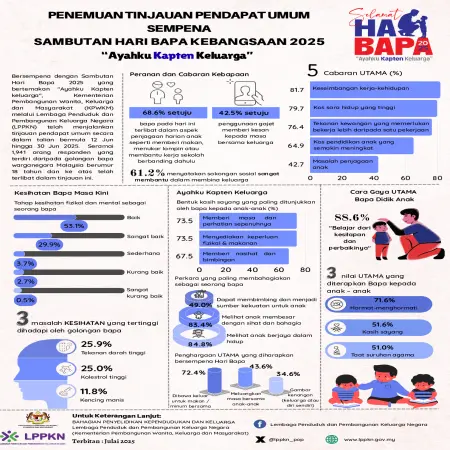
Penemuan Tinjauan Pendapat Umum Sempena Sambutan Hari Bapa Kebangsaan 2025 “Ayahku Kapten Keluarga”
Item Type: Infographic
Editor:
Year: 00/07/2025
Abstract: In conjunction with the 2025 Father’s Day celebration themed “My Father, the Family Captain,” the Ministry of Women, Family and Community Development (KPWKM), through the National Population and Family Development Board (NPFDB), conducted an online public opinion survey from 12 June to 30 June 2025. A total of 1,941 respondents, consisting of Malaysian fathers aged 18 and above, participated in this survey.
|
|
|
|
|
|
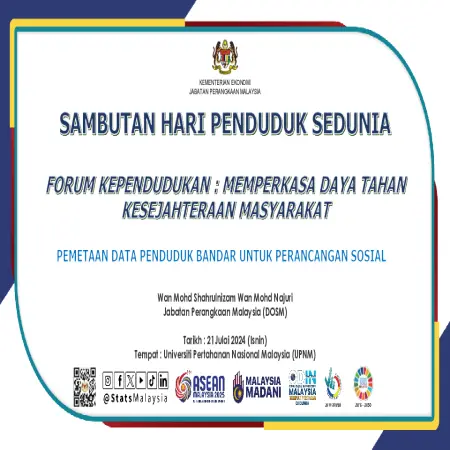
Pemetaan data penduduk bandar untuk perancangan sosial
Item Type: Conference or Workshop Item
Editor:
Year: 00/07/2025
Abstract: The importance of statistics for national development is to measure the current situation; identify current issues and gaps; formulate policies and action plans; monitor implementation; evaluate achievements; correct and realign.
|
|
|
|
|
|
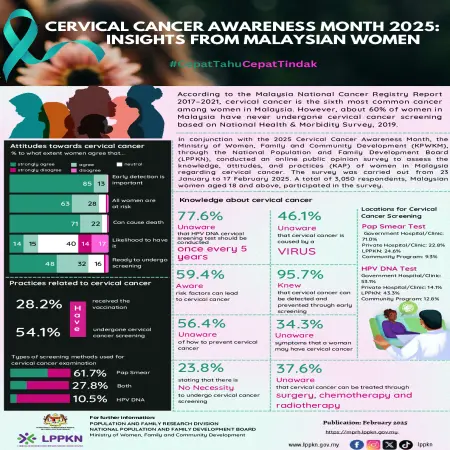
Penemuan Utama Tinjauan Pendapat Umum Bersempena Sambutan Pendapat Umum Bulan Kesedaran Kanser Serviks 2025
Item Type: Infographic
Editor:
Year: 00/06/2025
Abstract: In conjunction with the 2025 Cervical Cancer Awareness Month, the
Ministry of Women, Family and Community Development (KPWKM),
through the National Population and Family Development Board
(LPPKN), conducted an online public opinion survey to assess the
knowledge, attitudes, and practices (KAP) of women in Malaysia
regarding cervical cancer. The survey was carried out from 23
January to 17 February 2025. A total of 3,050 respondents, Malaysian
women aged 18 and above, participated in the survey.
|
|
|
|
|
|
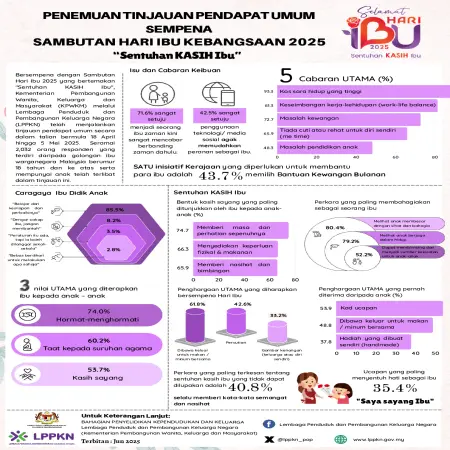
Penemuan Tinjauan Pendapat Umum Sempena Sambutan Hari Ibu Kebangsaan 2025 “Sentuhan KASIH Ibu”
Item Type: Infographic
Editor:
Year: 00/06/2025
Abstract: In conjunction with Mother's Day celebration themed “The Touch of a Mother's LOVE”, the Ministry of Women, Family and Community Development (KPWKM), through the National Population and Family Development Board (NPFDB), conducted an online public opinion survey from April 18 to May 5, 2025. A total of 2,032 respondents, consisting of Malaysian mothers aged 18 and above who have children, participated in this survey.
|
|
|
|
|
 |
Podcast Kasih Lensa Keluarga: Jejak Subfertiliti – Sejarah, Stigma & Harapan
Item Type: Video
Editor:
Year: 23/04/2025
Abstract: This episode highlights the distinguished contribution of Dato’ Dr. Hamid Arshat, Consultant Obstetrician and Gynaecologist (OBGYN), a renowned medical pioneer who has led the development of subfertility treatment in Malaysia for more than four decades. He will share his personal journey, challenges encountered, and key achievements in advancing fertility care in the country. The session also features Dr. Halimatul Saadiah Mohd Aris, Deputy Director of the National Subfertility Specialist Centre, LPPKN.
|
|
|
|
|
|
Podcast KASIH Lensa Keluarga: IUI, TI, IVF @ ICSI - Mana yang sesuai?
Item Type: Video
Editor:
Year: 24/03/2025
Abstract: This session of the KASIH Lensa Keluarga Podcast explores key fertility treatment options, namely Intrauterine Insemination (IUI), Timed Intercourse (TI), In Vitro Fertilisation (IVF), and Intracytoplasmic Sperm Injection (ICSI). The discussion features Dr. Lee Yeh Han, Senior Assistant Director, Subfertility Unit, LPPKN, and Dr. Adilah Ahmat, Consultant Obstetrician and Gynaecologist, LPPKN Fertility Clinic (FPP). The panel will provide detailed insights into the procedures, effectiveness, and suitability of each method based on individual needs. This session aims to enhance public understanding of available fertility treatments in Malaysia and to promote greater awareness of reproductive health.
|
|
|
|
|
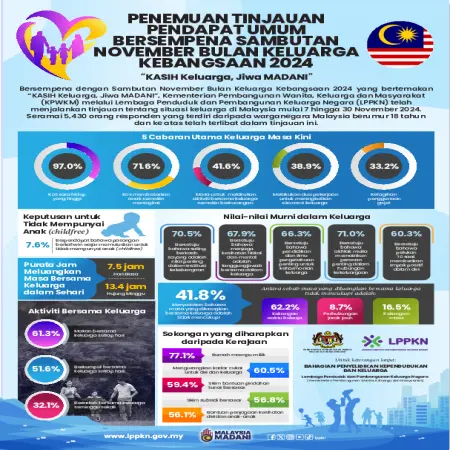
Penemuan tinjauan pendapat umum bersempena Sambutan November Bulan Keluarga Kebangsaan 2024
Item Type: Infographic
Editor:
Year: 00/11/2024
Abstract: In conjunction with the National Family Month celebration in November 2024, themed “KASIH Keluarga, Jiwa MADANI”, the Ministry of Women, Family and Community Development (KPWKM) through the National Population and Family Development Board (NPFBD) conducted a survey on the family situation in Malaysia from November 7 to 30, 2024. A total of 5,430 respondents, consisting of Malaysian citizens aged 18 and above, participated in this survey. The purpose of the survey was to gain a deeper understanding of the well-being, challenges, and perspectives of families in Malaysia, as well as to gain further insight into the social dynamics of families in the current context.
|
|
|
|
|