Browse by Division/Agency
|
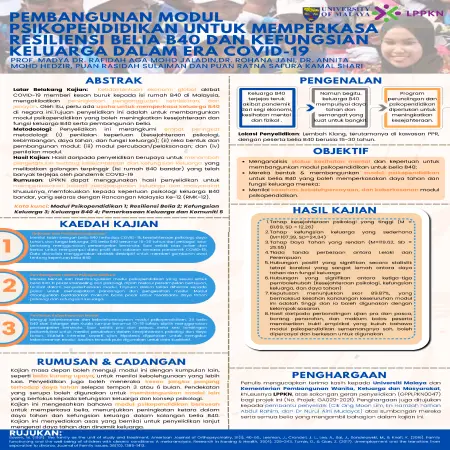
Pembangunan Modul Psikopendidikan untuk memperkasa resiliensi belia B40 dan kefungsian keluarga dalam era Covid-19
Item Type: Scientific Poster
Editor:
Year: 00/11/2024
Abstract: The global economic uncertainty caused by COVID-19 has had a negative impact on B40 households in Malaysia, resulting in increased unemployment, poverty, and crime. Therefore, efforts are needed to empower the B40 families in the country. The aim of this research is to develop a psychoeducational module that can improve the well-being and functioning of B40 families as well as the development of youth.
Methodology: This research includes four methodological stages: (i) needs assessment (psychological well-being, concerns, resilience, and family functioning); (ii) design and development of the module; (iii) trial/implementation of the module; and (iv) module evaluation.
Study Findings: The results of the research are expected to increase knowledge on the well-being and functioning of families, particularly marginalized groups (urban B40 households) that have been significantly affected by the COVID-19 pandemic.
Conclusion: LPPKN can utilize the results of this research to strengthen family and community development initiatives, particularly focusing on the psychological needs of urban B40 families, in line with the 12th Malaysia Plan (RMK-12).
|
|
|
|
|
|
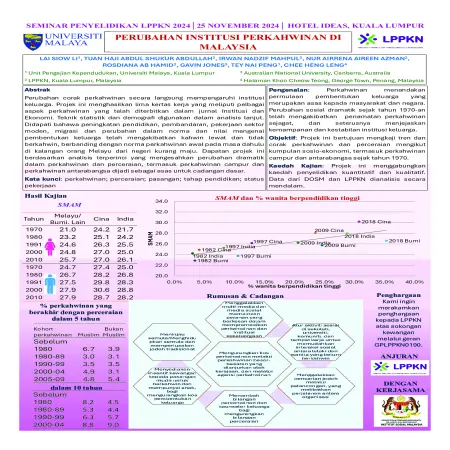
Perubahan institusi perkahwinan di Malaysia
Item Type: Scientific Poster
Editor:
Year: 00/11/2024
Abstract: The changing patterns of marriage directly affect the family institution. This project produced five papers covering various aspects of marriage, which have been published in the Journal of Institutions and Economics. Statistical and demographic techniques were used in further analysis. It was found that increased education, urbanization, employment in the modern sector, migration and changes in norms and values regarding family formation have led to later marriages and unmarried individuals, compared to the earlier marriage norms among Malays in less developed states. The findings of this project, based on detailed analysis, confirm dramatic changes in marriage and divorce trends, including mixed marriages and international marriages, which serve as the basis for policy recommendations.
|
|
|
|
|
|
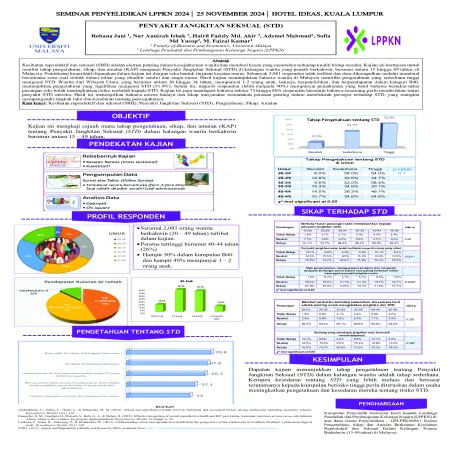
Penyakit jangkitan seksual (Std)
Item Type: Scientific Poster
Editor:
Year: 00/11/2024
Abstract: Reproductive and sexual health (SRH) is a key element in women's well-being and profoundly affects their quality of life. This study aims to assess the knowledge, attitude, and practices (KAP) regarding sexually transmitted diseases (STDs) among married women aged 15 to 49 years in Malaysia. A quantitative approach with a cross-sectional survey design was used in this study. A total of 2,081 respondents were involved, and data was collected through face-to-face interviews as well as self-administered, anonymous online questionnaires.
The results of the study indicate that women in Malaysia have a moderately high level of knowledge about STDs. Women from the Northern region, aged between 30 and 34 years, with 1-2 children, employed, educated, and with a B40 income category, showed significant knowledge about STDs (51.9%). Additionally, the majority of respondents (more than 90%) correctly understood that having multiple sexual partners increases the risk of exposure to STDs. The study also found that around 75 to 86% of respondents agreed that one should keep their STD status confidential.
These findings highlight that cultural norms and societal attitudes play an important role in shaping perceptions about STDs, which may influence behaviors and awareness of their prevention.
|
|
|
|
|
|
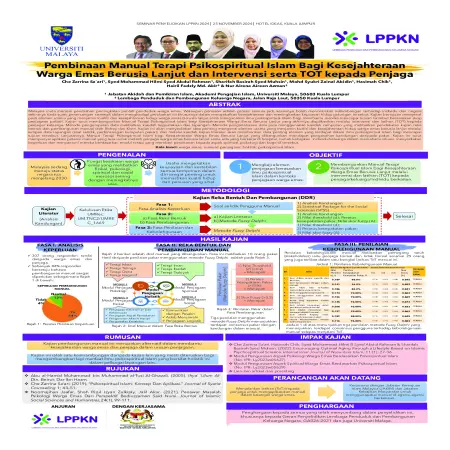
Pembinaan manual terapi psikospiritual Islam bagi kesejahteraan warga emas berusia lanjut dan intervensi serta TOT kepada penjaga
Item Type: Scientific Poster
Editor:
Year: 00/11/2024
Abstract: The aging population in Malaysia is increasingly becoming a concern. Although aging is a natural process, its effects can cause anxiety among individuals and the country if there is no strategic planning to address it, particularly in maintaining the well-being and improving the quality of life for the elderly. This study aims to identify key elements that ensure the quality of life and well-being of the elderly and analyze Islamic psychospiritual knowledge to help achieve these goals based on palliative care. The study also develops an Islamic Psychospiritual Therapy Manual for Elderly Well-being, which is applied through intervention and training (TOT) for caregivers/families. Data collection methods include literature review and fieldwork, while data analysis uses a mixed-method approach involving Richey and Klein's design and development study. This research will provide important data on the key elements that guarantee the quality of life for the elderly through field data collection (surveys, expert group discussions), and literature research will give valuable insights into psychospiritual elements in Islam that can help achieve this. Additionally, the developed manual for elderly well-being was content-validated by experts. This study also has the potential for widespread application, such as training elderly caregivers, whether working in hospitals, welfare homes, or within families, to better understand, meet the needs, and care for elderly individuals based on the therapeutic module focusing on spiritual, psychological, and cognitive aspects.
|
|
|
|
|
|
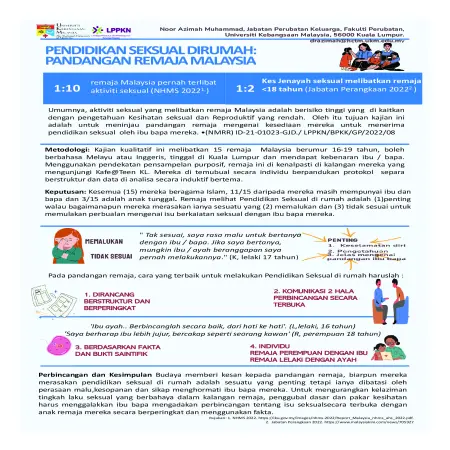
Pendidikan seksual di rumah : pandangan remaja Malaysia
Item Type: Scientific Poster
Editor:
Year: 00/11/2024
Abstract: Culture influences the views of adolescents, even though they believe that sexual education at home is important, it is often restricted by feelings of shame, modesty, and respect for their parents. To reduce the prevalence of risky sexual behaviors among adolescents, policymakers and health experts should encourage parents to have open discussions about sexual issues with their teenage children in a gradual manner, using factual information.
|
|
|
|
|
|
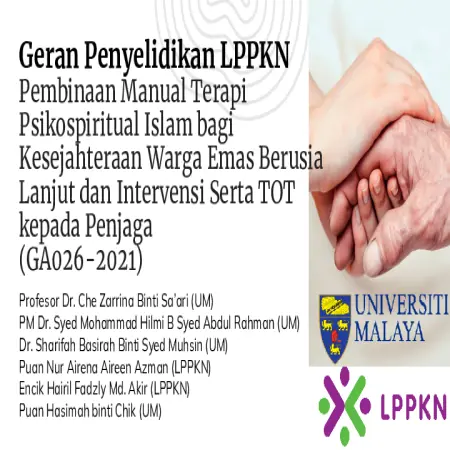
Pembinaan manual terapi psikospiritual Islam bagi kesejahteraan warga emas berusia lanjut dan intervensi serta TOT kepada penjaga
Item Type: Conference or Workshop Item
Editor:
Year: 00/11/2024
Abstract: It is projected that by 2050, the elderly population will be significantly larger than the number of children under the age of five, reaching two billion within the next 50 years. This growth wave also affects Malaysia, where the elderly population increased to 9.9% in 2020. Some elderly individuals experience spiritual distress due to the awareness that their lifespan is limited. The application of religious elements is considered the most effective method to address life's challenges, as it helps individuals achieve mental well-being. As a result, the research has developed a manual, namely the Islamic Psychospiritual Therapy Manual for the Well-being of Elderly Individuals, along with interventions and a Training of Trainers (TOT) program for caregivers.
|
|
|
|
|
|
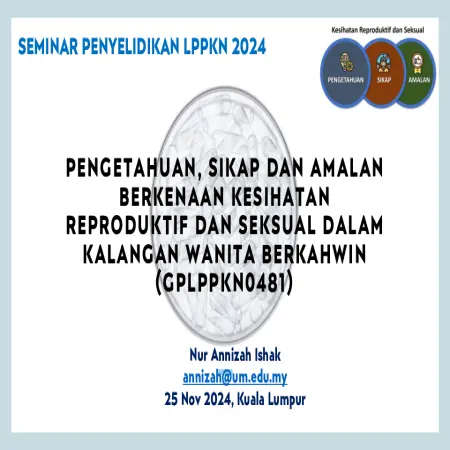
Pengetahuan, sikap dan amalan berkenaan kesihatan reproduktif dan seksual dalam kalangan wanita berkahwin
Item Type: Conference or Workshop Item
Editor:
Year: 00/11/2024
Abstract: The study aims to explore the factors that create a gap between knowledge and practice regarding reproductive health for women in Malaysia. Additionally, it measures the level of knowledge about reproductive and sexual health among women, examines attitudes towards reproductive and sexual health, investigates practices regarding reproductive and sexual health, and identifies factors influencing the level of knowledge, attitudes, and practices related to reproductive and sexual health among women. The findings suggest that the low level of knowledge about family planning indicates that some women have misunderstandings about the functions of family planning methods. Women with moderate and high levels of knowledge are more likely to practice family planning. Advocacy and educational programs on family planning should be enhanced to ensure that women have accurate information and are able to make informed decisions regarding the use of family planning methods.
|
|
|
|
|
|
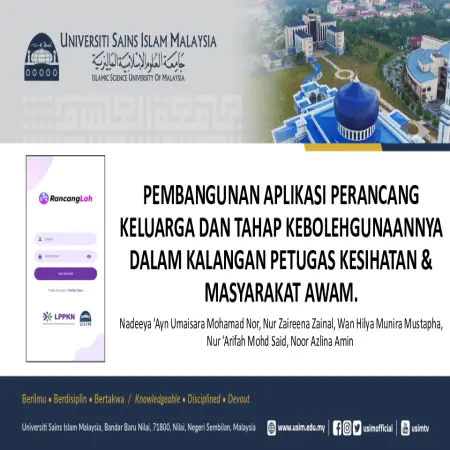
Pembangunan aplikasi perancang keluarga dan tahap kebolehgunaannya dalam kalangan petugas kesihatan dan masyarakat awam
Item Type: Conference or Workshop Item
Editor:
Year: 00/11/2024
Abstract: The use of family planning is still low among Malaysians. There is a need to raise awareness about family planning, especially among the 'high-risk group in pregnancy.' This group requires specific interventions and approaches, such as awareness of pregnancy risks, family planning, and the types of family planning methods suitable for them. This study aims to assess the usability of the Family Planning Application for the general public. The high usability score for the RancangLah app among both respondent groups indicates its potential for adoption. RancangLah has a positive impact, as it can be used as an educational tool in health promotion activities related to family planning.
|
|
|
|
|
|
Pembangunan Modul Seksualiti anak berkeperluan khas
Item Type: Conference or Workshop Item
Editor:
Year: 00/11/2024
Abstract: Sexuality is a fundamental aspect of human life, and it is important for every individual, regardless of ability, to have access to accurate and appropriate information about sexuality. Individuals with special needs often face challenges in learning and expressing their sexuality. Parents are the primary educators of sexual health, but many parents find it difficult or are unwilling to discuss topics related to sexuality with their children. Most teenagers receive sexual education through informal means, such as interactions with peers, but children with special needs do not have such opportunities. This study aims to identify the knowledge of sexual and reproductive health among adolescents with autism spectrum disorders and learning difficulties. Additionally, it seeks to develop a sexuality and reproductive module that is acceptable to adolescents with autism spectrum disorders and learning difficulties.
|
|
|
|
|
|
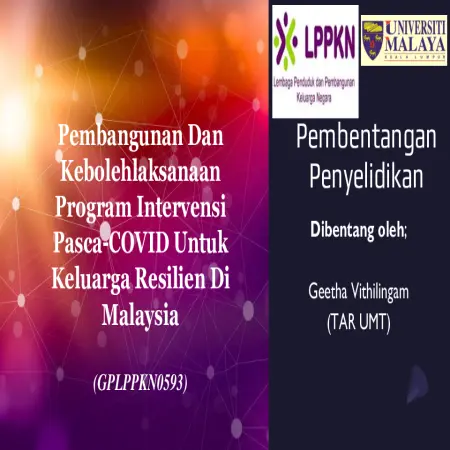
Pembangunan dan kebolehlaksanaan program intervensi pasca-Covid untuk keluarga resilien di Malaysia
Item Type: Conference or Workshop Item
Editor:
Year: 00/11/2024
Abstract: This study aims to develop a new, evidence-based family well-being intervention program in response to the challenges faced by families in Malaysia post-COVID-19. Marriage-related stress, particularly from external sources, can negatively affect relationship satisfaction and stability, and the COVID-19 pandemic has exacerbated these pressures. Measures such as travel restrictions and social distancing have contributed to increased psychological stress, leading to deteriorating relationship quality due to mental health issues like depression and anxiety. The impact of the pandemic highlights weaknesses and resilience in family dynamics, underscoring the need for support systems to maintain relationship quality during crises. A collaborative approach in designing the new intervention program should involve not only health experts but also representatives from fields such as education, psychology, and technology. This will ensure a comprehensive and effective intervention to address the various challenges families face.
|
|
|
|
|