Browse by Type
|
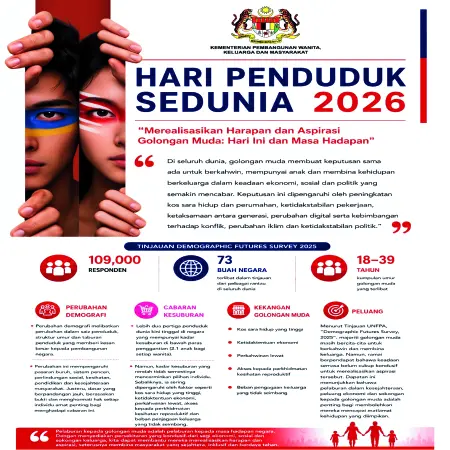
Hari Penduduk Sedunia 2026 “Merealisasikan Harapan dan Aspirasi Golongan Muda: Hari Ini dan Masa Hadapan”
Item Type: Infographic
Editor:
Year: 00/07/2026
Abstract: All around the world, young people are making decisions about whether to get married, have children, and build family life amid increasingly challenging economic, social, and political conditions. These decisions are influenced by rising costs of living and housing, job instability, intergenerational inequality, digital changes, as well as worries about conflicts, climate change, and political instability. Investing in young people is an investment in the country's future. By providing an environment that is supportive economically, socially, and through family support, we can help them achieve their hopes and aspirations, and in turn build a prosperous, inclusive, and resilient society.
|
|
|
|
|
|
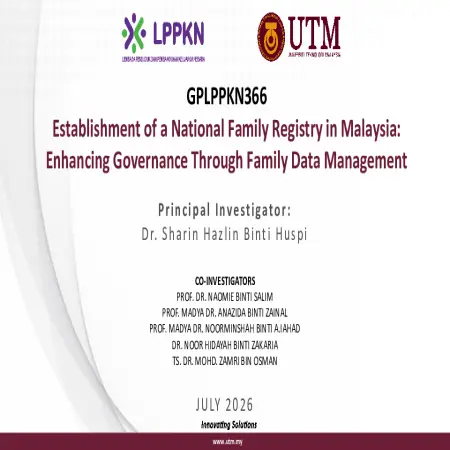
Establishment of a National Family Registry in Malaysia: Enhancing Governance Through Family Data Management
Item Type: Conference or Workshop Item
Editor:
Year: 00/07/2026
Abstract: This study evaluates the feasibility of establishing a National Family Registry (DKK) in Malaysia as a strategic mechanism to strengthen governance, service delivery, and policy analysis based on integrated family data. The study proposes an integration model that combines key records such as births, deaths, marriages, divorces, and household structures into a centralized database. It is expected to produce a data governance policy framework, a conceptual model for integrated data governance, and a roadmap for implementing the DKK. Overall, this study could support the country's digital transformation by enhancing data security, administrative efficiency, and the ability to deliver more inclusive and responsive social services.
|
|
|
|
|
|
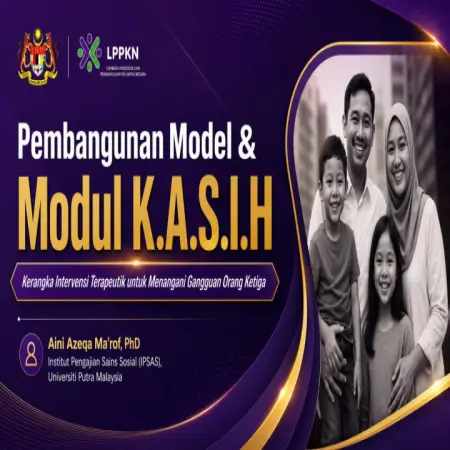
Pembangunan model dan modul terapeutik berasaskan kaunseling untuk menangani gangguan orang ketiga dalam perkahwinan
Item Type: Conference or Workshop Item
Editor:
Year: 00/07/2026
Abstract: This study aims to develop a therapeutic model and module based on family counseling to address third-party interference in marriages in Malaysia. Using a qualitative approach through semi-structured interviews with 17 couples and three expert counselors, the study identifies contributing factors to the interference, its effects on the well-being of couples and families, as well as the therapeutic elements needed in the intervention. The findings of the study produced the Marital Relationship Interference Cycle Model (KGHP) and the K.A.S.I.H Intervention Model, complete with the K.A.S.I.H Therapeutic Counseling Module, a module that tackles third-party interference in a structured, integrative, and culturally sensitive way to Malaysia.
|
|
|
|
|
|
Keibubapaan : ketakutan tertinggal (FOMO) atau ketenangan bebas (freedom glow)? satu kajian emosi dan psikologi dalam keputusan perkahwinan tanpa anak
Item Type: Conference or Workshop Item
Editor:
Year: 00/07/2026
Abstract: This study aims to identify typologies of reproductive decisions, examine the factors that influence the decision to live without children, compare levels of Parenting Fear of Missing Out (Parenting FOMO), Freedom Glow, and socio-cultural pressure according to reproductive decision typologies, as well as explore the emotional experiences of individuals living without children. Economic factors are the main factors influencing reproductive decisions, followed by career, autonomy, health, and life aspirations. The Childless by Condition group recorded higher levels of Parenting FOMO and socio-cultural pressure, while the Childfree by Choice group showed higher levels of Freedom Glow.
|
|
|
|
|
|
Pembinaan model kaunseling pra dan pasca penceraian komprehensif Witaj (Wiqayah, Tahlil Wal’ilaj – Pencegahan, Analisis Keperluan, Pemulihan)
Item Type: Conference or Workshop Item
Editor:
Year: 00/07/2026
Abstract: The increase in divorce rates, especially among young families, has had significant implications on psychological, social, and economic well-being, and calls for more systematic, contextual, and evidence-based counseling interventions. This study aims to develop the WITAJ Comprehensive Pre- and Post-Divorce Counseling Model, which integrates prevention (wiqayah), needs analysis (tahlil), and recovery (‘ilaj’) elements in addressing divorce issues in Malaysia. The study successfully produced two counseling models, two intervention guidelines, and valid and reliable pre- and post-divorce screening instruments. Significantly, the WITAJ model contributes to the development of a holistic, integrative, and contextual counseling intervention framework, with the potential to strengthen professional counseling practice and evidence-based family policy development in Malaysia.
|
|
|
|
|
|
Emotional wellbeing, quality of life, and coping strategies among couples undergoing infertility treatment at LPPKN Subfertility Centres in Malaysia
Item Type: Conference or Workshop Item
Editor:
Year: 00/07/2026
Abstract: This study aims to assess emotional well-being, quality of life, and coping strategies among couples undergoing infertility treatment at the LPPKN subfertility center in Malaysia, as well as explore their psychosocial experiences in the local cultural context. Partner and family support are identified as important protective factors. The study emphasizes the need for a comprehensive biopsychosocial approach and the integration of mental health screening and counseling support in infertility services to ensure patient-centered care.
|
|
|
|
|
|
Penambahbaikan Indeks Kesejahteraan Keluarga Malaysia (IKK): berasaskan data LPPKN
Item Type: Conference or Workshop Item
Editor:
Year: 00/07/2026
Abstract: This study aims to assess the strengths and weaknesses of the existing IKK and to suggest strategic improvements that are more responsive and inclusive. The study uses a mixed-method approach, involving secondary analysis of FWI data from 2011-2022, systematic literature review, in-depth interviews with seven expert informants, and a comparative analysis with international wellbeing indices. To address the issue of score instability, the study proposes a strategic shift from purely subjective measurement to the integration of Administrative Data (objective) such as JKM aid statistics, PDRM crime indices, and local authority infrastructure data as triangulation agents. The study also recommends conducting Local Situation Analyses, Longitudinal Panel Studies, and pilot studies of new instruments before full implementation.
|
|
|
|
|
|
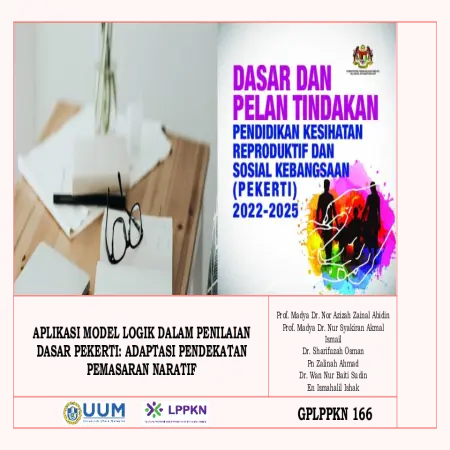
Aplikasi model, logik dalam penilaian Dasar PEKERTI: adaptasi pendekatan pemasaran naratif
Item Type: Conference or Workshop Item
Editor:
Year: 00/07/2026
Abstract: This study assesses the current performance of the PEKERTI policy by focusing on the challenges that limit its potential from achieving the set goals. The findings show that the policy’s achievements are moderate and reasonable. PEKERTI faces complex challenges due to the large target group and the varied implementation strategies. Meanwhile, the level of advocacy among agencies is relatively low, and policy implementation monitoring is found to be quite loose. This study suggests that the upcoming PEKERTI 3.0 should reorganize its implementation strategies to be more aligned and focused, while also strengthening advocacy strategies with the involved agencies. Policy implementation monitoring should also be improved through a more efficient data management system. A new narrative for the PEKERTI policy needs to be developed to strengthen public acceptance.
|
|
|
|
|
|
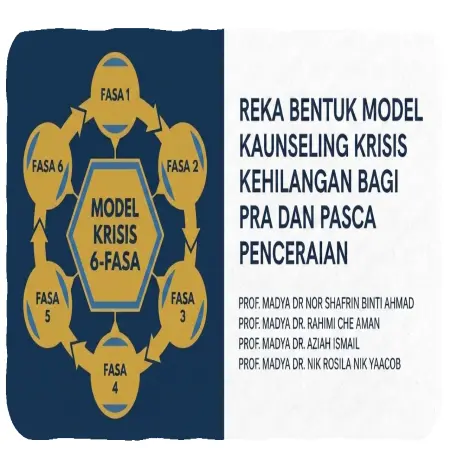
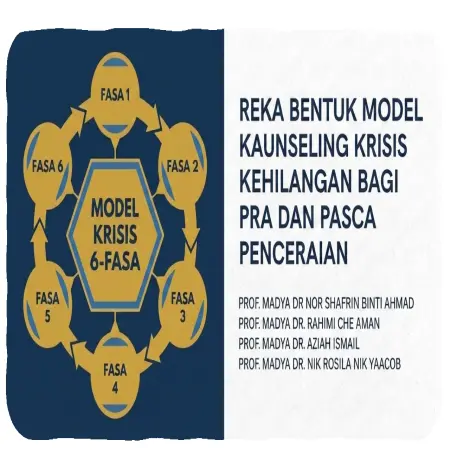
Reka bentuk model kaunseling krisis kehilangan bagi pra dan pasca penceraian
Item Type: Conference or Workshop Item
Editor:
Year: 00/07/2026
Abstract: This study aims to develop a Crisis Loss Counseling Model for individuals in the pre- and post-divorce phases. It identifies coping strategies, resilience levels, experiences of loss crises, and counseling intervention needs among people facing divorce issues. The findings show that clients tend to use adaptive coping strategies more than maladaptive ones, while resilience is at a moderate level. Integrating the study's findings resulted in a comprehensive model consisting of six main phases: initial screening, relationship building and session structuring, issue exploration and crisis assessment, intervention, support, and post-divorce adjustment. The model's validity was tested using the Fuzzy Delphi method and has the potential to serve as a systematic, phased, and responsive guide for crisis counseling interventions in the context of handling divorce in Malaysia.
|
|
|
|
|
|
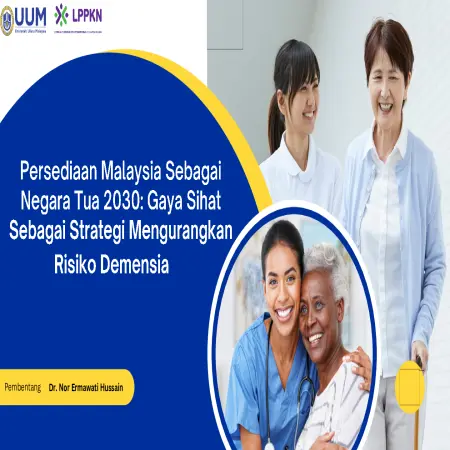
Persediaan Malaysia sebagai negara tua 2030: gaya sihat sebagai strategi mengurangkan risiko demensia
Item Type: Conference or Workshop Item
Editor:
Year: 00/07/2026
Abstract: The issue of dementia is not a new matter, but if it is not managed, it can affect the health of the population and subsequently lead to increased dementia treatment costs. Therefore, this study aims to analyze the relationship between a healthy lifestyle and the risk of dementia among the elderly in the northern zone as a preparation for the aging nation in 2030. The study findings show that the majority of the elderly face chronic health problems and rely on caregivers. The results also found that the effects of a healthy lifestyle and social well-being can reduce the risk of dementia. Thus, to ensure the well-being of the elderly is maintained and to reduce dementia problems among them, the development of inclusive community programs, increasing health literacy, as well as physical, mental, and social well-being programs to maintain the quality of life need to be carried out. Cooperation from various parties is very important to ensuring that the quality of life for the elderly is maintained.
|
|
|
|
|