Browse by Type
|
Improving Marriage Tribunal Framework and Practices
Item Type: Conference or Workshop Item
Editor:
Year: 00/07/2026
Abstract: This study looks at the effectiveness of the Marriage Tribunal system for non-Muslim couples in Malaysia and suggests an evidence-based framework to improve its mediation practices. Although the tribunal operates as a mandatory pre-divorce reconciliation mechanism, concerns have been raised about procedural efficiency, professional capacity, and overall effectiveness in the reconciliation process. The study proposes a four-pillar framework consisting of structure, process, practitioners, and performance, along with an Integrated Tribunal Model that introduces a structured, triage-based approach to mediation. This model combines systematic assessment, tailored intervention pathways, and output-based evaluations. Overall, the findings show that while the Marriage Tribunal system has a strong institutional foundation, targeted reforms are needed to enhance its effectiveness, consistency, and responsiveness to the complex psychosocial dynamics of marital conflict.
|
|
|
|
|
|
Sikap Terhadap Kaunseling Keluarga Sebagai Mediator Antara Gaya Keibubapaan, Sokongan Emosi dan Keterlibatan Dengan Hubungan Ibubapa-Anak Bagi Menangani Tingkah Laku Buli Dalam Kalangan Remaja
Item Type: Conference or Workshop Item
Editor:
Year: 00/07/2026
Abstract: This study aims to examine the influence of family dynamics on bullying behavior among teenagers, focusing on parenting styles, emotional support, and parental involvement. It also looks at the role of parent-child relationships and attitudes toward family counseling as mediating factors. The study emphasizes that family dynamics play an important role in shaping teenage behavior, with positive family relationships and an openness to counseling being key mechanisms in reducing bullying behavior.
|
|
|
|
|
|
Improving the Marriage Tribunal Process for the Urban Non-Muslim Using Qualitative Research
Item Type: Conference or Workshop Item
Editor:
Year: 00/07/2026
Abstract: This study was conducted to suggest improvements to the Marriage Tribunal process for non-Muslim couples living in urban areas, particularly in Kuala Lumpur, through collaboration between LPPKN and the National Registration Department. The study's findings show that the Marriage Tribunal process has quick appointment scheduling, reasonable service costs, professional staff, and follow-up support. However, the Tribunal process faces challenges and constraints such as a lack of clear procedures, high emotional stress among petitioners and respondents, language and communication barriers, and short session durations. The study results indicate that improvements to the Marriage Tribunal process need to be implemented, including providing clearer guidelines at all stages—before, during, and after the tribunal process, digitizing administrative and management processes, continuous training, mental health support for officers involved in proceedings, as well as strengthening counseling, legal, and referral support for couples.
|
|
|
|
|
|
Microplastics in Human Semen: A Baseline Study on Characterization, Sources and Reproductive Health Implications Among Men from Klang Valley (Malaysia)
Item Type: Conference or Workshop Item
Editor:
Year: 00/07/2026
Abstract: These microplastics (MPs) have been identified as concerning pollutants due to their presence being documented in several human biological matrices, including blood, placenta, lung tissue, feces, and more recently, semen. This study is the first systematic research in Malaysia to assess the presence of MPs in male semen and their relationship with semen quality. These findings directly benefit LPPKN by strengthening the evidence base on environmental factors affecting reproductive health and align with the PEKERTI Policy and Action Plan, especially the emphasis on empowering research in the field of reproductive health.
|
|
|
|
|
|
Customer journey mapping: a qualitative inquiry of Klinik Nur Sejahtera LPPKN
Item Type: Conference or Workshop Item
Editor:
Year: 00/07/2026
Abstract: This study uses a qualitative approach aimed at recommending an operational framework for Klinik Nur Sejahtera, focusing on organizational processes, integration of user feedback, and assessment of the existing business model. The framework recommendations in this study highlight the need for an integrated digital health ecosystem and the expansion of a collaborative care network to strengthen the clinic’s structure in terms of service access, financial stability, workforce capacity, service quality, digital engagement, supply chain efficiency, and population health impact. Recognizing Klinik Nur Sejahtera as a community-based healthcare provider, the recommended framework has short-term implications for the clinic’s development from 2026 to 2030, emphasizing the critical intersection between clients, service providers, and opportunities for improving the national family planning services.
|
|
|
|
|
|
Pembangunan Model Kerangka Penjagaan Berpusatkan Pesakit untuk Mengatasi Cabaran dan Meningkatkan Keberkesanan Pengesanan Awal Kanser Payudara
Item Type: Conference or Workshop Item
Editor:
Year: 00/07/2026
Abstract: This study aims to develop a Patient-Centered Care (PCC) framework model to tackle challenges and improve the effectiveness of early breast cancer detection in Malaysia. The study uses a retrospective trend analysis design based on secondary data from the LPPKN Mammogram Screening Program over a 5-year period from 2020 to 2024, involving women aged 35 to 70. Analysis was conducted to identify participation patterns, implementation gaps, sociodemographic factors, as well as the effectiveness of screening and early breast cancer detection. Based on the findings, a PCC framework was developed covering four main domains: service accessibility and availability, patient engagement and empowerment, sociodemographic context, and continuity and coordination of care. This framework provides an evidence-based strategic approach to increase screening participation, strengthen follow-up compliance, and promote early cancer detection. Overall, this study contributes to the improvement of a more inclusive, responsive, and effective national screening system in enhancing women's health outcomes in Malaysia.
|
|
|
|
|
|
Feasibility of a Household Registry System for the Panel Study of Malaysian Families (MyHoPS)
Item Type: Conference or Workshop Item
Editor:
Year: 00/07/2026
Abstract: This study aims to assess the feasibility of developing a Household Registry System (HRS) to support the Malaysia Family Panel Study (MyIsiRumah). Currently, Malaysia does not have a dynamic, centralized household database capable of tracking socioeconomic changes over time. Using a mixed-methods approach that combines desk studies, expert interviews, system evaluations, and a pilot survey involving 743 respondents, the study found strong public support for the HRS application. The study suggests four strategic pillars: legal reforms, digital infrastructure integration, independent/impartial governance, and phased implementation through the MyIsiRumah pilot study.
|
|
|
|
|
|
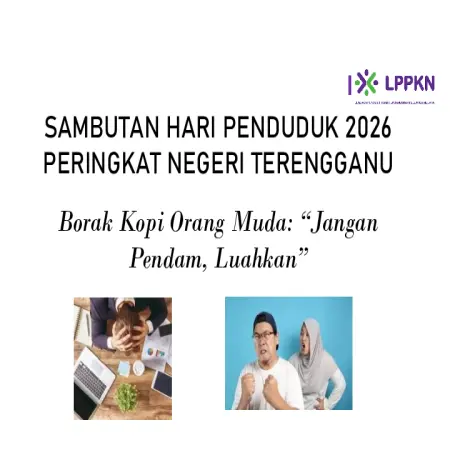
Borak Kopi Orang Muda: “Jangan Pendam, Luahkan”
Item Type: Conference or Workshop Item
Editor:
Year: 00/07/2026
Abstract: The aim of the program is to emphasize effective emotional management for a more positive daily life. It also helps individuals balance and handle their own needs, family, and work efficiently (Work-Life Balance). Additionally, it helps participants strengthen their resilience in facing life’s challenges. Experiencing stress is normal, but each person is responsible for managing their emotions so it doesn't affect daily activities.
|
|
|
|
|
|
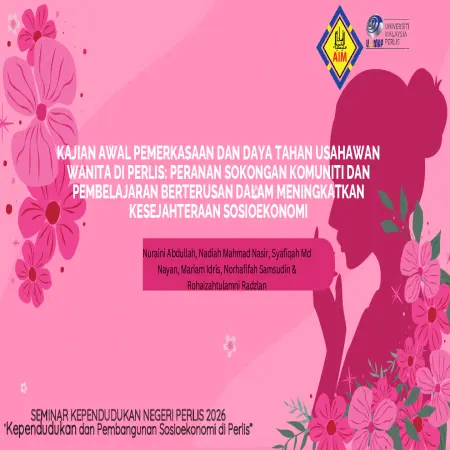
Kajian Awal Pemerkasaan dan Daya Tahan Usahawan Wanita di Perlis: Peranan Sokongan Komuniti dan Pembelajaran Berterusan Dalam Meningkatkan Kesejahteraan Sosioekonomi
Item Type: Conference or Workshop Item
Editor:
Year: 00/07/2026
Abstract: In June 2026, there were 3,996 women entrepreneurs under the SAHABAT Amanah Ikhtiar Malaysia (AIM) network in Perlis. Financing acts as a key catalyst for the socioeconomic chain of low-income groups. Studies summarize that the sustainability of women entrepreneurs is not just the result of individual effort or financial injections alone. Resilience is shaped by how actively the ecosystem (husband, children, community, institutions) manages and negotiates the work-family boundaries. When both domains are under pressure, it’s this invisible infrastructure that helps prevent a 'boundaryless' situation that would overwhelm entrepreneurs.
|
|
|
|
|
|
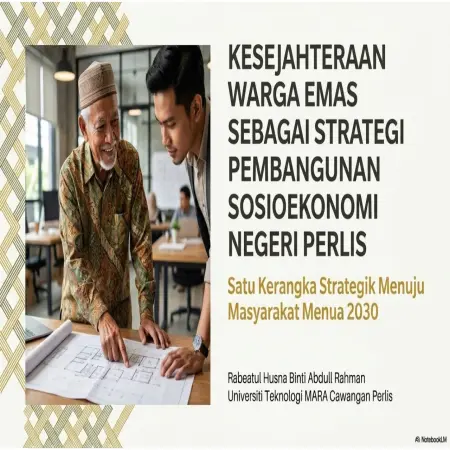
Kesejahteraan warga emas sebagai strategi pembangunan sosioekonomi Negeri Perlis
Item Type: Conference or Workshop Item
Editor:
Year: 00/07/2026
Abstract: There are 5 strategic frameworks for elderly welfare in Perlis, namely Strategy 1 - Strengthening the welfare ecosystem (strategic collaboration across sectors to build a strong social support network in Perlis); Strategy 2 - Developing an elderly-friendly environment (modifying the state's physical and social landscape to be inclusive, conducive, and safe for senior mobility); Strategy 3 - Empowering Senior Economic Participation (driving the state's 'Silver Economy' through labor sector flexibility and micro-business initiatives); Strategy 4 - Lifelong learning and digital inclusion (eliminating digital gaps and ensuring ongoing tech adaptation for independent seniors); and Strategy 5 - Strengthening evidence-based governance (policy making and program evaluations must be assessed empirically based on demographic data and real feedback).
|
|
|
|
|