TOPICS
Results for Topics : "Population"
|
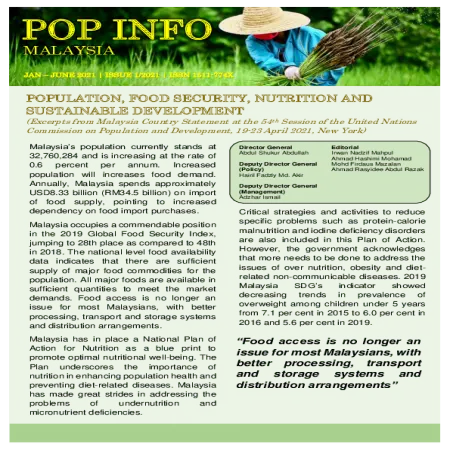
Prosiding Persidangan Kependudukan Kebangsaan 2023 (PERKKS 23): “Penduduk dan Keluarga Mampan, Membangun Malaysia MADANI”
Item Type: Book
Editor:
Year: 00/12/2023
Abstract: Collection of papers presented during the 2023 National Population Conference (PERKKS 23), 21-22 November 2023, Pulse Grande Hotel, Putrajaya.
|
|
|
|
|
|
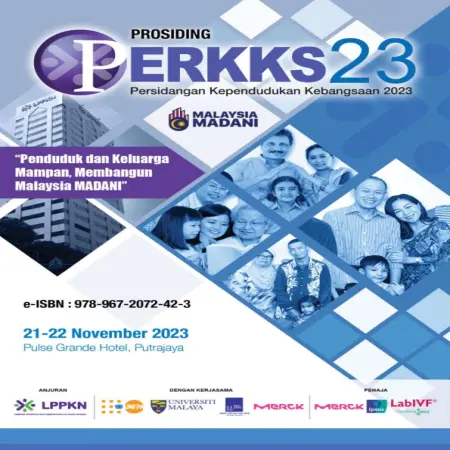
Penurunan Kadar Kesuburan Di Malaysia
Item Type: Infographic
Editor:
Year: 00/10/2023
Abstract: Total Fertility rate (TFR) is a demographic indicator used to estimate the average number of children a woman should give birth to during her reproductive period. The findings of a poll in Sarawak found that the total TFR for the state of Sarawak is decreasing drastically. 12.6% of couples have had or are experiencing fertility problems and it is difficult to conceive within a year after marriage.
|
|
|
|
|
|
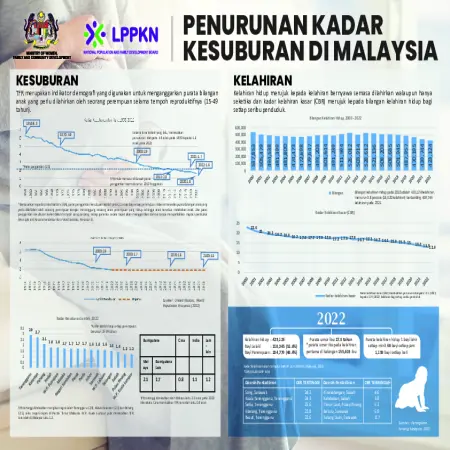
Population, education and sustainable developmet
Item Type: Newsletter
Editor:
Year: 00/06/2023
Abstract: Education is a longstanding right enshrined in human rights and developmental instruments, including in the Plan of Action also recognises the key role of education in sustainable development, as well as the responsibilities of different stakeholders, particularly parents, in this regard.
Strengthening of human capital through education is a priority to Malaysia, with the Government providing free education to citizens up to secondary level. Malaysia is also undertaking efforts to ensure that the education system is robust, resilient and fit for the future.
|
|
|
|
|
|
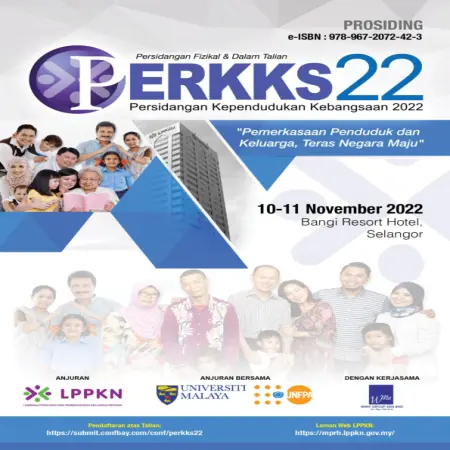
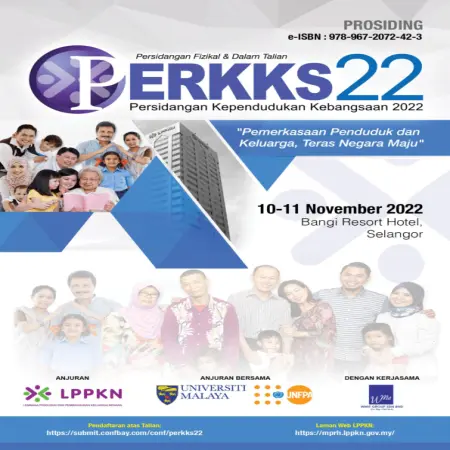
Prosiding Persidangan Kependudukan Kebangsaan 2022 (PERKKS 22): “Pemerkasaan Penduduk dan Keluarga, Teras Negara Maju”
Item Type: Book
Editor:
Year: 00/12/2022
Abstract: Collection of papers presented during the 2022 National Population Conference (PERKKS 22), 10-11 November 2022, Bangi Resort Hotel, Selangor.
|
|
|
|
|
|
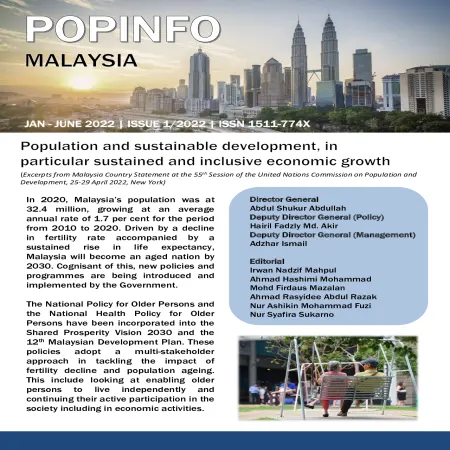
Population and sustainable development, in particular sustained and inclusive economic growth
Item Type: Newsletter
Editor:
Year: 00/05/2022
Abstract: In 2020, Malaysia's population was at 32.4 million, growing at an average annual rate of 1.7 per cent for the period from 2010 to 2020. Driven by a decline in fertility rate accompanied by a sustained rise in life expectancy. Malaysia will become an aged nation by 2030.
|
|
|
|
|
|
Preliminary investigation of cognitive abilities among B40 single mothers
Item Type: Book Section
Editor:
Year: 00/00/2022
Abstract: There have been a lot of socioeconomic research regarding the B40 income group in Malaysia but hardly any conducted among single mothers within the B40 population. Research that emphasizes on B40 group whereby RM4,850.00 is the maximum household income which represents 40 percent of Malaysians is intensely required in order to acquire the most appropriate strategies and policies that can improve their socioeconomic conditions.
|
|
|
|
|
|
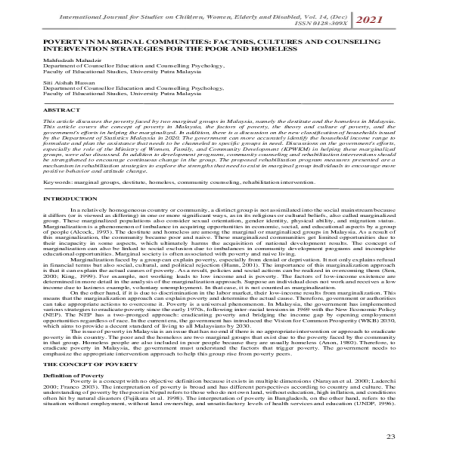
Poverty in marginal communities: factors, cultures and counseling intervention strategies for the poor and homeless
Item Type: Article
Editor:
Year: 00/12/2021
Abstract: This article discusses the poverty faced by two marginal groups in Malaysia, namely the destitute and the homeless in Malaysia. This article covers the concept of poverty in Malaysia, the factors of poverty, the theory and culture of poverty, and the government's efforts in helping the marginalized. In addition, there is a discussion on the new classification of households issued by the Department of Statistics Malaysia in 2020. The government can more accurately identify the household income range to formulate and plan the assistance that needs to be channeled to specific groups in need.
|
|
|
|
|
|
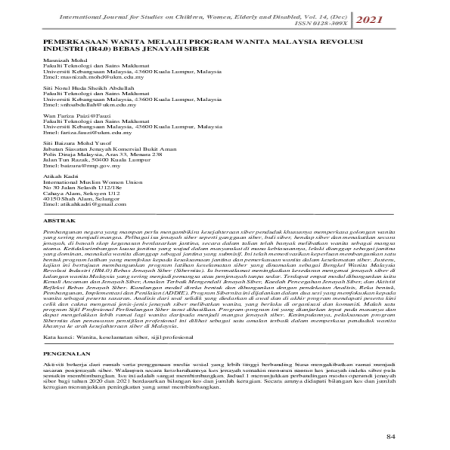
Pemerkasaan wanita melalui program wanita Malaysia Revolusi Industri (IR4.0) bebas jenayah siber
Item Type: Article
Editor:
Year: 00/12/2021
Abstract: Sustainable national development needs to take into account the cyber well-being of the population, especially empowering women who are often the victims. Various cybercrime issues such as cyber harassment, cyberbullying, cyber stalking and criminal intimidation, under the scope of gender-based violence, online have largely involved women as primary victims. The gender power imbalance that exists in a society where usually, men are considered the dominant gender while women are considered the submissive gender. This has motivated the need to develop a form of training program that focuses on gender equality and women’s empowerment in cyber security. Therefore, this study aims to develop a cyber security training program called the Bengkel Wanita Malaysia Revolusi Industri (IR4.0) Bebas Jenayah Siber (Sibernita).
|
|
|
|
|
|
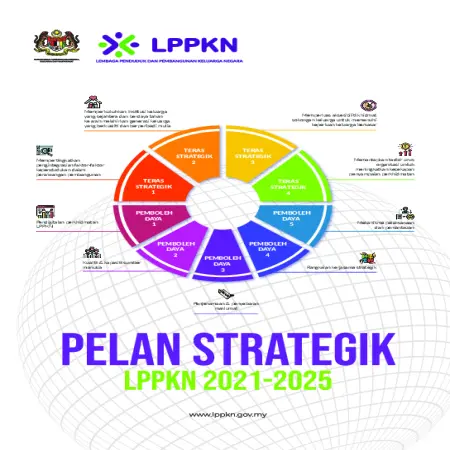
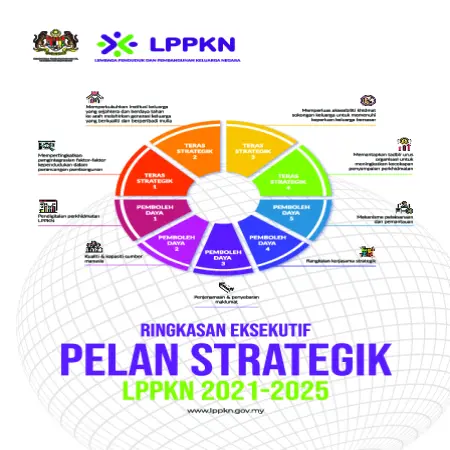
Pelan Strategik LPPKN 2021-2025
Item Type: Book
Editor:
Year: 00/01/2021
Abstract: NPFDB was established under the Population and Family Development Act 1966 as a leader in the field of family development, population and human reproductive in Malaysia and in 2021 is NPFDB’s 55th anniversary celebration. During more than five decades of its establishment, NPFDB has faced several changes in organizational structure, but this agency has remained steadfast in its mandate and responsibility in strengthening family institutions to produce quality Malaysians in the era of change and current challenges. Various high-impact studies, programs and services have been introduced and will be implemented from year to year with the aim of ensuring the well-being of Malaysians regardless of race, religion and socioeconomics. NPFDB’s flagship programs such as the Family and Community Empowerment Program (FACE), Mamacare and KafeTEEN have recognition from the public in dealing with social problems among target groups at the community level, thus elevating NPFDB as a family and population leader.
|
|
|
|
|
|
Population, food security, nutrition and sustainable development
Item Type: Newsletter
Editor:
Year: 00/00/2021
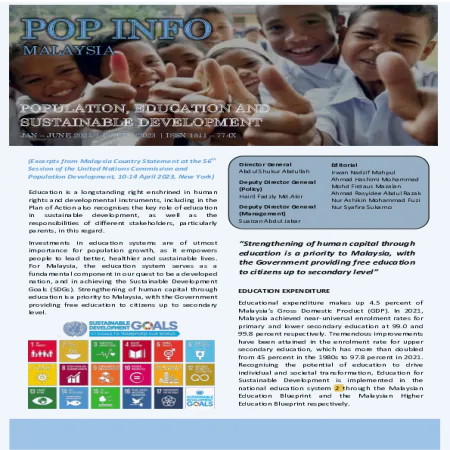
Abstract: Malaysia occupies a commendable position in the 2019 Global Food Security Index, jumping to 28th place as compared to 48th in 2018. The national level food availability data indicates that there are sufficient supply of major food commodities for the population. All major foods are available in sufficient quantities to meet the market demands. Food access is no longer an issue for most Malaysians, with better processing, transport and storage systems and distribution arrangements.
|
|
|
|
|