Browse by Type
|
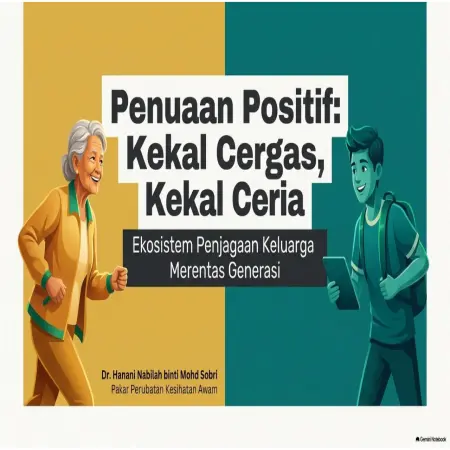
Penuaan Positif: Kekal Cergas, Kekal Ceria
Item Type: Conference or Workshop Item
Editor:
Year: 00/08/2026
Abstract: Malaysia is aging rapidly. This rapid change led to the Elderly Health Program under the 7th Malaysia Plan. The responsibility of caring is a shared commitment. In terms of formal support, it involves government and private agencies. Informal support comes from family, children, teenagers, and the involvement of the community and neighbors. The main goal is to achieve elderly people who are well, independent, and productive through proper knowledge and caregiving skills at home.
|
|
|
|
|
|
Kompilasi Hasil Geran Penyelidikan LPPKN 2025
Item Type: Research Report
Editor:
Year: 00/08/2026
Abstract: The implementation of the LPPKN Research Grant (GP LPPKN) 2025 emphasizes producing findings that are not only scientific but also practical and implementable. A total of 20 studies produced cover various critical issues, including the stability of marriage institutions, family well-being, fertility challenges, and the need for more effective social support systems. These findings provide a strong foundation for policymakers, program implementers, and strategic partners in planning interventions that are more focused, impactful, and results-oriented. Setting a clear research scope has allowed each study to directly contribute to policy improvements, program planning, and the development of more effective interventions.
|
|
|
|
|
|
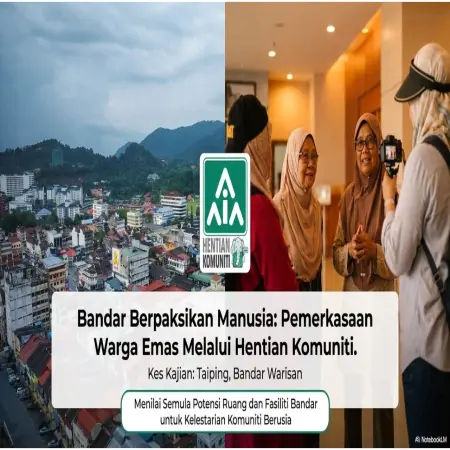
Bandar Berpaksikan Manusia: Pemerkasaan Warga Emas Melalui Hentian Komuniti
Item Type: Conference or Workshop Item
Editor:
Year: 00/08/2026
Abstract: Taiping has an active elderly population, highly mobile, and ready to act as storytellers of local history. All they need is structure and official recognition. This guide program is a two-in-one active aging intervention: preserving Taiping's heritage while improving the quality of life for the senior community. The Community Stop concept is an initiative to turn existing commercial/public premises into community interaction hubs without the cost of new infrastructure.
|
|
|
|
|
|
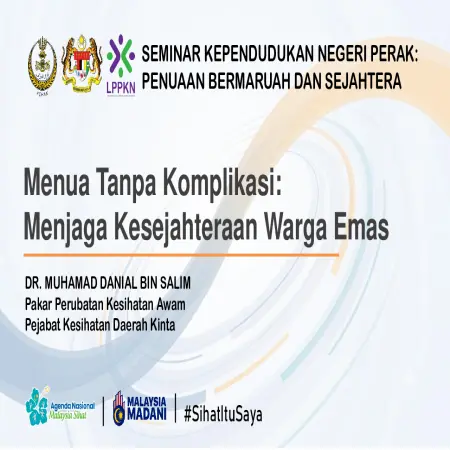
Menua Tanpa Komplikasi: Menjaga Kesejahteraan Warga Emas
Item Type: Conference or Workshop Item
Editor:
Year: 00/08/2026
Abstract: Ageing is a normal biological process, but disease complications can be prevented. Older people age well if they meet all of the following: strong social support; no cognitive limitations; no depression; able to live independently in daily activities; and have no chronic diseases or well-controlled chronic conditions. Preparing to age healthily doesn’t start at 60. It’s a lifestyle investment that begins when you’re young.
|
|
|
|
|
|
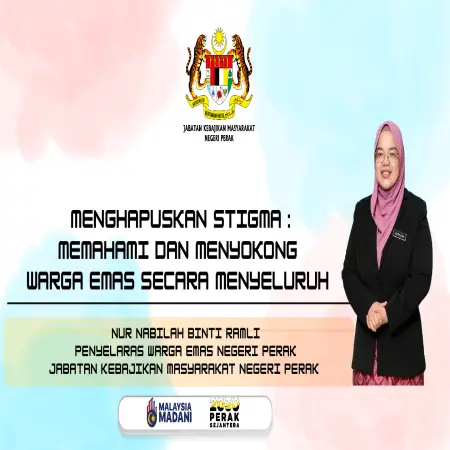
Menghapuskan Stigma: Memahami dan Menyokong Warga Emas Secara Menyeluruh
Item Type: Conference or Workshop Item
Editor:
Year: 00/08/2026
Abstract: Malaysia needs to have a structured policy in terms of social support and elderly welfare, as well as plan a sustainable financial support system before becoming an aging nation. This planning aims to ensure that everyone can have a healthy and prosperous life in their later years. The National Elderly Policy (DWEN) and the National Elderly Action Plan (PTWEN) 2026-2030 are Malaysia's official commitment to creating independent, dignified, and well-being elderly citizens.
|
|
|
|
|
|
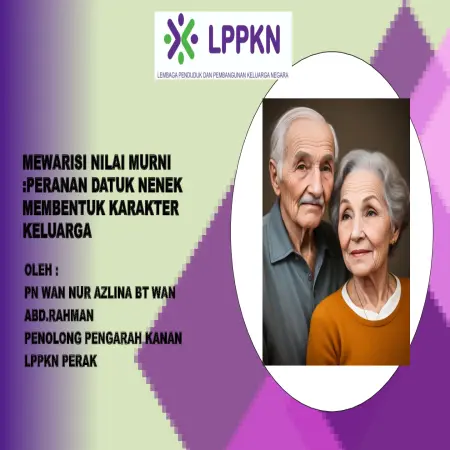
Mewarisi Nilai Murni: Peranan Datuk Nenek Membentuk Karakter Keluarga
Item Type: Conference or Workshop Item
Editor:
Year: 00/08/2026
Abstract: The definition of successful ageing is an individual who has a high level of social support, no cognitive limitations, no depression (mental issues), is able to be independent in daily activities, and has no chronic or controlled illnesses. The role of grandparents in building family character includes being a source of advice and guidance; emotional support (for children, in-laws, grandchildren); introducing traditions and culture; sharing ideas and experiences; taking care of grandchildren; and instilling good values and discipline.
|
|
|
|
|
|
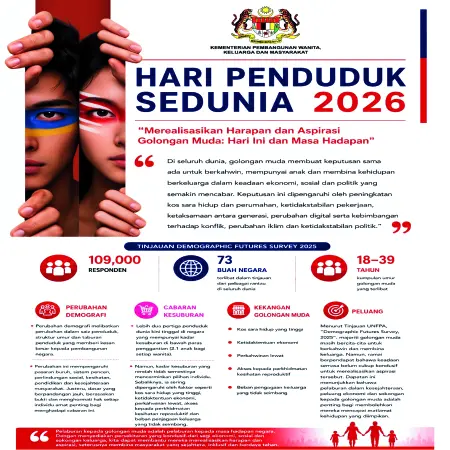
Hari Penduduk Sedunia 2026 “Merealisasikan Harapan dan Aspirasi Golongan Muda: Hari Ini dan Masa Hadapan”
Item Type: Infographic
Editor:
Year: 00/07/2026
Abstract: All around the world, young people are making decisions about whether to get married, have children, and build family life amid increasingly challenging economic, social, and political conditions. These decisions are influenced by rising costs of living and housing, job instability, intergenerational inequality, digital changes, as well as worries about conflicts, climate change, and political instability. Investing in young people is an investment in the country's future. By providing an environment that is supportive economically, socially, and through family support, we can help them achieve their hopes and aspirations, and in turn build a prosperous, inclusive, and resilient society.
|
|
|
|
|
|
Establishment of a National Family Registry in Malaysia: Enhancing Governance Through Family Data Management
Item Type: Conference or Workshop Item
Editor:
Year: 00/07/2026
Abstract: This study evaluates the feasibility of establishing a National Family Registry (DKK) in Malaysia as a strategic mechanism to strengthen governance, service delivery, and policy analysis based on integrated family data. The study proposes an integration model that combines key records such as births, deaths, marriages, divorces, and household structures into a centralized database. It is expected to produce a data governance policy framework, a conceptual model for integrated data governance, and a roadmap for implementing the DKK. Overall, this study could support the country's digital transformation by enhancing data security, administrative efficiency, and the ability to deliver more inclusive and responsive social services.
|
|
|
|
|
|
Pembangunan model dan modul terapeutik berasaskan kaunseling untuk menangani gangguan orang ketiga dalam perkahwinan
Item Type: Conference or Workshop Item
Editor:
Year: 00/07/2026
Abstract: This study aims to develop a therapeutic model and module based on family counseling to address third-party interference in marriages in Malaysia. Using a qualitative approach through semi-structured interviews with 17 couples and three expert counselors, the study identifies contributing factors to the interference, its effects on the well-being of couples and families, as well as the therapeutic elements needed in the intervention. The findings of the study produced the Marital Relationship Interference Cycle Model (KGHP) and the K.A.S.I.H Intervention Model, complete with the K.A.S.I.H Therapeutic Counseling Module, a module that tackles third-party interference in a structured, integrative, and culturally sensitive way to Malaysia.
|
|
|
|
|
|
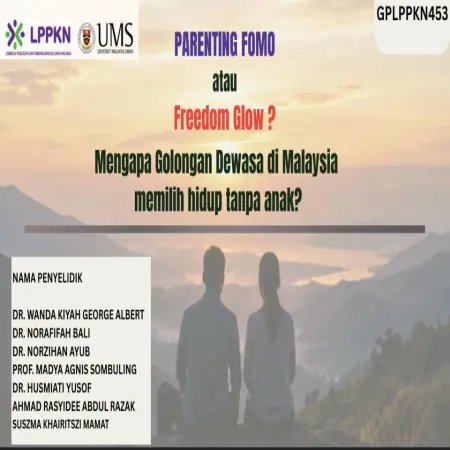
Keibubapaan : ketakutan tertinggal (FOMO) atau ketenangan bebas (freedom glow)? satu kajian emosi dan psikologi dalam keputusan perkahwinan tanpa anak
Item Type: Conference or Workshop Item
Editor:
Year: 00/07/2026
Abstract: This study aims to identify typologies of reproductive decisions, examine the factors that influence the decision to live without children, compare levels of Parenting Fear of Missing Out (Parenting FOMO), Freedom Glow, and socio-cultural pressure according to reproductive decision typologies, as well as explore the emotional experiences of individuals living without children. Economic factors are the main factors influencing reproductive decisions, followed by career, autonomy, health, and life aspirations. The Childless by Condition group recorded higher levels of Parenting FOMO and socio-cultural pressure, while the Childfree by Choice group showed higher levels of Freedom Glow.
|
|
|
|
|